Welcome back. This past Saturday, February 14th, I celebrated six months post-transplant. I wouldn’t say that time has “flown” by, but I am quite surprised to have already reached this milestone.
The surprise comes less from the passage of time and more from how I’m actually feeling, and the progress I’ve been able to make in my physical recovery.
As some of you may know, prior to my transplant I shared a post titled “Pre-Transplant Health & Fitness: Baseline.” This post will essentially serve as the first post-transplant follow-up to that piece.
The topics of health, nutrition, and exercise are something that I plan to revisit multiple times with you all during different stages of my recovery. By sharing occasional long-form updates like this, I hope to provide an example of what can be possible at different points in the recovery process.
Not to mention, I love this stuff. I love talking about it, and I’m genuinely excited to dive into it all in a bit more detail today.
So, without further ado…
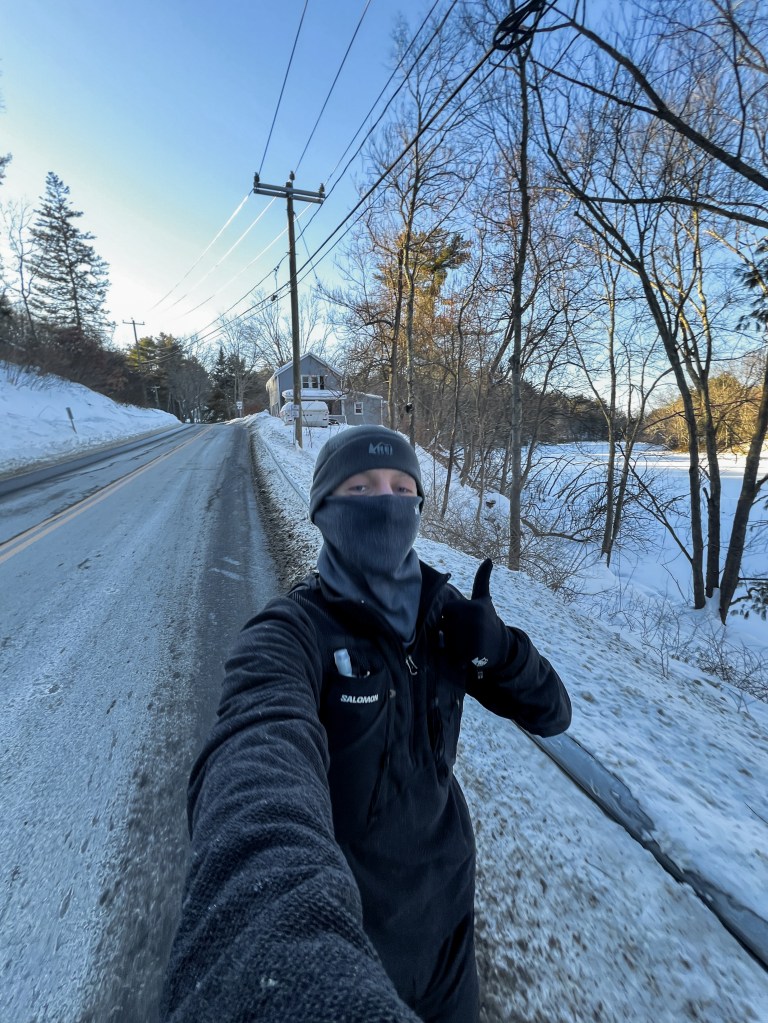
Disclaimer: I hope this goes without saying, but I am no expert on any of these topics. I can and will reference outside sources whenever possible, and I recommend doing your own research on all things nutrition, exercise, and strength training.
Most importantly, finding what brings you joy and keeps you healthy is the key. This is simply my own personal blueprint. And as always, every transplant recovery experience will be different. This is just mine.
Exercise
It wouldn’t be an exaggeration to say that most things I do in a given day right now are done with the goal of serving my exercise habits and my overall recovery trajectory.
The way I see it, at six months post-transplant, there really isn’t much else I should be focused on. My care team has done their best to guide me through all of the medical specifics, and because that has gone as well as it has, the recovery part has largely been up to me.
They gave me my health and how I decide to use that gift to aid in my recovery is entirely my responsibility. Plain and simple.
Since there is a decent amount of ground to cover, we’ll be breaking this down into more digestible sections, starting with the big one: cardio.
Cardio
Walking
I’ll be the first to admit that prior to my transplant, I didn’t care much for walking. My two settings were either running or staying sedentary. No real in-between. That changed when walking became the only real thing I could do. For a while, especially right after getting out of the hospital, I could hardly even do that.
Nevertheless, you have to start somewhere. Those first few weeks were rough, but I kept at it because I knew I would never get back to running if I didn’t first lay the groundwork. That’s what walking has done, and it’s something I’ve kept up now that I’m back to running more consistently.
I try to get out for a walk at least once a day, and have been averaging around 7–10 miles per week. I’ll share a few data points from those walks below:
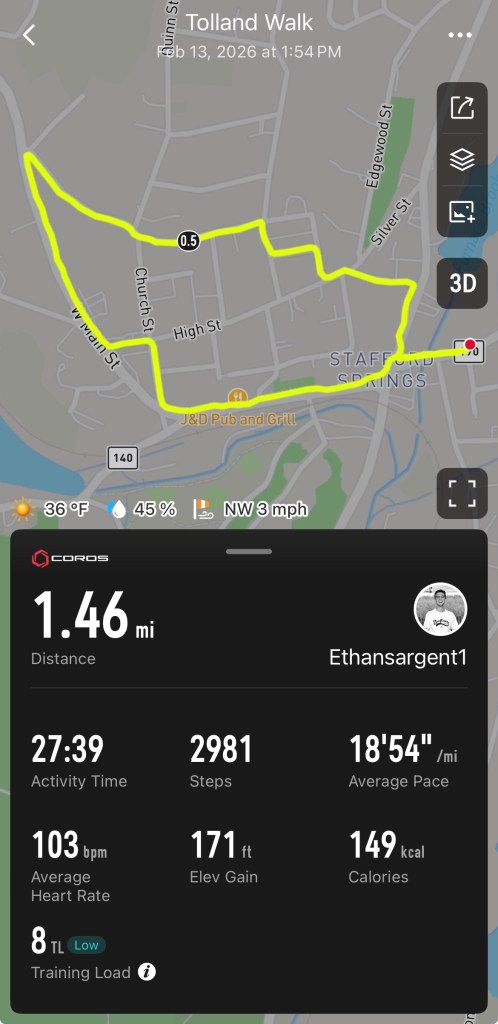
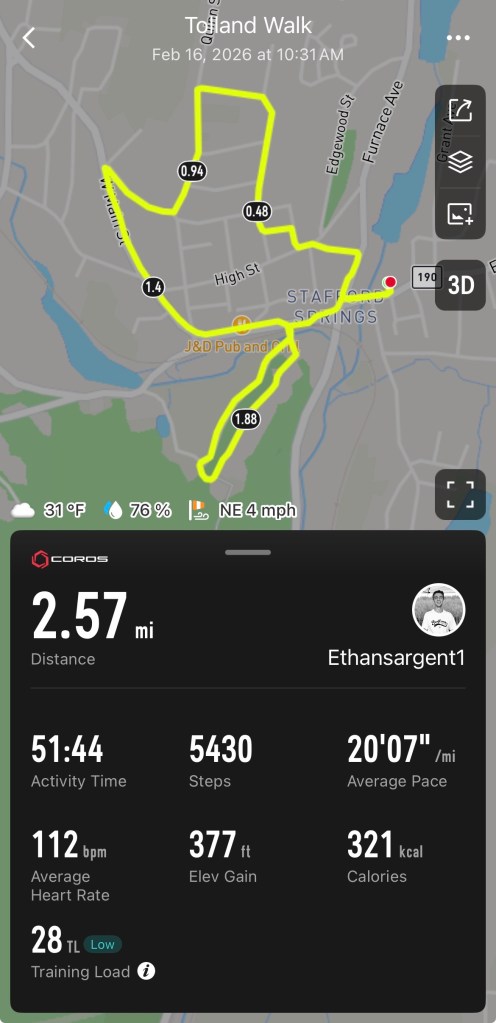
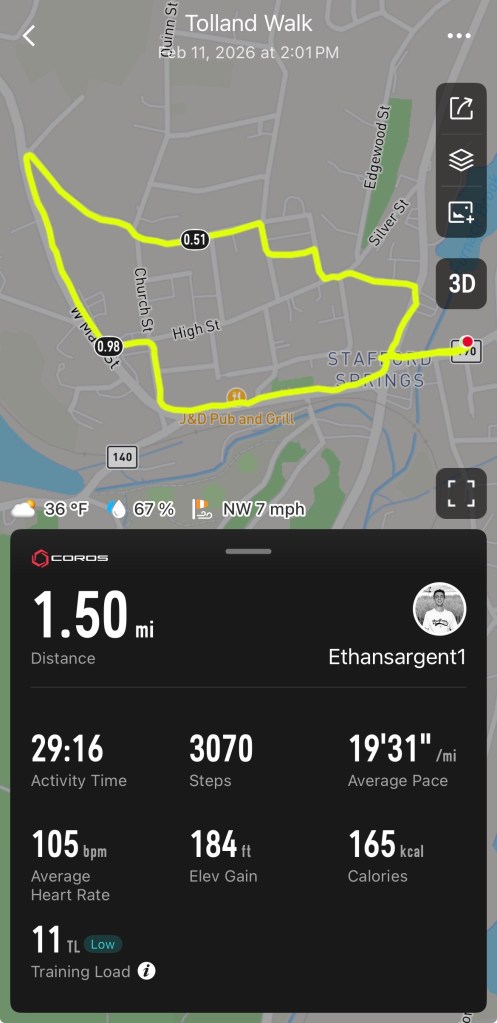
As you can see from the elevation data, the walks I do are fairly hilly. There is simply no way of avoiding the hills in my town, which is both a blessing and a curse. When I first got back, three months after my transplant, they kicked my butt every single time. But they got easier and easier to manage the more I did them.
As with most things in life, you simply don’t get better at handling something if you avoid it entirely.
Adjusting to elevation changes on my walks allowed my muscles to re-learn what that stimulus felt like, so by the time I was back to running hills, it didn’t come as a complete shock to my system.
Additionally, because walking is such a low-impact activity, it is realistically one of the most accessible habits you can incorporate into your routine each day to positively impact your health and recovery.
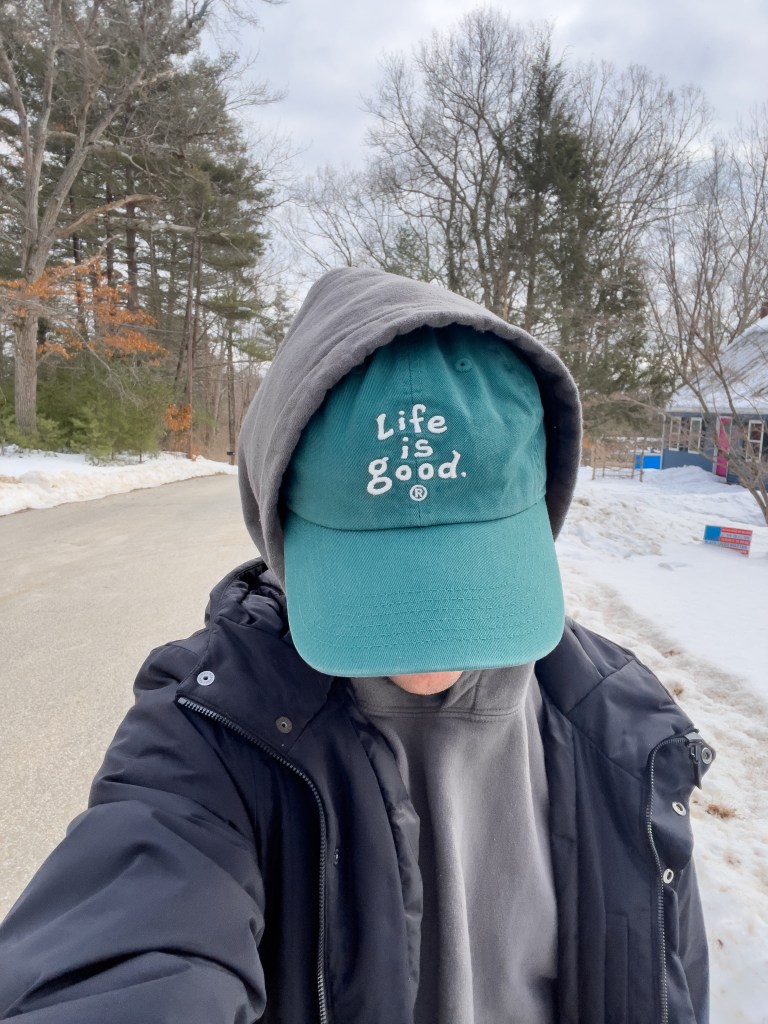
The benefits of consistently hitting a solid step count each day cannot be overstated. Weight management, sunlight exposure, improved blood and oxygen circulation, stress relief, and more. All good things, especially for those moving through recovery.
Biking
Another activity I didn’t partake in much before all of this was biking. I never had too much interest in it, but knowing that the bulk of my early recovery would take place during a New England winter, I wanted to have an indoor cardio option available. I didn’t have space for a treadmill, so I bought an exercise bike instead.
Disclaimer: I’ll be linking all the equipment I own and mention in this post in the references section at the end. I am not affiliated in any way with these brands or products—just linking in case you’re reading this and also in the market for similar health and fitness related gear.
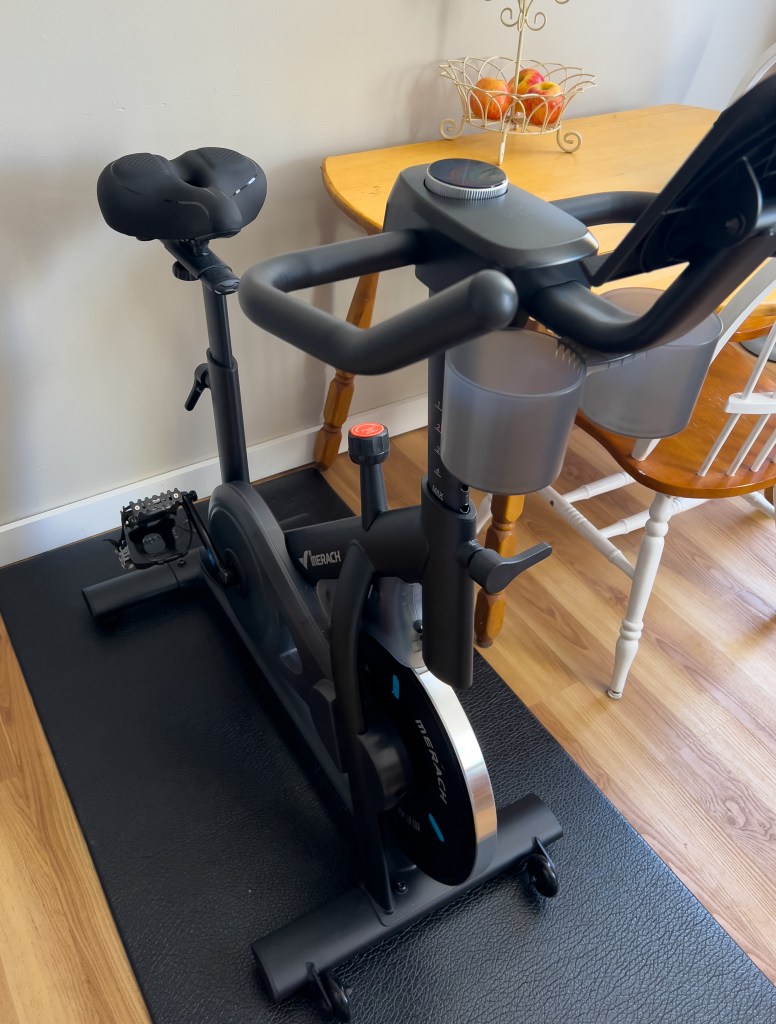
So far, much to my surprise, I’ve actually quite enjoyed having it in my apartment. The bike is mainly serving as an active recovery tool for me at the moment. Essentially, I use it on days when I’m not running but still want to log a low-stimulus activity that is separate from my walks.
The resistance is set relatively low, and my main focus is usually on keeping my heart rate in check. Think zone 1 or light zone 2 efforts. Realistically, I usually spend 2–4 hours a week on the bike, covering around 20–40 miles. This varies depending on my running load for the week.
I have yet to use it for what I would consider a proper workout, but I’ve already put over 300 miles on it, and it’s held up very well. No complaints. I’ll share a few data snippets from some of my rides below:
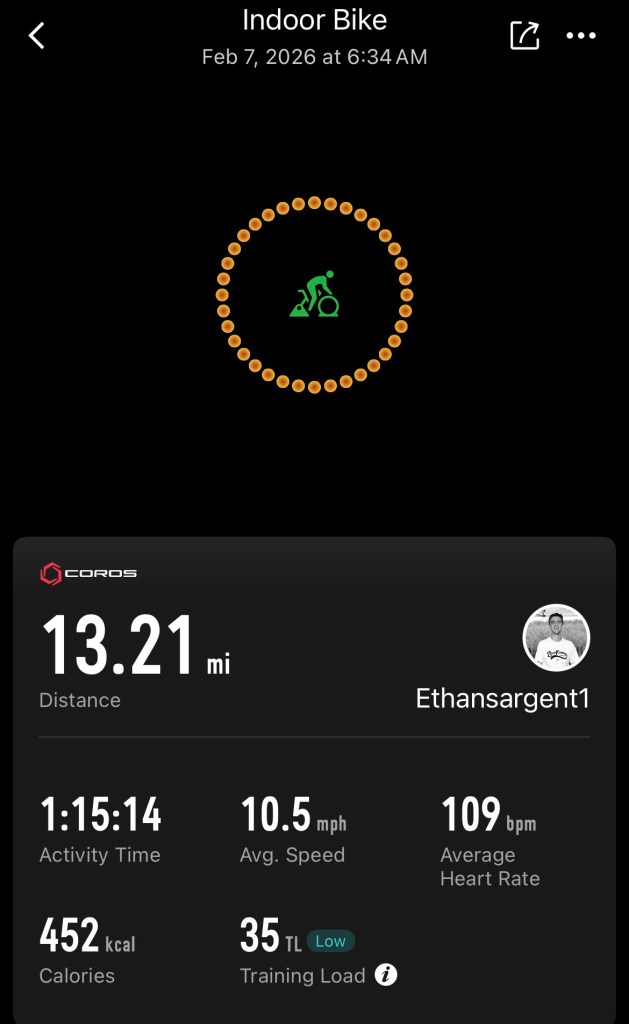
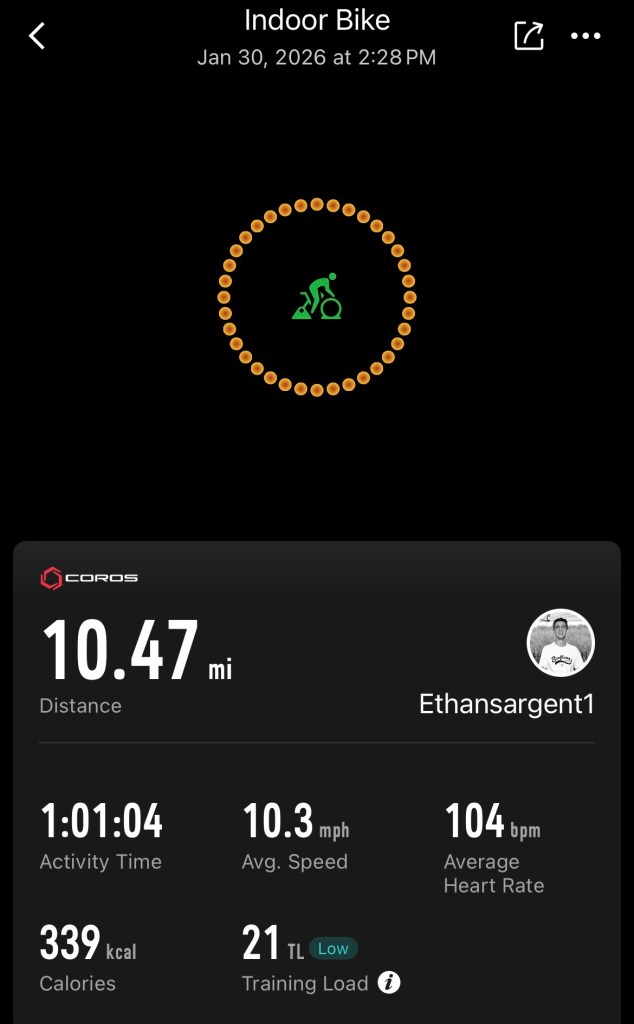
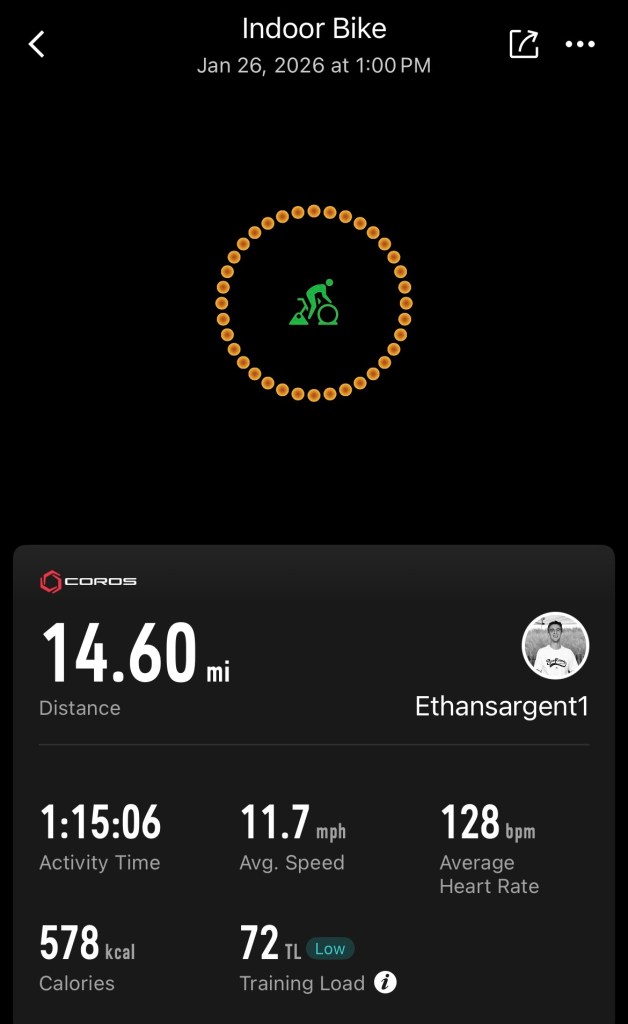
Similar to walking, I think biking is an excellent option for post-transplant patients looking to rebuild fitness. What arguably makes it more dynamic than walking is the ability to adjust the intensity. Turn up the resistance, pedal harder, do intervals, etc. There are plenty of ways to challenge yourself and build fitness with a bike.
Running
I saved running for last, because what I am managing to do right now would not be possible without the two exercise activities I have already discussed. Yes, I had a foundation in running prior to transplant, but it is hard to express how much of a total body reset a transplant really is.
I couldn’t just get up and run like I used to. It was something I had to build towards and eventually graduate to. An entirely new foundation needed to be laid before I could get back to this activity that I love so much.
And boy oh boy, do I start to feel like I am back.
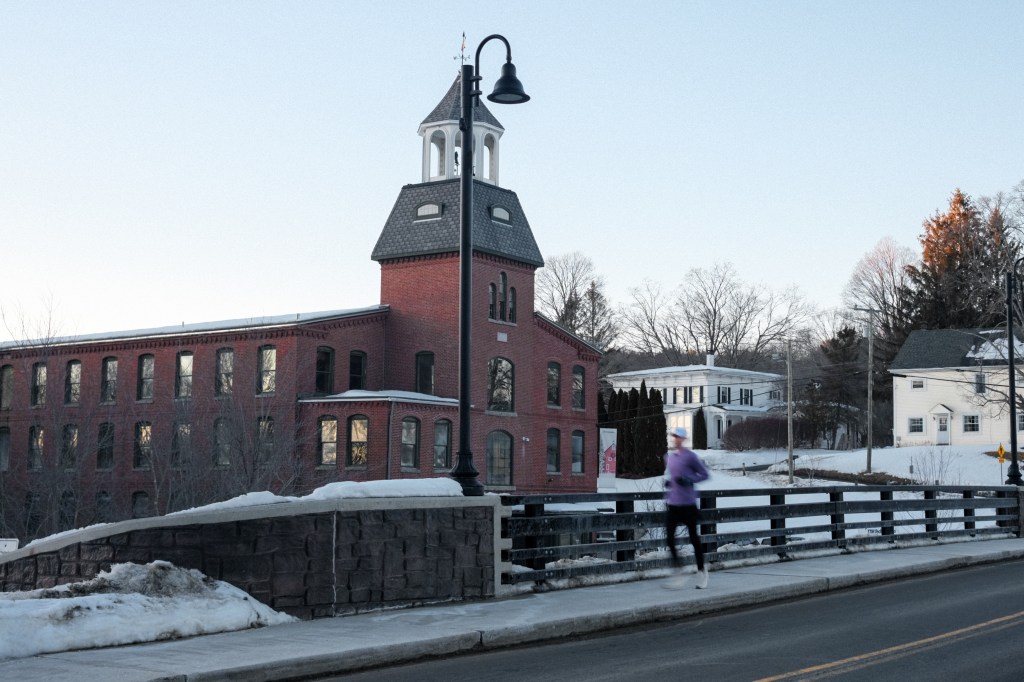
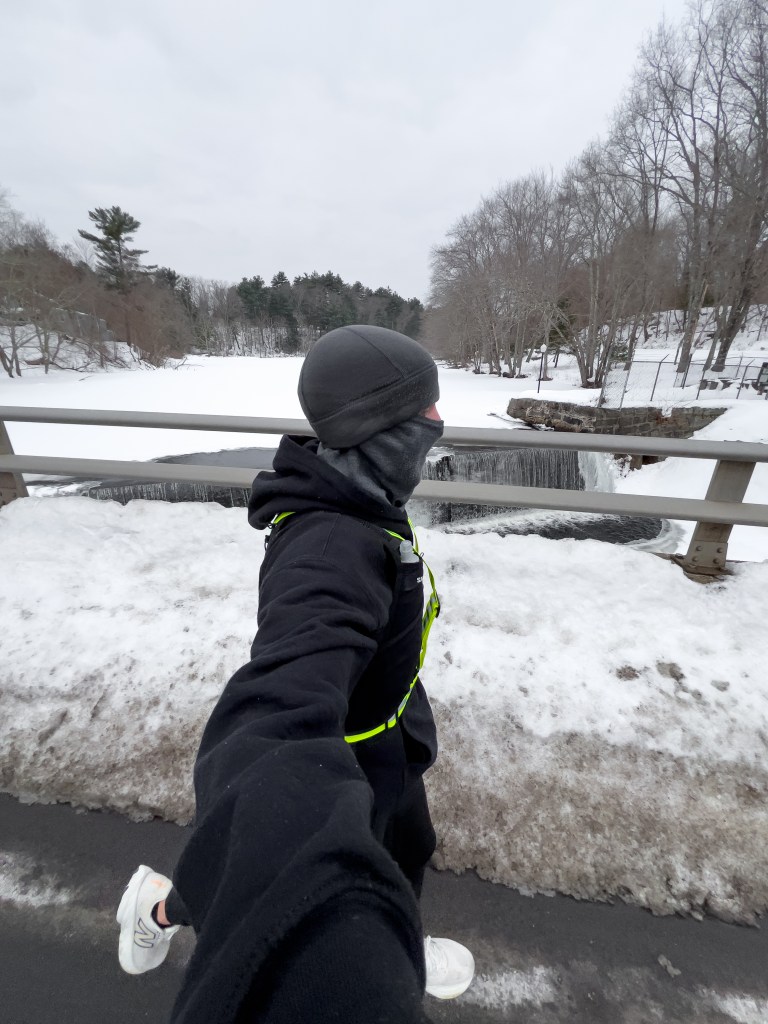
This past weekend, on the six-month anniversary of my transplant (surely there is a better word than anniversary?), I completed a fifteen-mile long run. Not a typo. Fifteen. It was the longest run I thought I could manage without hurting myself, and I was able to get it done. I paced myself well, kept my heart rate steady, and most importantly, just enjoyed myself.
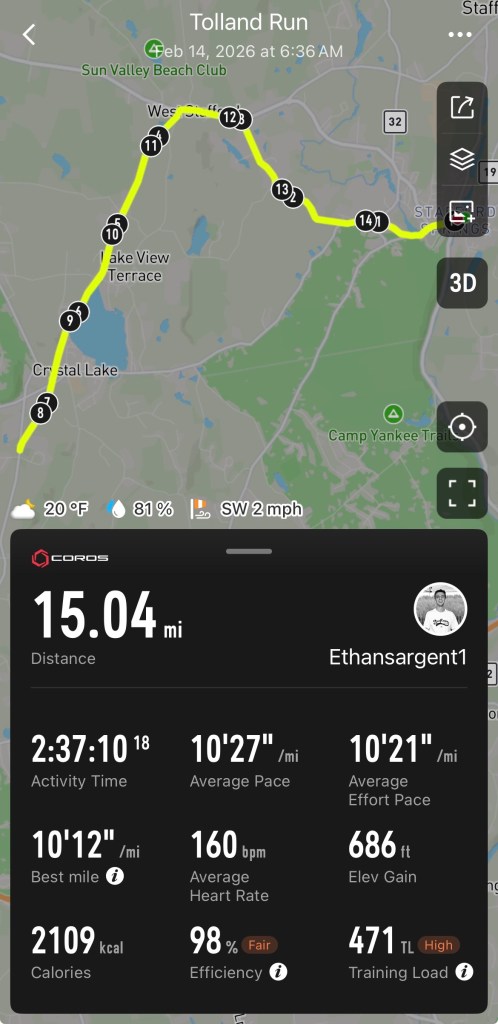
As you can imagine, I spent almost every minute of that run reflecting on the last six months. Thinking about what it took to get to that point. How grateful I am for the people in my life, for my care team, for modern medicine, for muscle memory, for chosen discomforts, for my morning coffee. You name it. Gratefulness for it all (more or less).
As proud as I am of that run, it didn’t happen in a vacuum. I didn’t just wake up and decide to pop out the door and run fifteen miles. I simply couldn’t have done that without all of the intentional work I have put into my recovery these past few months. Below is a screenshot, courtesy of my Strava account, showing what my weekly mileage has looked like lately in the buildup to that run:
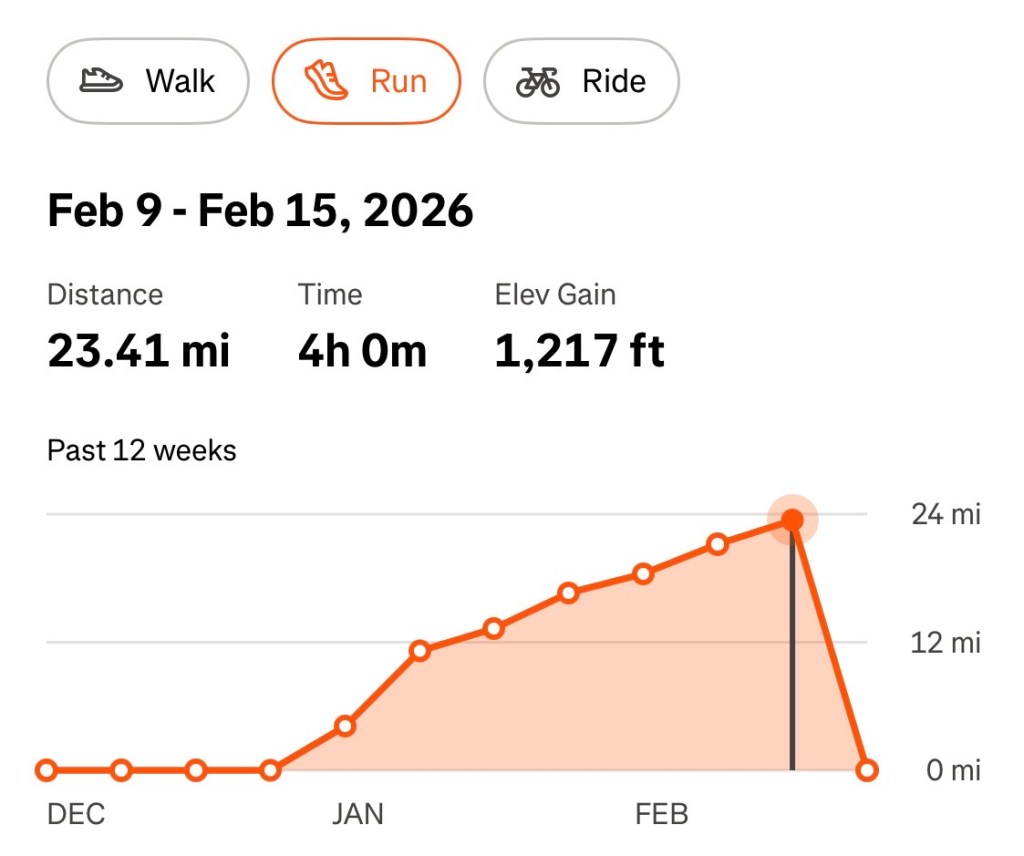
Please note that I created my Strava account in early January, so no trends are available from before then. Data from before the ~four month mark can be found in previous entries of my “Field Note” series if that is of interest.
As you can see, there are no peaks and valleys here. I had slowly been building mileage for weeks leading up to that run, usually spread over 3-4 runs a week. As much as I wanted to push earlier, I knew that drastically increasing my training load out of nowhere would likely only result in injury. My body needed time to adjust, and I managed to stay patient enough to let that happen. Additional data points from a few of my other runs during this time can be found below:
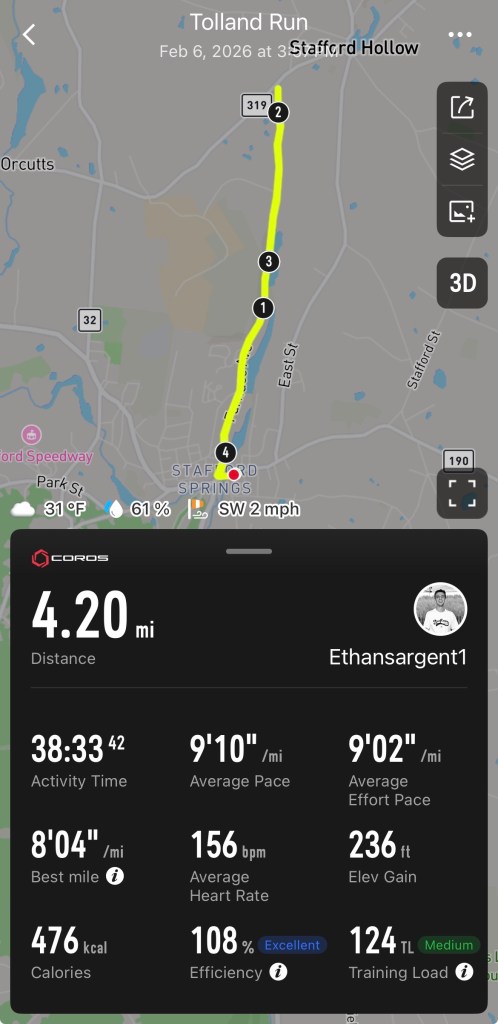
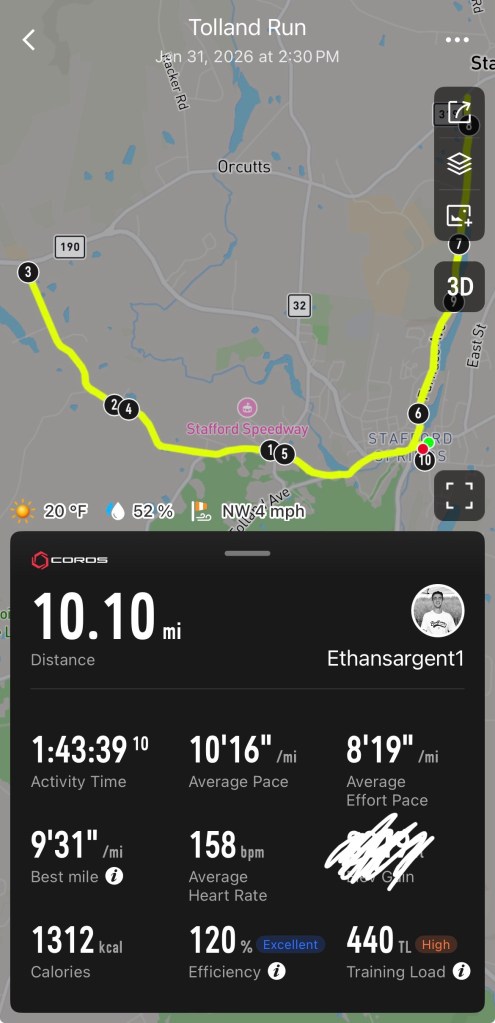
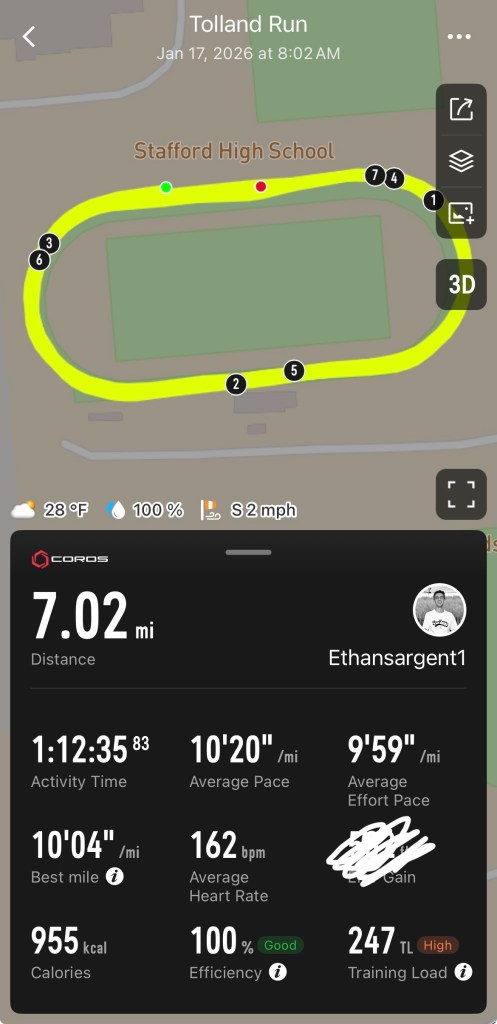
Unlike walking and biking, running is high impact and very energy intensive. It’s not something I would recommend just starting out of the blue this soon post-transplant unless it’s something you were regularly doing beforehand.
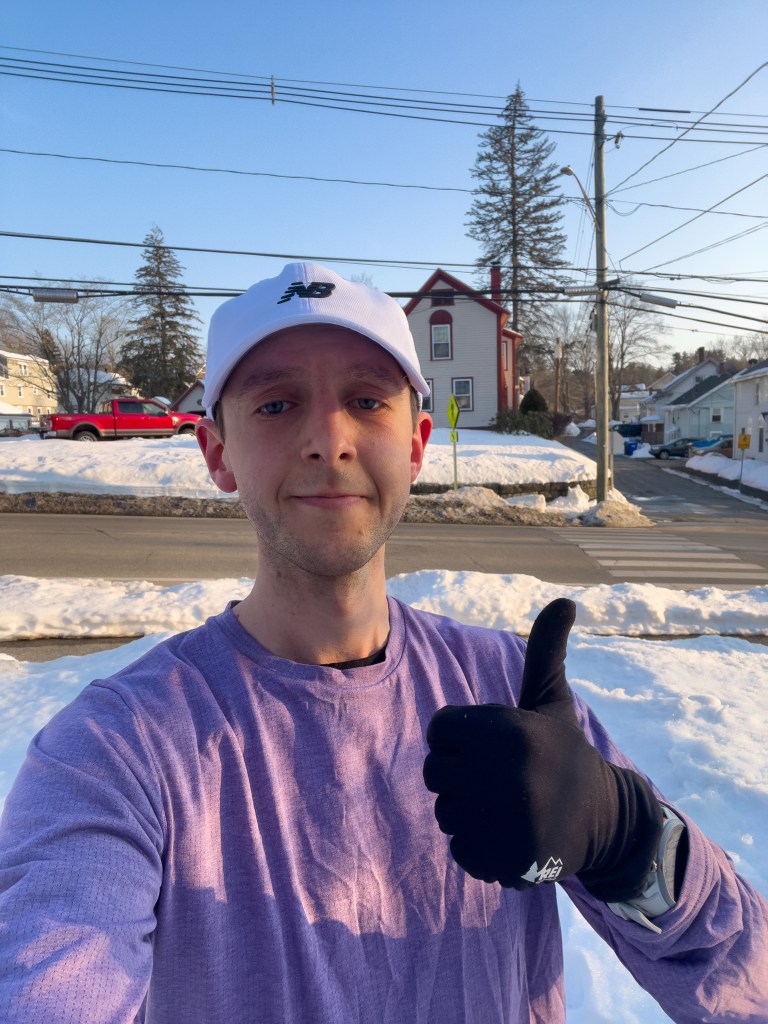
That said, if you can run, I’ll say that there are not many things in my life that truly make me happier than when I am out for a run. By the time I get back from my runs these days, my sorest muscles are usually in my face from smiling the whole time.
Movement is a gift. There’s no other way to say it. Nothing reminds you more of that fact than being forced into a situation where it is taken away for a period of time.
I’ll talk about my plan moving forward in a little bit, and some of the things I hope to accomplish in the coming months with my running and everything else, but for now, let’s shift gears and discuss another equally important category of exercise: strength training.
Strength Training
Arguably the most surprising part of the transplant experience for me was how much muscle mass and function I lost while I was in the hospital. When I left, my muscles were very weak and deconditioned from any form of exercise, which made even the simplest of tasks feel very demanding.
The first three months after transplant, I focused mainly on light conditioning. Mostly cardio. I was getting my body used to movement again without asking much of myself in the strength training department. I didn’t actually resume my normal bodyweight training until three-four months after.
Since then though, I have not only resumed what I was doing prior to transplant, but I have also further developed my routine to include proper strength training with weights and more emphasis on compound movements with lean muscle gain being the goal.
I did this mainly by investing in some quality equipment to make sure I had the right tools to make my goals more attainable, and I now have a very intentional mini at-home setup that I am very proud of.

Routine
The best place to start, in my opinion, is to elaborate on what my strength training routine actually consists of. It’s not the most conventional plan, but it’s the one that fits into my life and the one I enjoy doing the most as of right now.
My workouts follow a Monday-to-Friday split: chest and shoulders on Mondays, back and biceps on Tuesdays, legs on Wednesdays, chest and shoulders again on Thursdays, and back and biceps again on Fridays.
For chest and shoulders, I do push-ups, lateral arm raises with weights, or shoulder shrugs with weights, and dips. For back and biceps, I do assisted pull-ups, curls with weights, or hammer curls with weights. For legs, I do weighted squats, fire hydrants with resistance bands, calf raises, single-leg bridges with weights, and reverse lunges with weights.
This may not seem like a ton, and that’s because it’s not. Where my routine becomes unconventional is in how I actually go about doing these exercises each day. I work from home, so a lot of my day is spent at my desk. Instead of dedicating a chunk of time each day to do more elaborate sets for each area of my body, I focus on high-impact compound movements that I can do multiple sets of throughout the day.
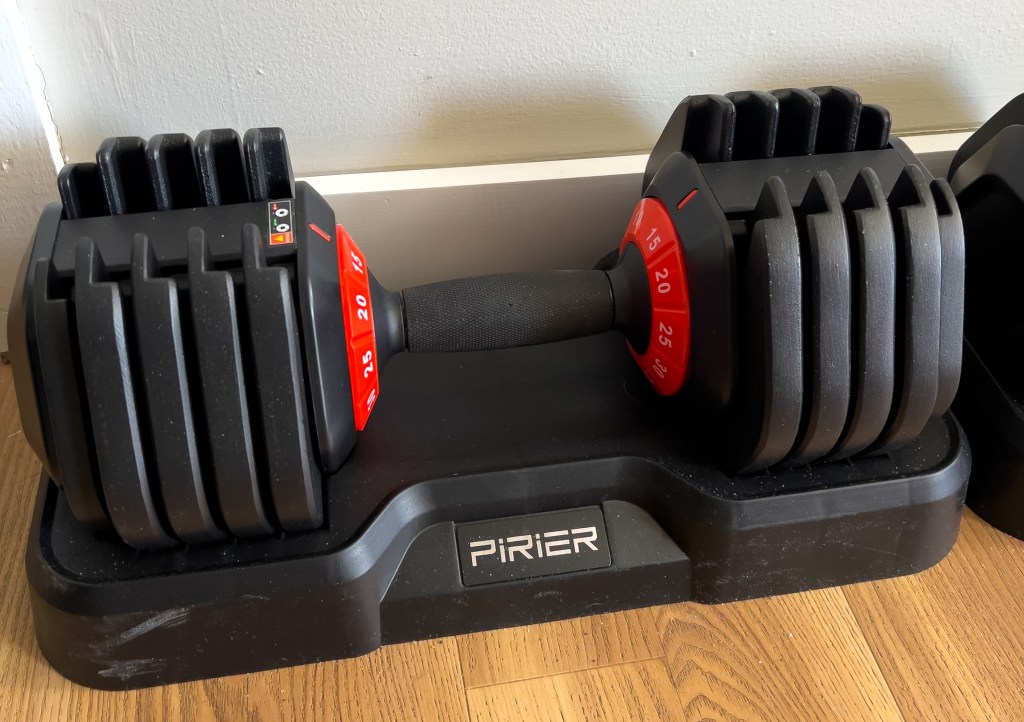
For instance, on chest/shoulder and back/bicep days, I get up from my desk every half hour or so and do a set of those movements. The sets are short enough not to take up much time but intense enough that around mid-day I really start to feel the fatigue. By the end of the day, I am usually fried, but I know that I got a solid workout in throughout the day that will promote the kind of muscle development I am looking for.
Leg days are the only days I switch it up a bit. I aim for 3-4 sets over the course of the day. There are more exercises here, most of which are geared not only toward gaining strength but also toward injury prevention.
As my weekly mileage increases, I want to make sure my strength training supports the quality of my runs as much as it supports the strength of the muscles I use most, so I reduce the risk of experiencing any injury setbacks as I continue to re-build my fitness.
Equipment
While I may be biased, since I never truly enjoyed going to the gym, I want to take a moment to discuss why investing in some decent at-home equipment can be very beneficial, especially for post-transplant patients.
Recovering from transplant is essentially like going through another COVID year in terms of restrictions: no crowds, minimal social outings, masks and gloves, and so on. That obviously includes gyms.
Now, you can absolutely get by with bodyweight exercises. I did for quite a while. That said, after getting through the transplant, I wanted to do more than just return to the baseline where I was. Yes, I was lean, but I never truly felt strong. Not in a way that inspired self-confidence or led to any meaningful improvements in my running performance.
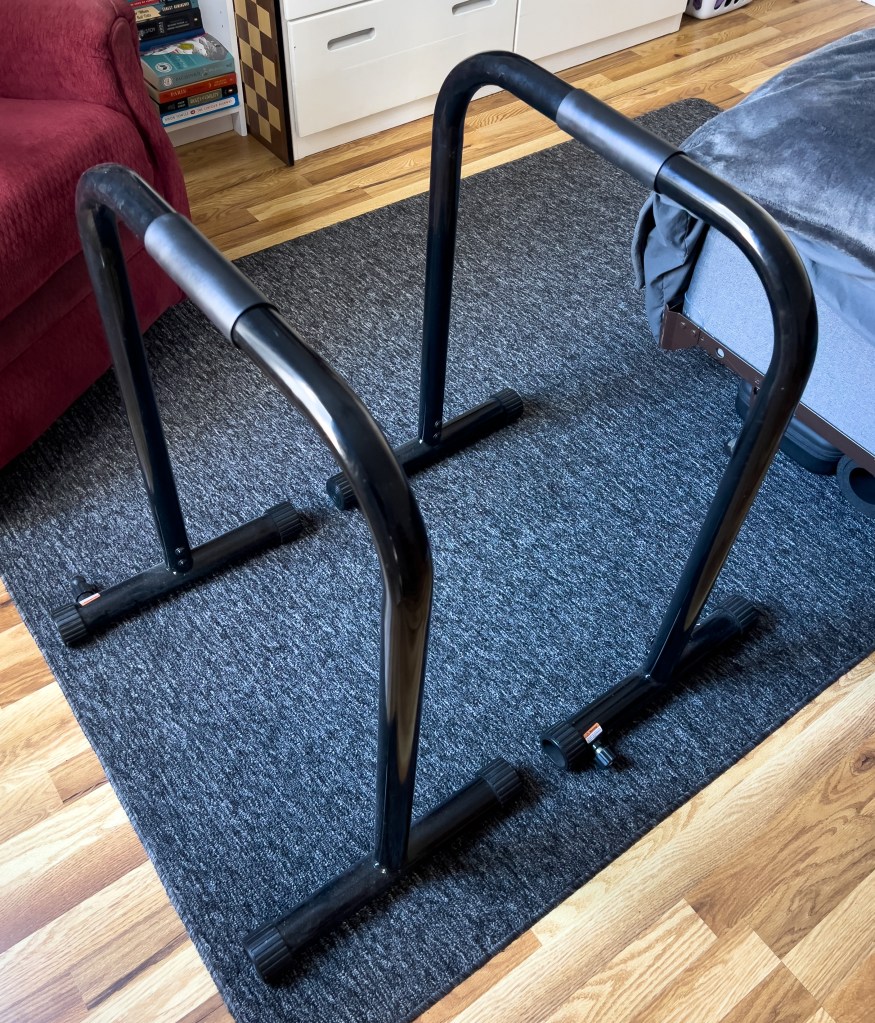
So, before all of this kicked off, I invested in a few key pieces of strength-training equipment so that I could have an at-home setup capable of supporting meaningful progress toward the goals I have set for myself.
Those pieces include a dip station, an adjustable dumbbell set (10–55 pounds), a pull-up bar, and resistance bands (both fabric bands and pull-up bands).
While I owned some of these items well before transplant, this feels like the first time I’m truly making consistent use of all the equipment I have and I couldn’t be happier that I pulled the trigger and invested in my health and recovery in this way. It’s made a huge difference for me so far.
Philosophy
Before moving on, I just want to elaborate on my personal reasoning for putting as much focus as I have on strength training, in a way I wasn’t doing as consistently beforehand.
As I mentioned earlier, those few weeks in the hospital really took a toll on me. I lost 15–20 pounds, most of which I believe was muscle. Mentally, that was tough to process, and it actually scared me quite a bit.
I don’t know exactly what my future holds. I hope, more than anything, it doesn’t involve more treatment, but of course that’s never a guarantee with stem cell transplants.
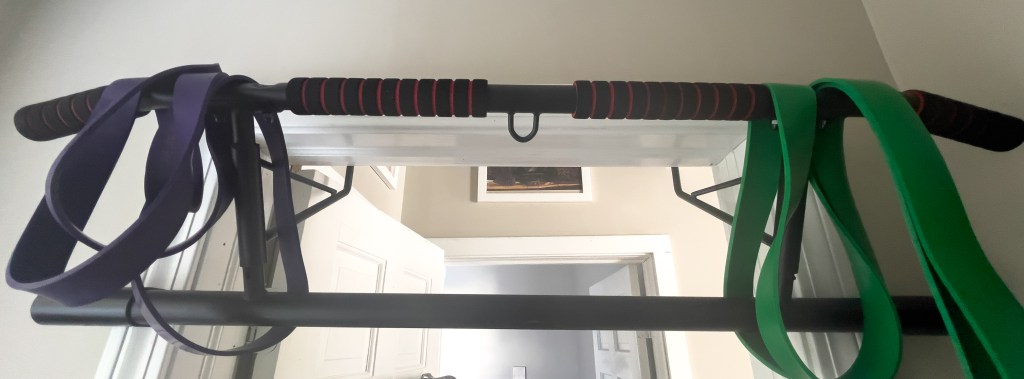
Right now, I feel healthy and I can feel my strength returning with every workout I complete. I love that, and I’m going to do everything in my power to keep that momentum going. I don’t want to just get back to baseline. I want to bulletproof my body as best I can so that if I ever have to face another health issue, whether related to the treatment I’ve already received or not, I’m ready.
I want to give my body the best chance to handle whatever life has in store for me.
I can’t do that unless I give strength training just as much attention as I do my running. Being healthy is a holistic venture and can’t be achieved without proper diversification in your exercise habits, adequate sleep, intentional nutrition, and so on.
It all matters.
Limitations & Setbacks
If I come across so far as someone who has it all figured out, please disregard that thought entirely. I am learning as I go, just like everyone else.
The truth is, I am still very much inhabiting the body of someone who just underwent a major medical procedure, one known to have some not-so-fun repercussions and lasting side effects. Navigating that has been difficult, and I am doing my best to find the balance between pushing my exercise habits while recovering from everything I have been through.
If you want more specific details about the side effects I am dealing with and the issues I have faced since transplant, I would point you back to my “Field Note” series again. For now, though, I’d like to focus more on the general, overarching challenges that post-transplant patients are most likely to be dealing with at this stage in recovery and share a few personal anecdotes when applicable.
Graft-Versus-Host Disease (GVHD)
GVHD can and likely will be the main concern and limiting factor for most patients post-transplant. In short, it occurs when your donor cells and the new immune system that comes with them start to view your body as a threat, attacking healthy parts of it. Acute GVHD usually occurs within the first three months or so, while chronic GVHD can appear anytime after that.
GVHD can affect just about any part of the body and can vary in severity. Luckily for me, I have only experienced the occasional skin rash so far, which has been easily treated with standard hydrocortisone.
I can’t speak to maintaining exercise habits while dealing with more serious GVHD, so please keep that in mind. If you are in that situation, my recommendation is to make sure your care team is up to date on your symptoms. If your symptoms limit what you can do physically, respect that and don’t force yourself to push through in a way that could cause harm.
Exercise can absolutely aid your recovery, but it should never take priority over your care team’s guidance or what your body is able to handle.
Immunosuppression
Immunosuppressants are a necessary evil in the recovery process, and I am very glad to be off the tacrolimus I had been taking. There are a wide range of side effects associated with prolonged immunosuppression, but the one that I think is the most universal and likely to affect your exercise habits is general fatigue.
For me, there is a pretty concrete before and after when it comes to my energy levels and output coming off immunosuppression. I believe I was on it just long enough for my new immune system to find a balance, so when I did come off, it allowed me to regain noticeable daily energy without any real setbacks.
Depending on the immunosuppressant you are on, and the duration that you are on it, there will likely be more specific side effects that your team monitors for. Because of that, it’s best to speak with your care team so you know exactly what to be on the lookout for. Being an informed patient never hurts.
Energy Levels
Whether related to the two topics I already touched on or the transplant experience in general, fatigue is a guarantee. There is no way to avoid it, and it will linger longer than you’d probably like no matter what you do.
This can affect your exercise habits in significant ways, but I also think it’s an opportunity. If fatigue is the only issue you are dealing with, I would highly recommend pushing through every once in a while.
I’m a firm believer in the idea that sometimes it takes energy to get energy in return. I couldn’t tell you the number of times I’ve returned from a run feeling more energized than when I stepped out the door.
Exercise engages your entire body in a really healthy way, and you can actually leverage that to combat fatigue if you approach it sustainably. That means starting slow, taking rest days when necessary, progressively building your exercise routine, and so on. Patience leads to progress here.
You can be doing everything right in terms of your exercise and general recovery, but if you aren’t fueling your body properly, you will only be holding yourself back. Because of that, we are going to take a few minutes now to discuss the building block that makes everything else possible: Nutrition.
Nutrition
As with everything else I am discussing today, nutrition is something I am continually learning more about. As someone who enjoys endurance activities, I have learned the hard way over the past few years just how crucial it is to fuel your body properly relative to your output.
As you can imagine, that knowledge came in handy over the past six months as I set out to start rebuilding my body through exercise and nutrition.
For patients recovering from a transplant, proper nutrition can make a real difference in energy levels, help restore weight, and support the rebuilding of muscle lost during treatment. You will just need to be intentional about it.
I am not a nutritionist or dietician, so I won’t be recommending you follow any specific diet. The truth is, like exercise routines, the best approach for you will be the one that not only keeps you healthy but also incorporates foods you genuinely enjoy. Forcing anything else never works for long.
That said, there are a few key guidelines I follow that I would like to share. They are simple and have made a real difference in my recovery so far, and they could potentially help you too.
Philosophy
“Eat food. Not too much. Mostly plants.” That’s the advice Michael Pollan gives in the opening lines of his book In Defense of Food. While the book was released in 2008, 18 years ago now, Pollan’s simple guidance not only still holds true, but is arguably even more relevant in today’s highly processed food world.
I will forever recommend this book to anyone looking to form a healthier relationship with the food they consume.
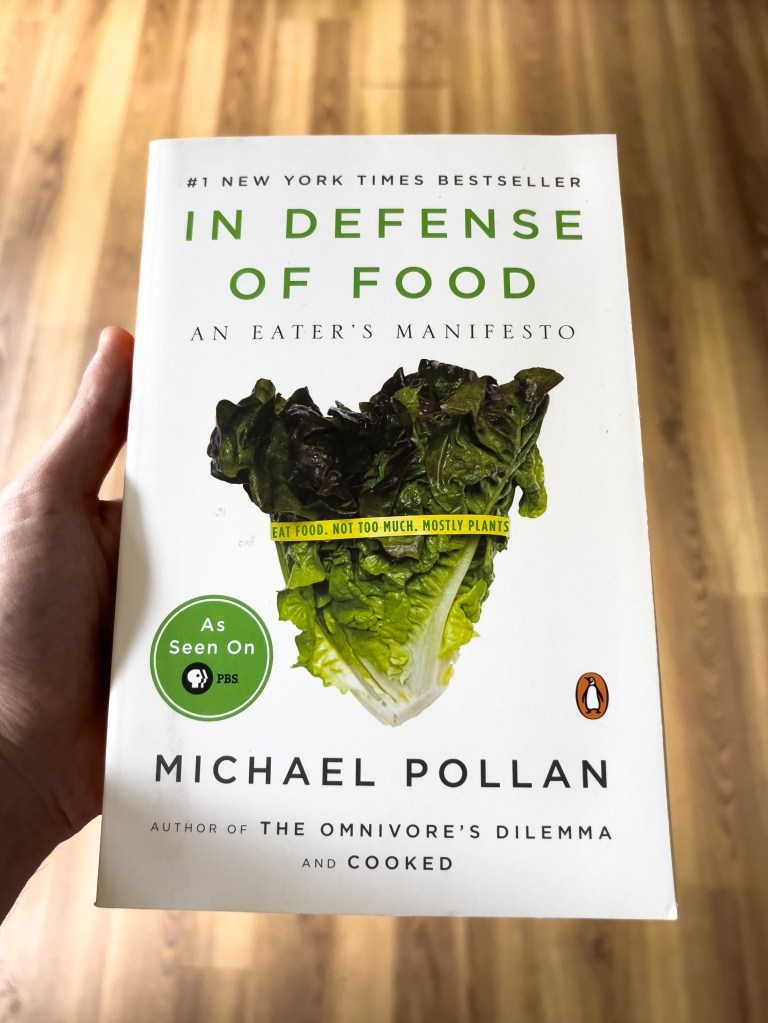
In the book, Pollan discusses how much of the “nutrition” advice we hear, especially here in the United States, falls victim to “Nutritionism.”
This is essentially the idea that food science has focused more on identifying which single nutrient is the “key to health” rather than looking at food as a whole and understanding how all of its components work together. When he says “eat food,” he means eat real food. Whole foods.
If you are in a grocery store shopping for food and a product has to loudly advertise to you why it’s healthy or what nutrients it contains, it’s probably not actually all that healthy. You don’t see anything in the produce aisle shouting at you about how healthy it is. It just is.
Nutrition does not need to be complicated, or cause anxiety. Keep it simple, and I promise you that your body will thank you.
Examples
Pollan’s work has had a major influence on how I’ve viewed food over the last few years. The advice is simple enough that I never feel like I’m forcing myself into an unrealistic diet. I eat real food, making sure my “diet” mainly consists of whole grains, fruits and vegetables, lean meats, healthy fats, and so on.
Pre-transplant, this approach helped me exercise efficiently, stay lean, and maintain muscle. Post-transplant, I’m using the same ideology for the same reasons. The only difference now is that I truly want to gain muscle. In concert with the strength training I’m doing, that goal feels more attainable than it did before.
Here’s a small gallery of some of the meals and snacks I’ve eaten over the past few months:
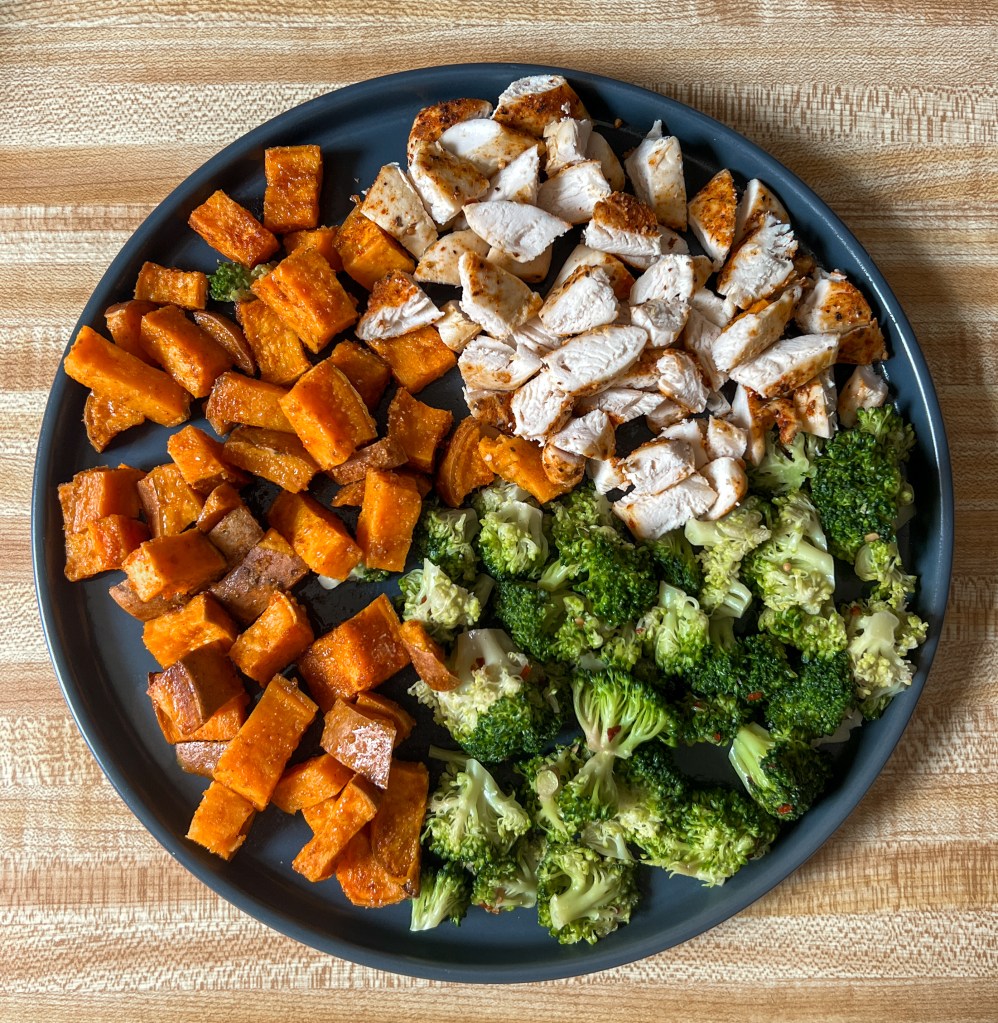

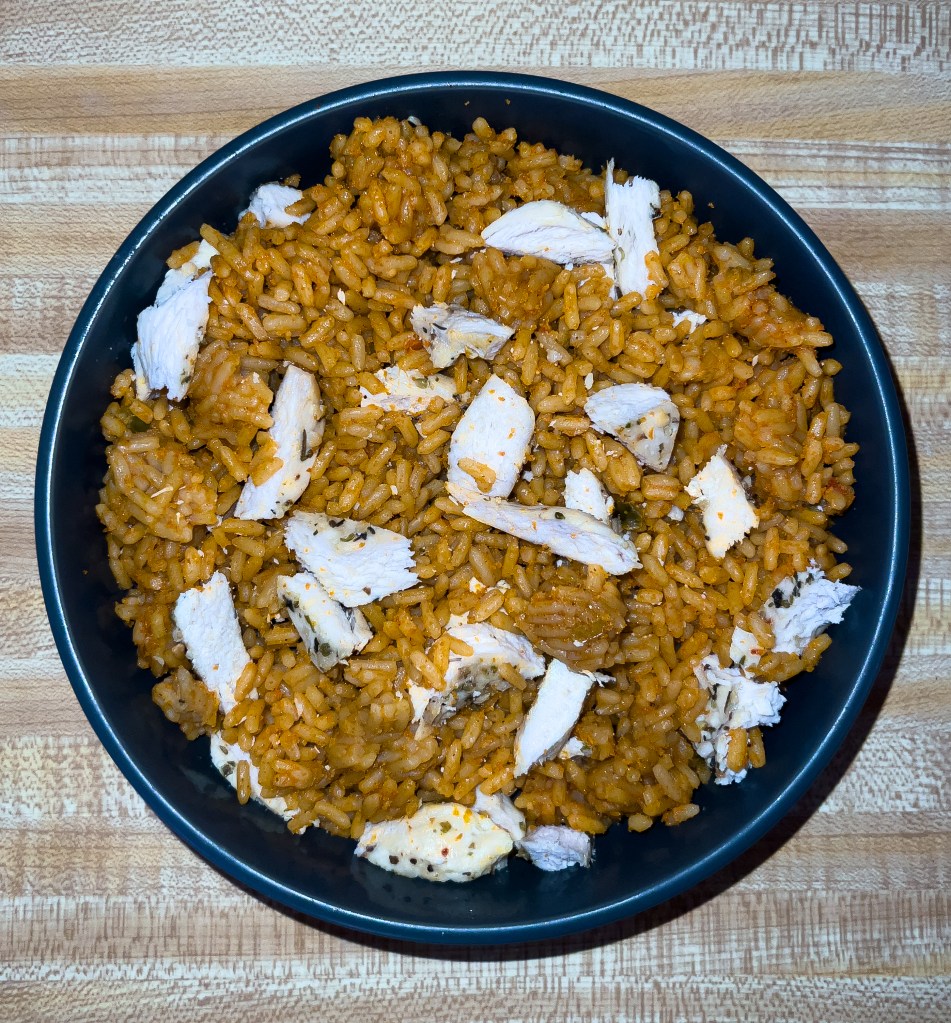
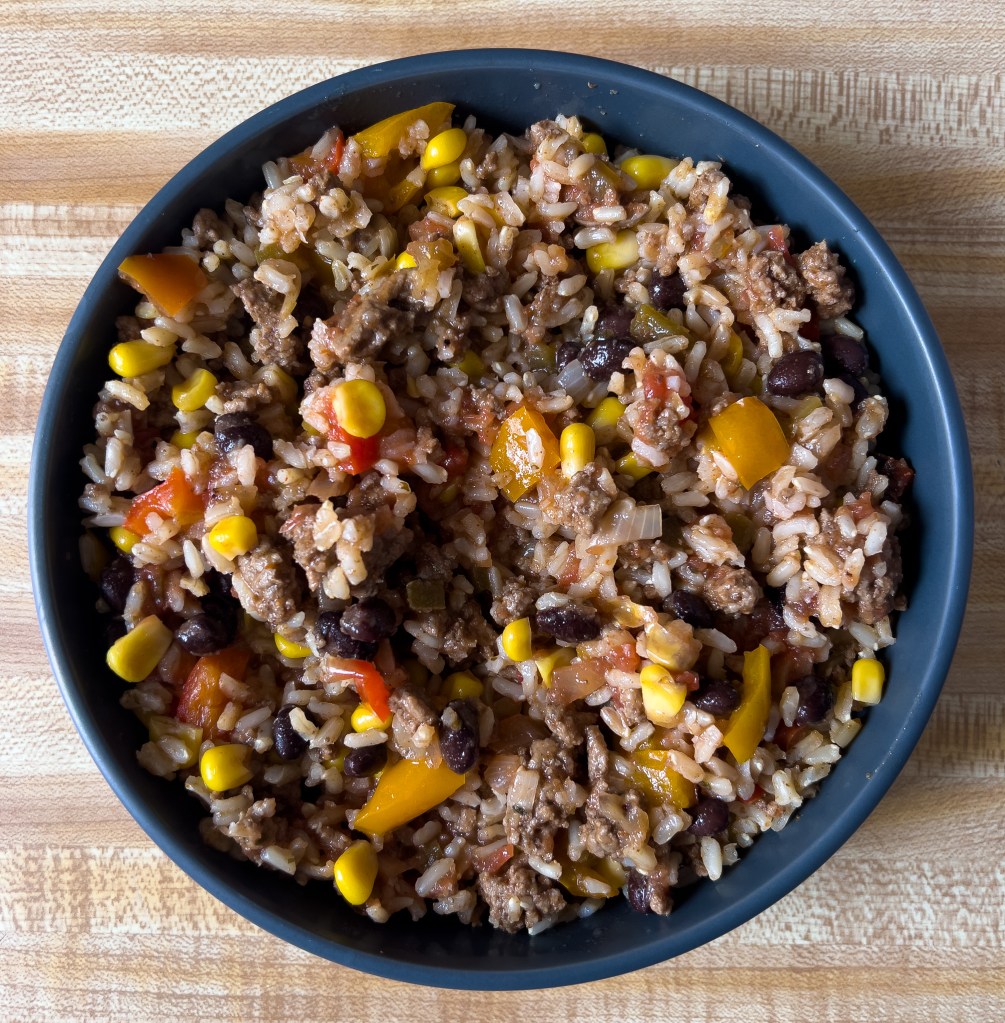
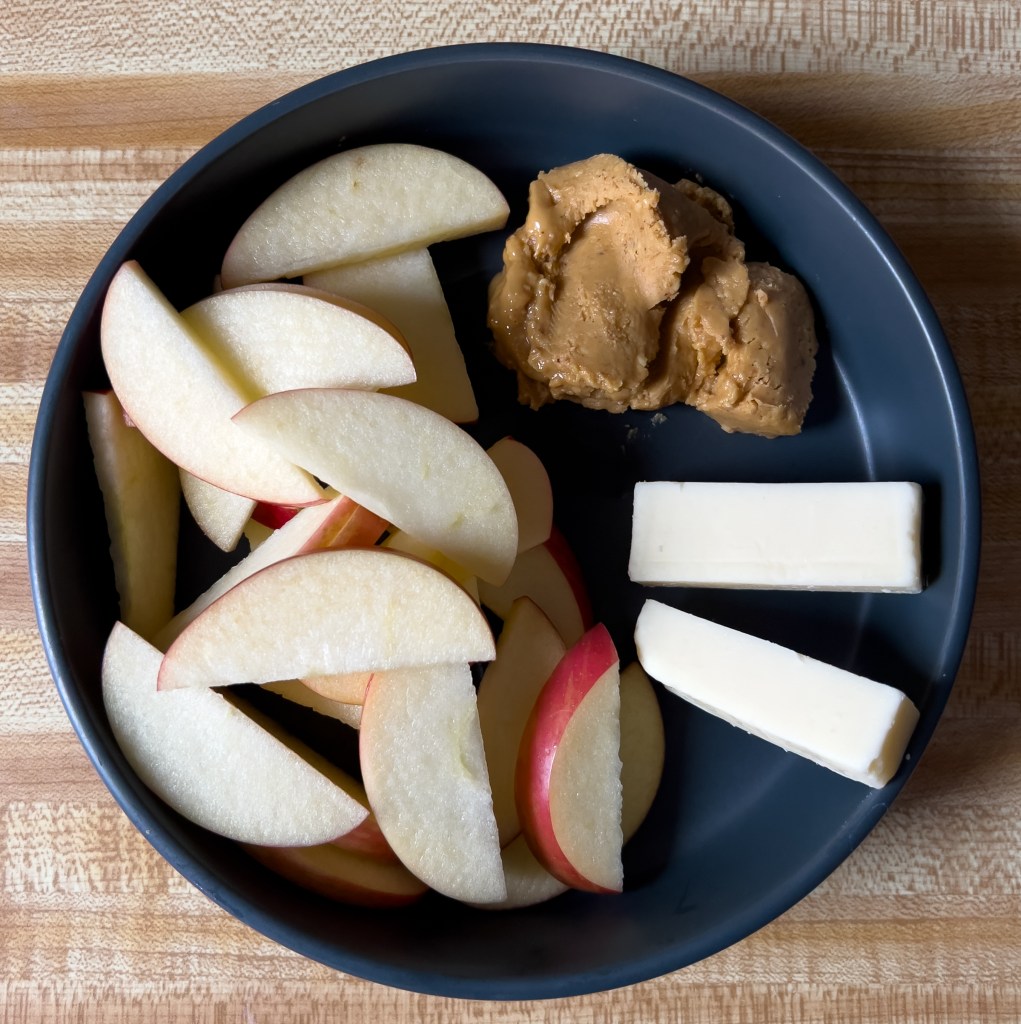
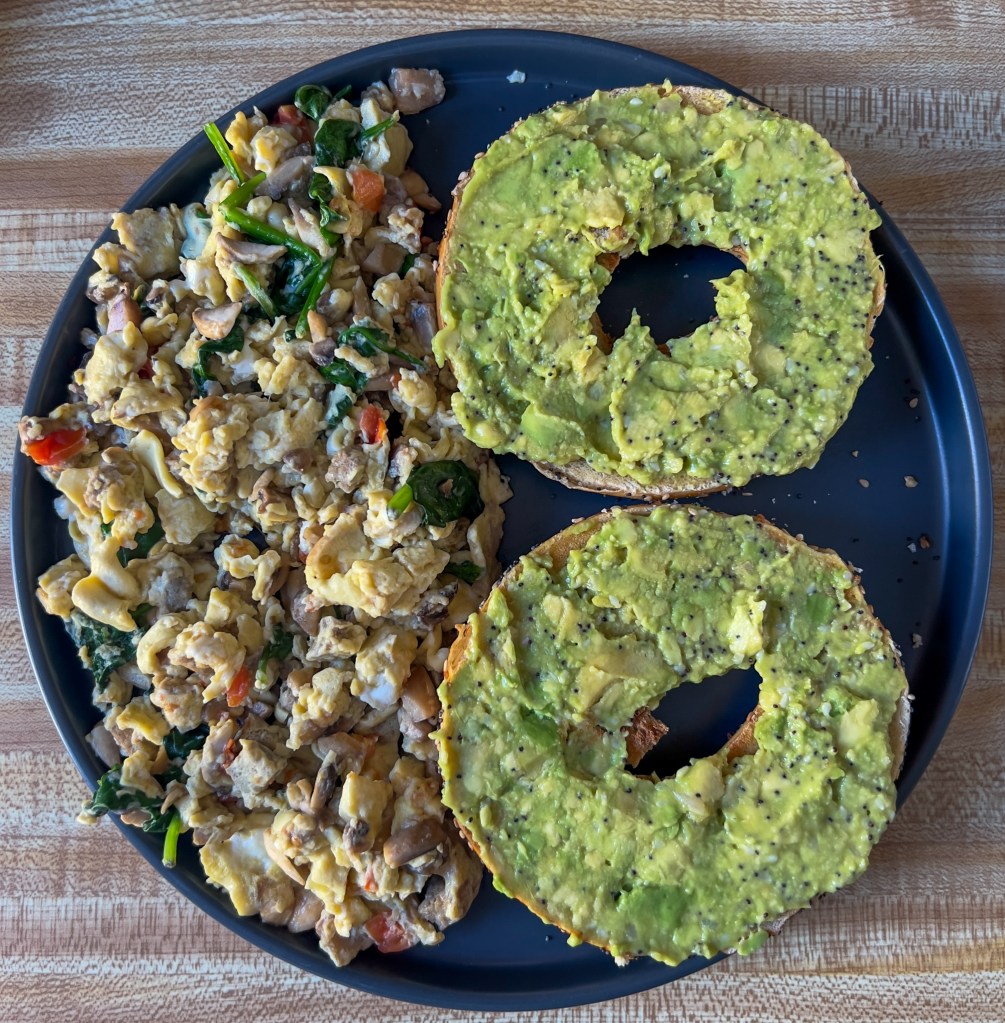
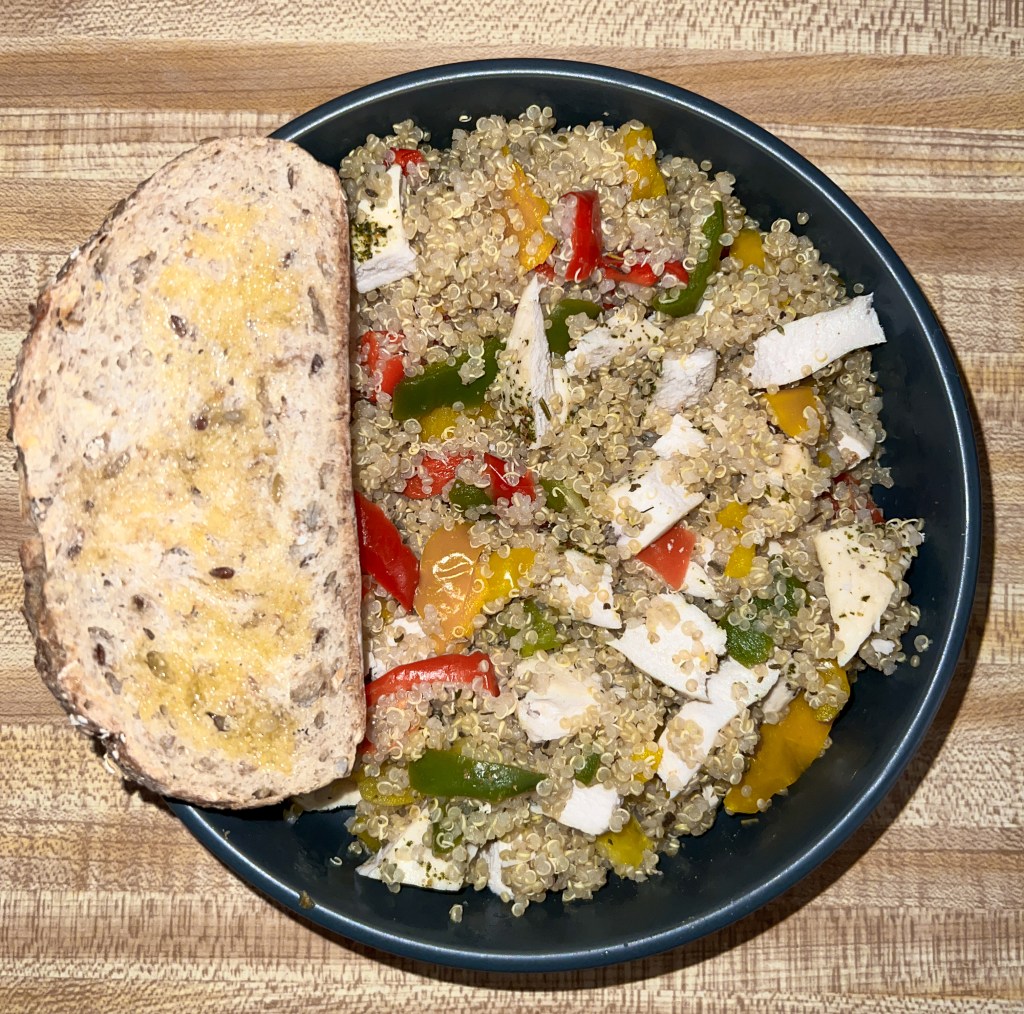
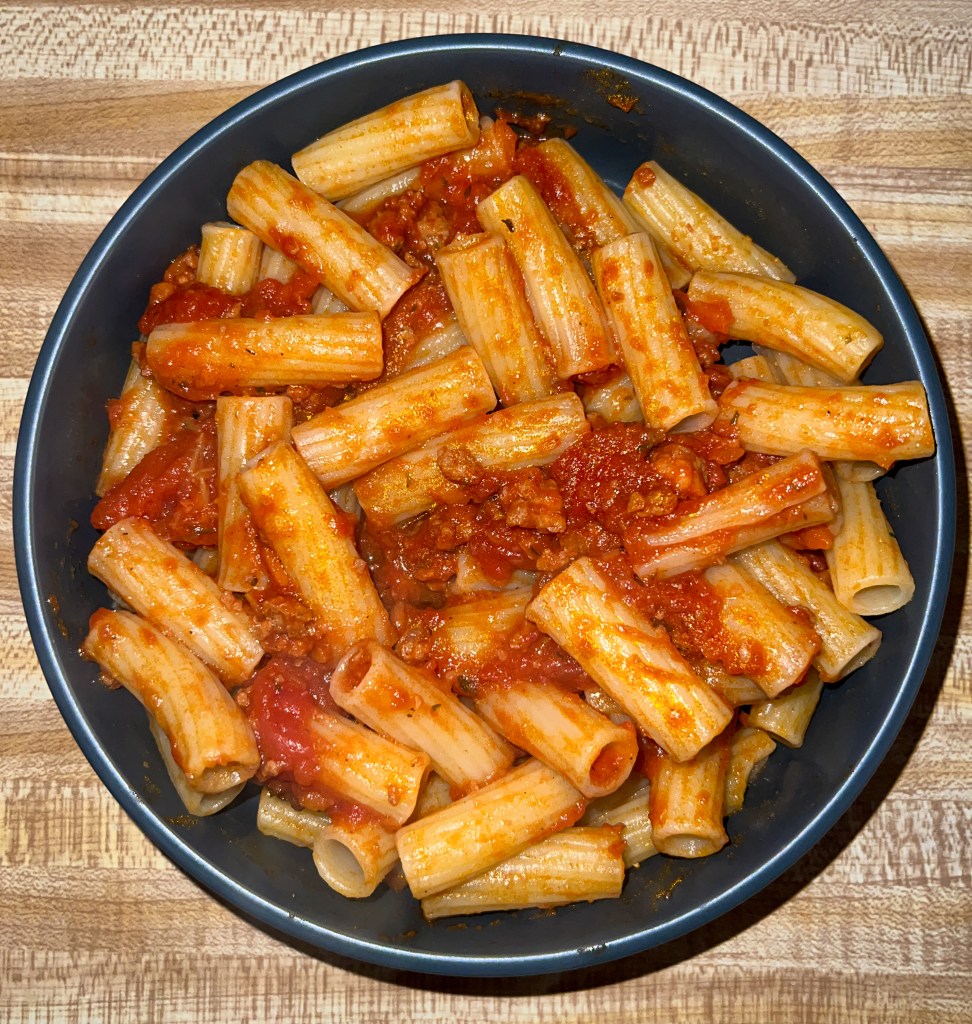
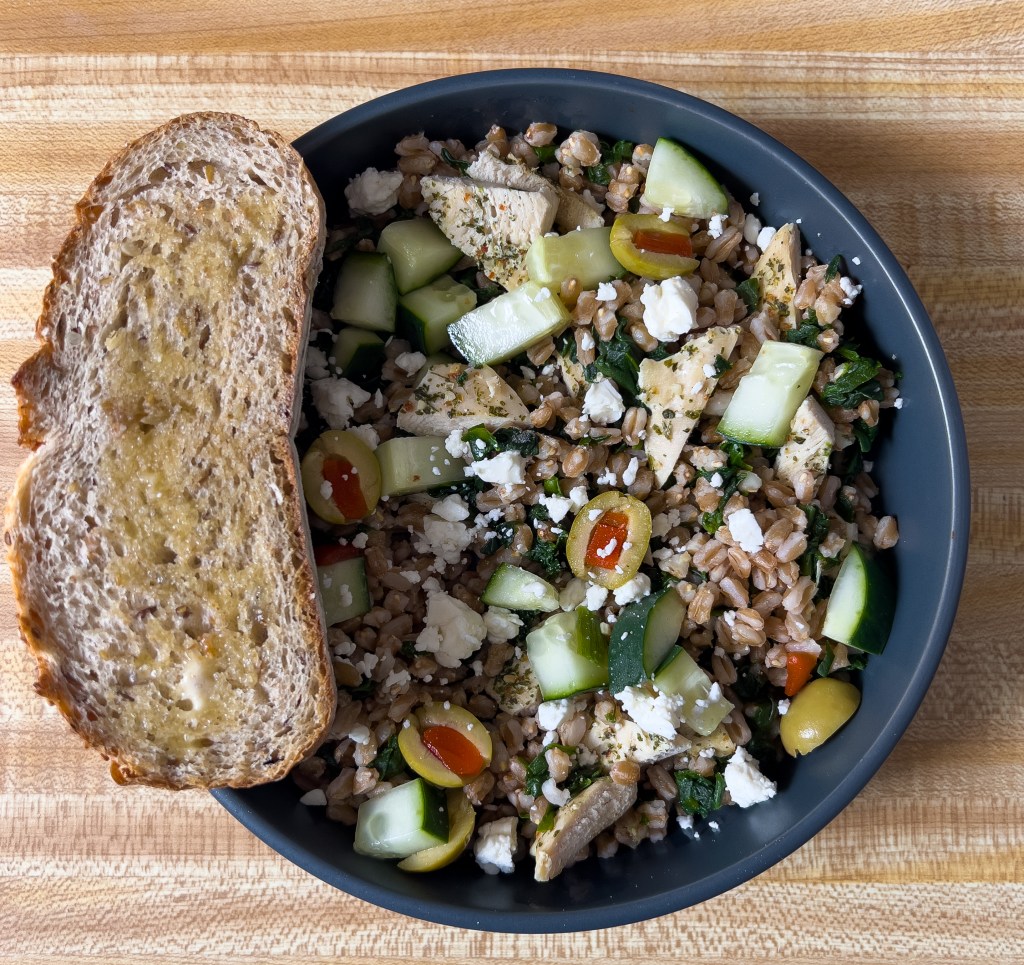
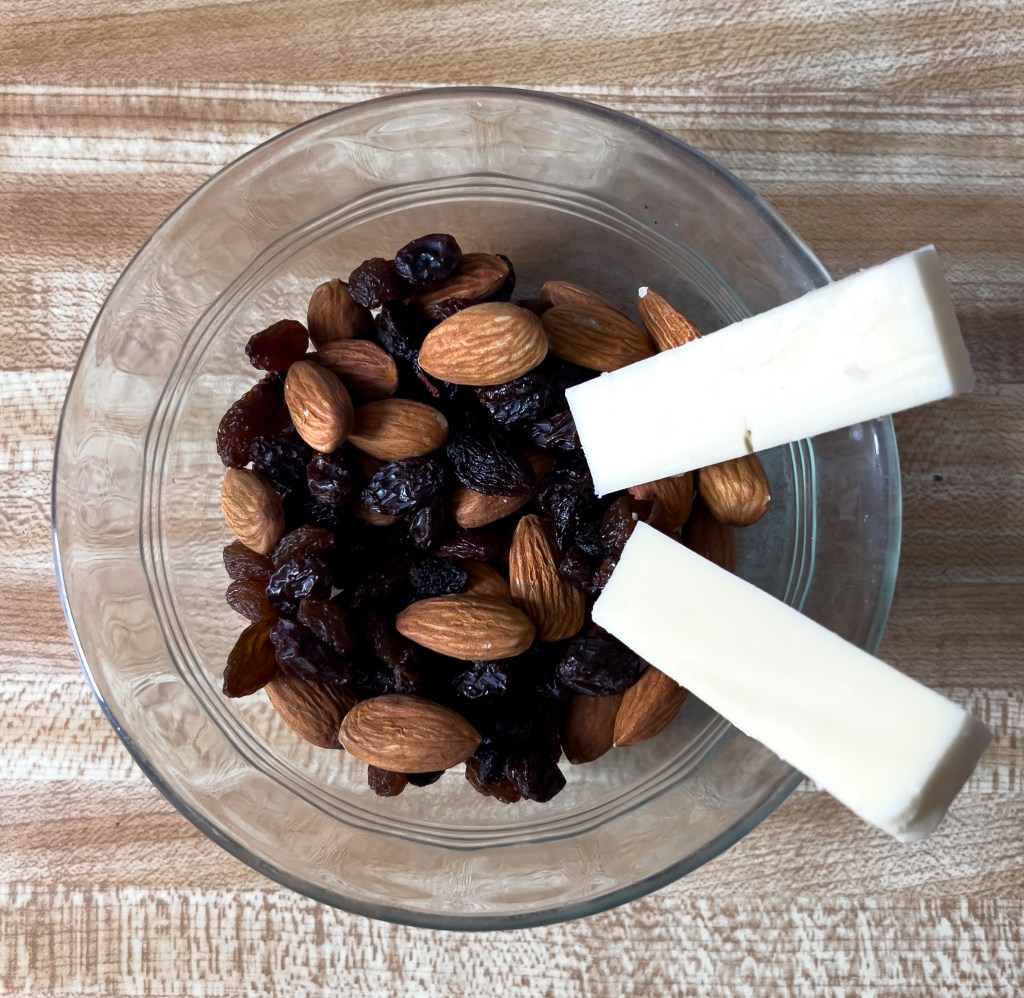
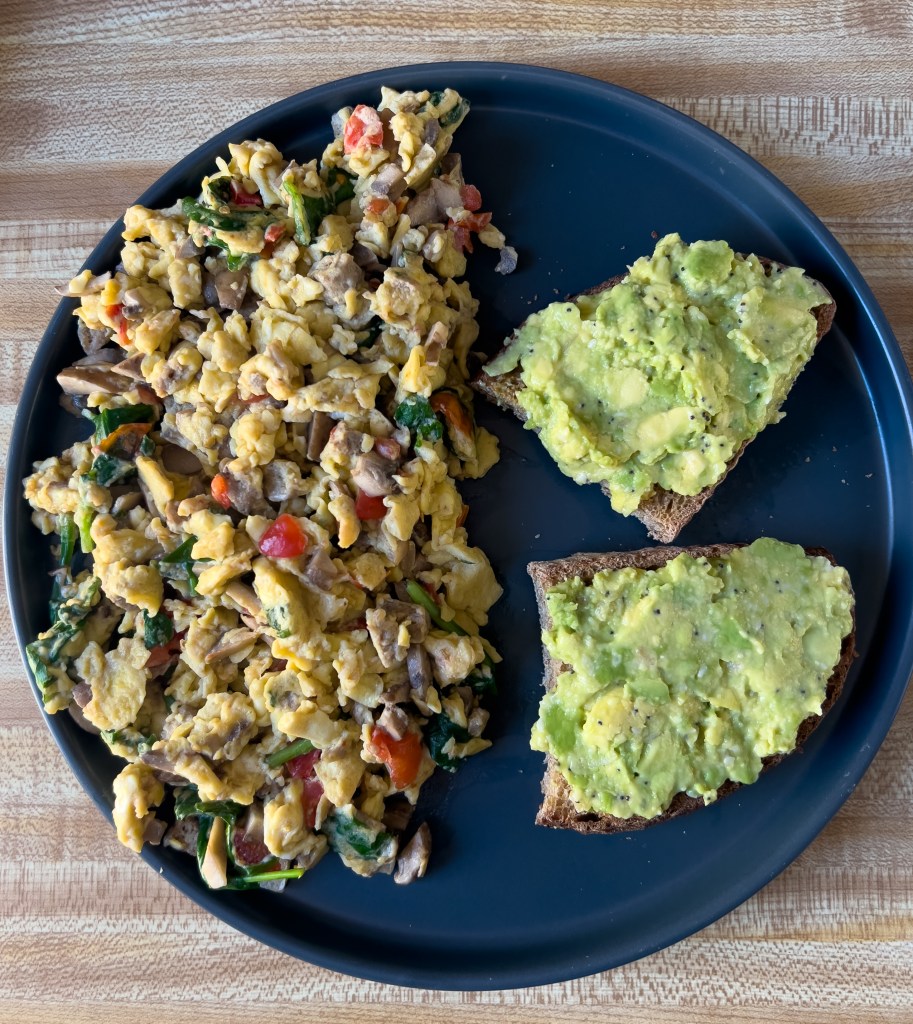
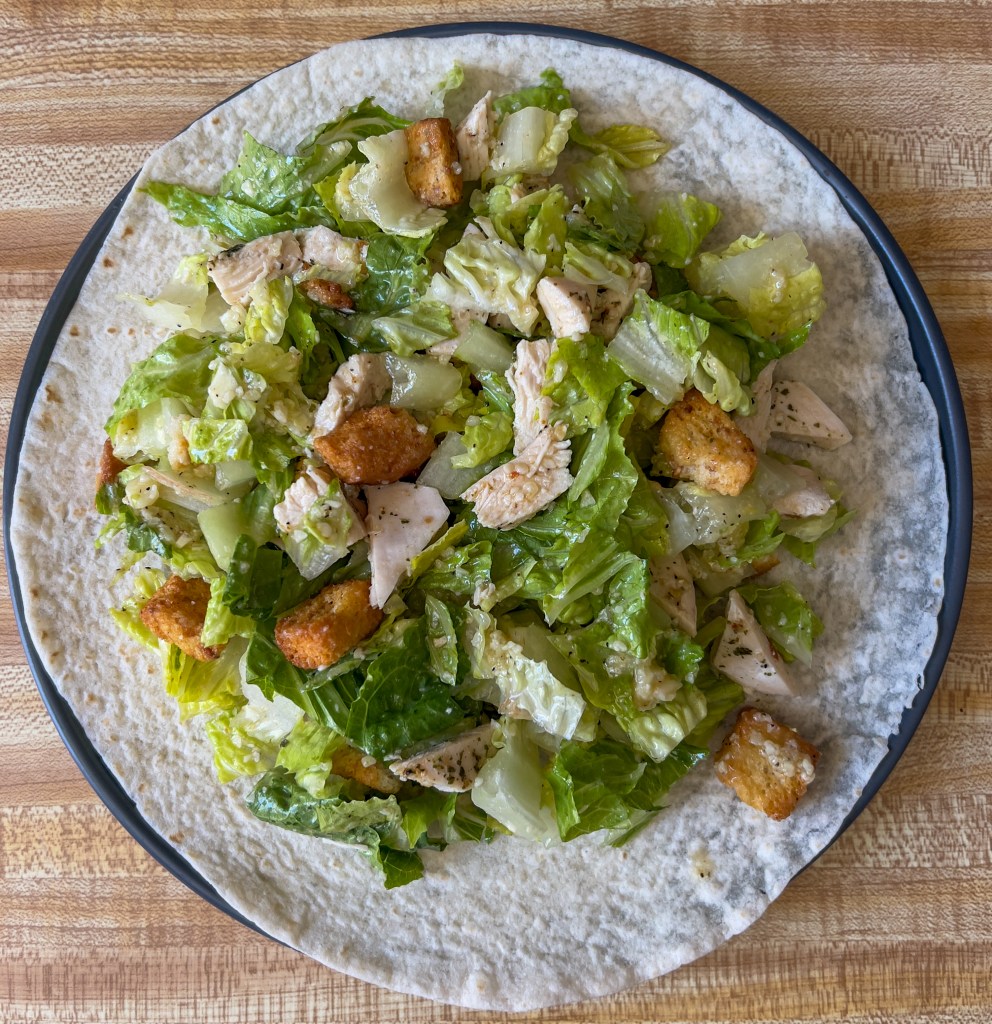
As I said earlier, I’m not an expert on nutrition. I keep it as simple as I can and eat in a way that supports my exercise habits, my recovery, and my future goals. If you want to aid your recovery, exercise more, and put muscle back on, you need to eat with those goals in mind. You can’t cheat that.
All that said, don’t be a robot either. Eat what you love now and again. Just make sure the food you know isn’t great for you is the exception you occasionally make, not the standard. Here’s a margherita pizza I ate almost entirely by myself a few weeks back. I’d also share a photo of the bag of Smartfood I had on Super Bowl Sunday, but I ate it before I got the chance.
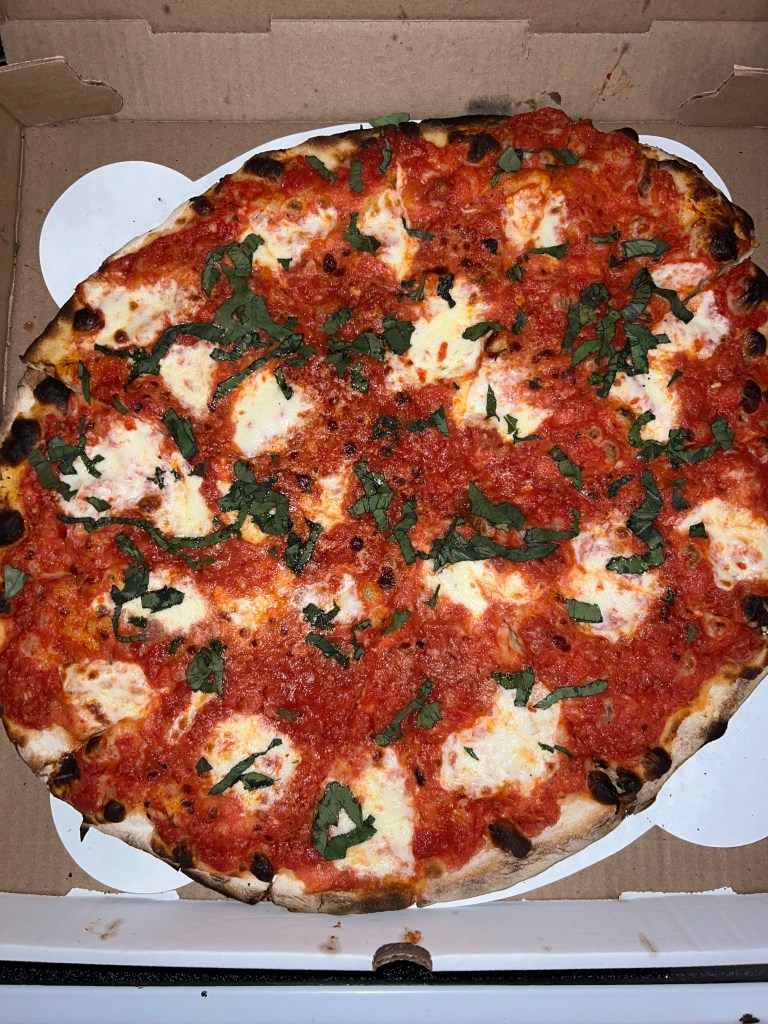
No need to strive for perfection, folks. Just consistency.
Looking Ahead
So far, we’ve covered just about everything I’ve been up to lately in the exercise and nutrition space. I put a lot of time, mental energy, and physical effort into these things each week because they matter to me. If that were my only reason for doing what I do, that would be enough.
Truthfully, though, I have big goals post-transplant. Goals that will require me to be physically ready and mentally prepared to execute them.
Let’s talk about what some of those goals are, and how I plan to get there.
General Exercise, Nutrition, & Health Plan
Starting with the high-level stuff, when it comes to walking and biking, I plan to keep them in the rotation just as I have so far. I don’t have any plans to fall back into only running, as I’ve already seen the benefits, both mentally and physically, of varying my cardio habits. Both allow me to be more active every day, and each support my other exercise routines really well.
Strength training can and will continue to be something I prioritize just as much as running. The exercises may change, or they may not, but I plan to progressively overload the weights to ensure I’m pushing my body enough to drive the kind of muscle gain I’m looking for. Combined with adequate protein intake, I’m excited to see what kind of progress I can make in the coming months.
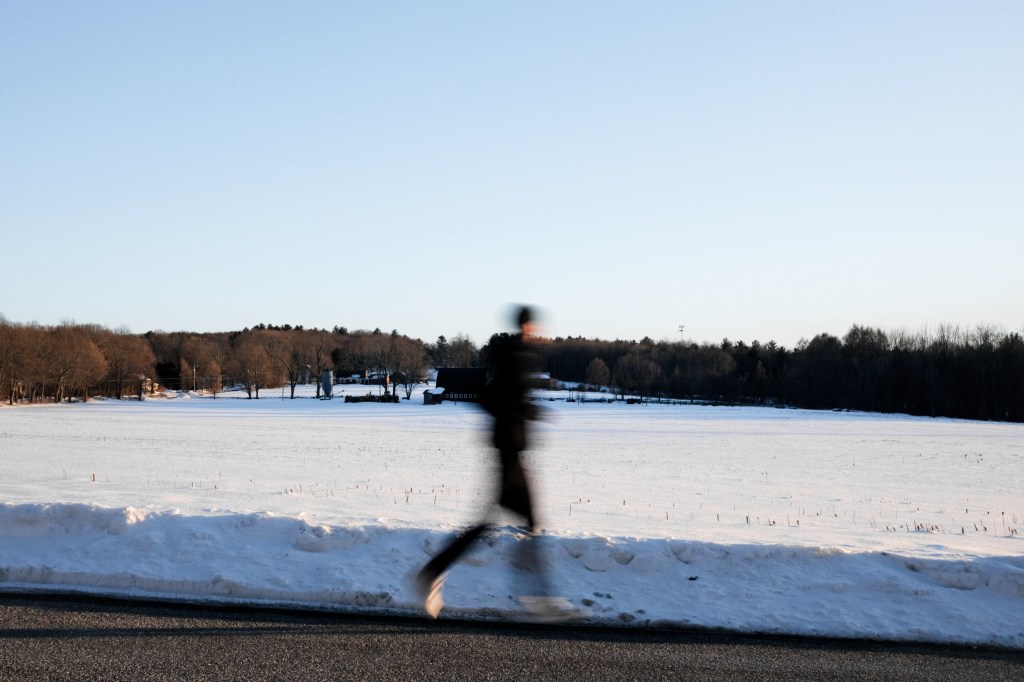
Nutrition-wise, I hope to continue being consistent with the whole-foods approach that has been working for me. As my training load increases, I imagine I’ll need to increase my overall food intake to keep up, but that’s a challenge I’m looking forward to taking on.
Something I didn’t touch on in depth in this post, but that is just as important as anything else I’ve discussed, is sleep. For the last couple of weeks, I’ve been waking up at the same time every day. This has helped my body settle into a routine and adjust to my training load, and it ensures that when it’s time to go to bed, my body actually lets me know. I get a consistent 7–8 hours each night, which is crucial for recovering from workouts and feeling rested for the next day.
Running
Diving into the fun stuff now, I’ve put a few races on my calendar for later this year. My care team recommended that I wait until around the one-year mark before really scheduling anything, just to be on the safe side. My recovery is going well, exceptionally well I think they would say, but that’s because of their guidance and the work I’ve been doing to make sure it stays that way.
As anxious as I am to get back to racing, I’m going to follow their lead. They’ve gotten me this far. No point in jumping track now.
With that in mind, I’m currently signed up for half marathons in September and October, with another one in November that I’ll be signing up for as soon as registration opens.
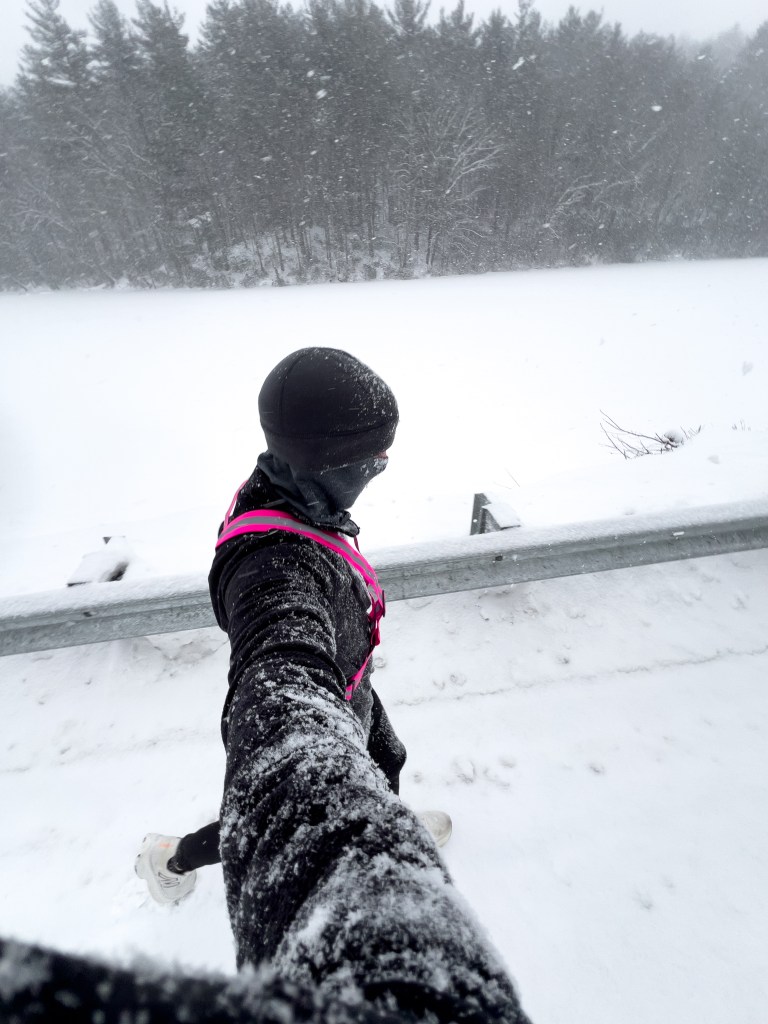
I also put my name in the non-guaranteed drawing for the NYC Marathon later this year. If by some miracle I get in, I may defer a year if possible to focus on building consistent mileage and muscle this season rather than forcing a marathon block this early in my recovery.
But we’ll see. Regardless, I plan to settle into the 20 to 30 mile per week range for the next couple of months. I’ve already managed to hit 20 plus these last two weeks, and it’s felt okay. Keeping mileage in this range should allow me to build fitness steadily and make the half marathons later this year very manageable.
As for what those runs actually look like, I’ll continue keeping most of my runs at an easy pace for the next couple of months. Cover the distance, keep the heart rate in check, and just lay the foundation. When spring rolls around, I’ll likely start to mix in a speed workout or two each week once I have more consistent access to my local track.
Mindset
Prior to transplant, I fully expected to spend this entire year in recovery mode. There’s still a good amount of truth to that, but if you had told me I’d already be managing the output I am now, I’m not sure I would have believed you.
Because of that, my mindset has shifted a bit. I’m no longer just aiming to get back to baseline this year. I’ll continue to stay consistent and increase my training load thoughtfully, but if my recovery keeps trending in this direction, I believe I can do more than simply return to where I was.
If my health allows for it, I plan to take it a step further.
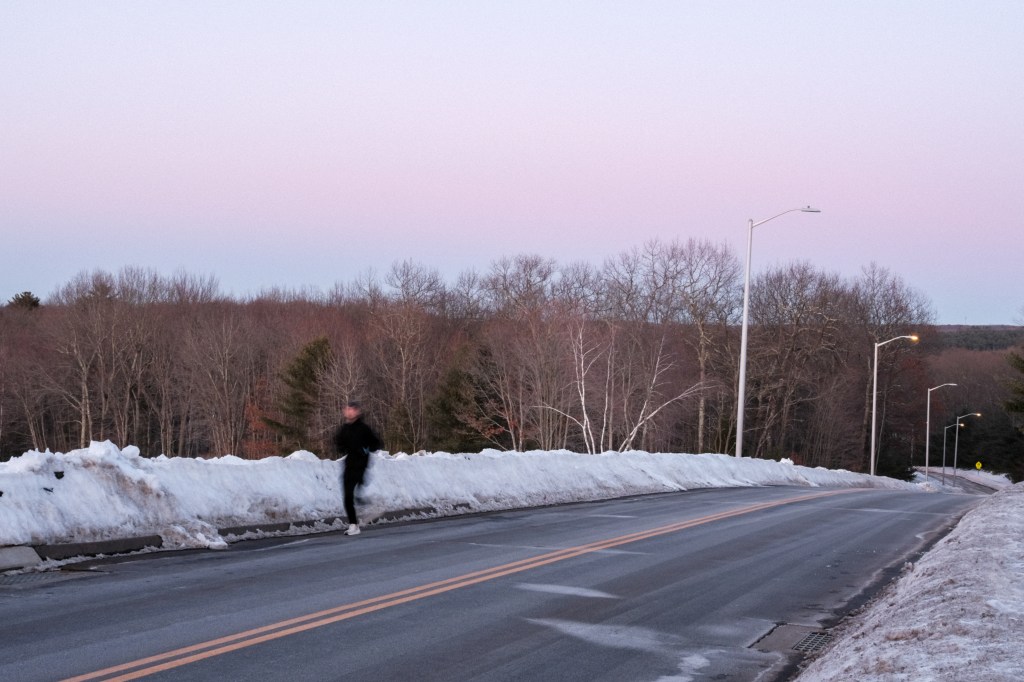
North Star
If you read my “Dear Boston” post, you’d know what my true long-term goal is. Essentially since the day I was diagnosed and began learning what I would need to do. One day, maybe sooner than I expected, I’d like to run the Boston Marathon for the Dana-Farber Marathon Challenge Team.
While that goal is still a long way from reality, I believe I can take meaningful steps toward it this year. The idea has motivated me immensely lately, and I imagine it will continue to do so until the day I am able to take that famous left on Boylston and cross the finish line.
You can’t tell, but I’m smiling just thinking about it. When I have more details to share about this immense goal, I promise you that you’ll be the first to know.
Closing Thoughts
Like everything post-transplant, progress in my exercise ability will likely be non-linear. I fully expect to have setbacks here and there, but I believe I am off to a really strong start this year, especially considering that my transplant was only six months ago.
While this was another longer post, I took my time with it and tried to fill it with the exact kind of content I would have loved to see heading into my own transplant.
Exercise is one of the cornerstones of my life, and I know I am not alone in feeling that way. My goal in sharing all of this is to paint a picture of what could be possible post-transplant, and to hopefully show what consistency, positive habits, and a little bit of motivation can do for your own recovery journey.
As always,
Talk soon,
Ethan
Links directly referenced in this article:
- https://www.healthline.com/health/active-recovery
- https://health.clevelandclinic.org/exercise-heart-rate-zones-explained
- https://www.strava.com/athletes/199166376
- https://www.physio-pedia.com/Compound_Exercises
- https://www.healthline.com/health/fitness-exercise/how-to-build-lean-muscle
- https://my.clevelandclinic.org/health/diseases/10255-graft-vs-host-disease-an-overview-in-bone-marrow-transplant
- https://www.drugs.com/hydrocortisone.html
- https://my.clevelandclinic.org/health/treatments/10418-immunosuppressants
- https://www.mayoclinic.org/drugs-supplements/tacrolimus-oral-route/description/drg-20068314
- https://www.verywellhealth.com/different-causes-of-immunosuppression-explained-4047405
- https://michaelpollan.com/
- https://michaelpollan.com/books/in-defense-of-food/
- https://lifestyle.sustainability-directory.com/term/nutritionism/
- https://www.healthline.com/health/progressive-overload
- https://www.hartfordmarathon.com/surftown-half-marathon-relay-5k/
- https://www.hartfordmarathon.com/eversource-hartford-marathon/
- https://www.baa.org/races/boston-half/
- https://www.nyrr.org/tcsnycmarathon
- https://www.baa.org/races/boston-marathon/
- https://danafarber.jimmyfund.org/site/TR?fr_id=2520&pg=entry
Links to all the exercise equipment I own:
- Strength Training/ Cardio Equipment
- Bike
- Adjustable Dumbbell Set
- Dip Station
- Pull-Up Bar
- Resistance Bands (pull-ups)
- Resistance Bands (fabric)
- Running Gear
- GPS Watch
- Heart Rate Monitor
- Shoe Sensor
- Running Vest
- Running Belt
- Reflective Vests
- Everyday Shoes (big fan of all versions of these)
- Race Shoes
 Long Way From Home
Leave a comment