
Welcome back. Today’s post will likely be a bit longer and more technical than the first, as I want to take the time to explain more about the genetic disorder I was diagnosed with. If you haven’t had a chance to read the first post, I would recommend doing that now. It’s a relatively quick read and it will provide a bit of context for who I am, where I’m currently at, and what lies ahead.
To briefly summarize though, I was diagnosed with a genetic disorder known as GATA2 deficiency about 6 months ago. In a couple of weeks, I will be receiving a stem cell transplant (SCT) at the Dana Farber Cancer Institute in Boston. I am choosing to document my experience as I believe it might help those who come after me who may be dealing with similar conditions.
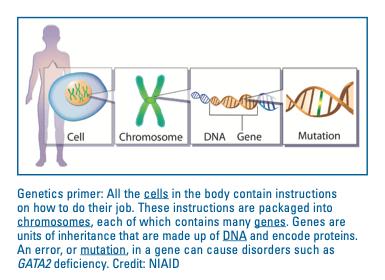
DISCLAIMER: Before I get into the specifics, I would like to reiterate once again that I am not a doctor. I’m a patient sharing what I’ve been told by my care team and what I’ve learned through my own research. If you have specific questions about your condition, please speak with your medical provider. GATA2 deficiency doesn’t follow a set path of progression, and it often varies widely from person to person. I will be linking the resources that I reference in this post at the end, along with any additional resources that have helped me better understand my specific condition.
GATA2 Deficiency?
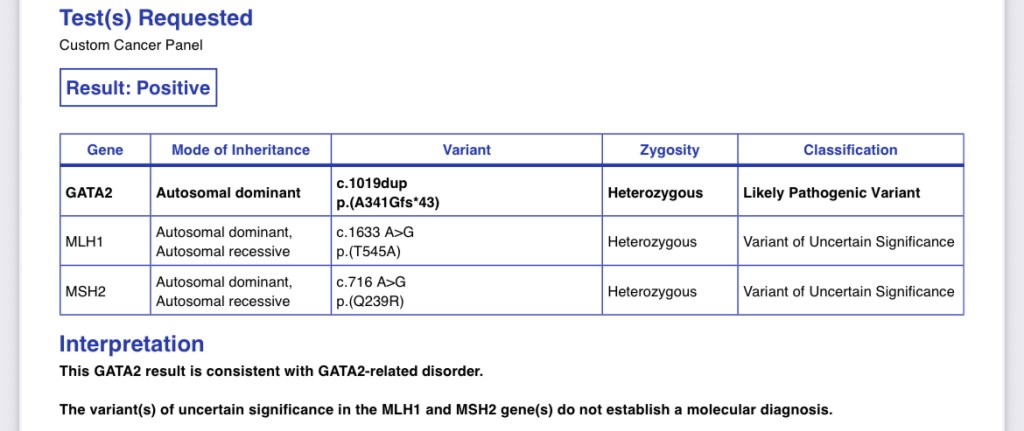
I think the best place to start is with a technical breakdown of what GATA2 deficiency is. As defined by the National Institute of Allergy & Infectious Diseases (NIAID): “GATA2 deficiency is a rare disorder of the immune system with wide-ranging effects. First identified in 2011, the disorder is characterized by immunodeficiency, myelodysplastic syndrome (a condition characterized by ineffective blood cell production), lung disease, and problems of the vascular/lymphatic system.”
In plain English, GATA2 deficiency is a very rare genetic disorder that was first identified in 2011. While it can present itself differently from person to person, it typically affects three main areas: the bone marrow, the immune system, and the lungs. It’s caused by mutations in the GATA2 gene, which plays a critical role in the development of blood and immune cells.
Bone Marrow Dysfunction
I am going to focus mainly on my understanding of the bone marrow issues, since that’s where many of the complications tend to begin and where my case is currently focused. One of the earliest signs can be a group of conditions called cytopenias. ‘Cytopenia’ is basically a medical term for having lower-than-normal blood counts. There are several types, but in the case of GATA2 deficiency, you’re likely to run into a few of the following:
- Anemia: Low red blood cell count
- Leukopenia: Low white blood cell count
- Thrombocytopenia: Low platelet count
- Neutropenia: Low neutrophil count
- Pancytopenia: Low counts in all 3 cell lines (red, white, & platelet)
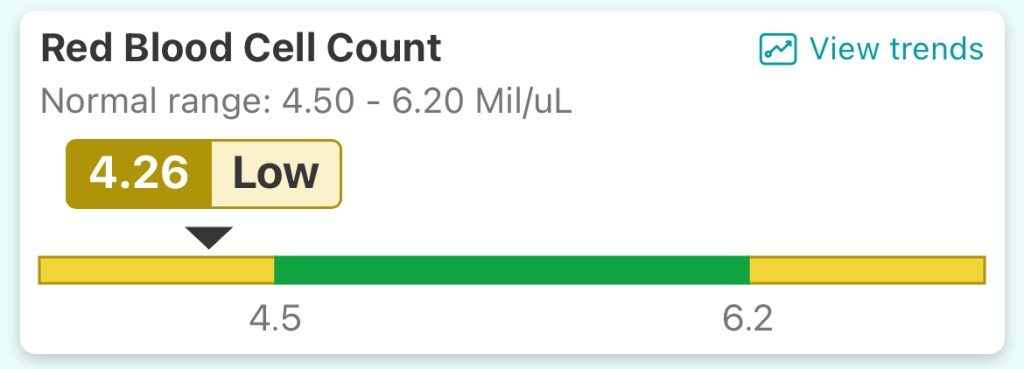
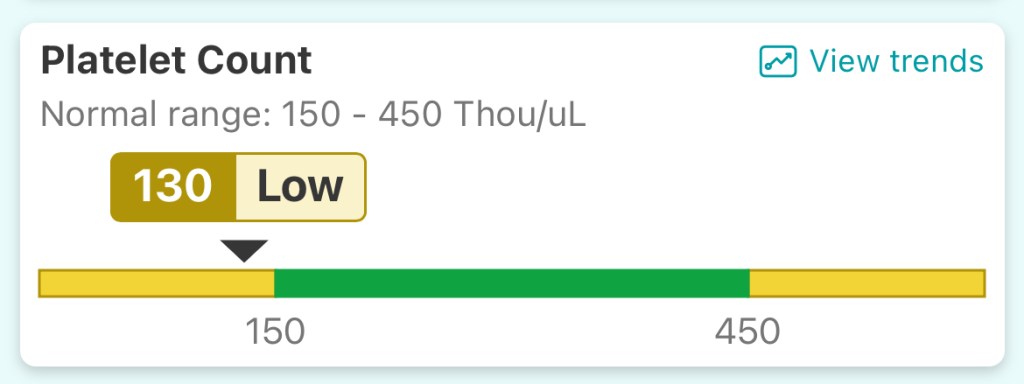
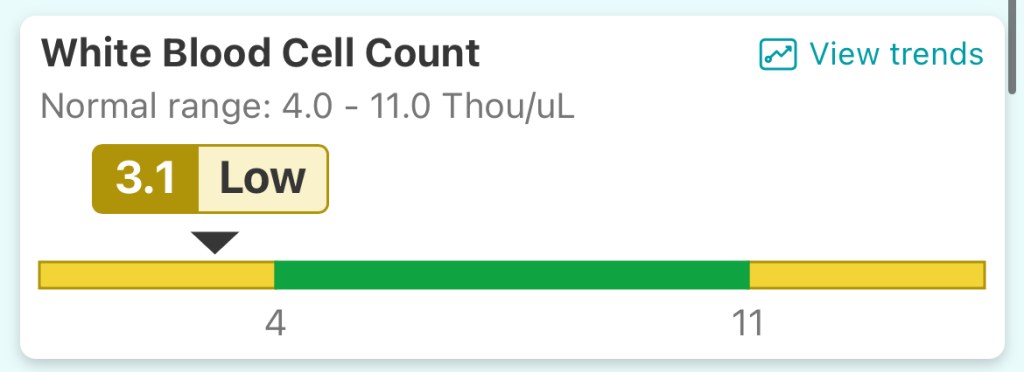
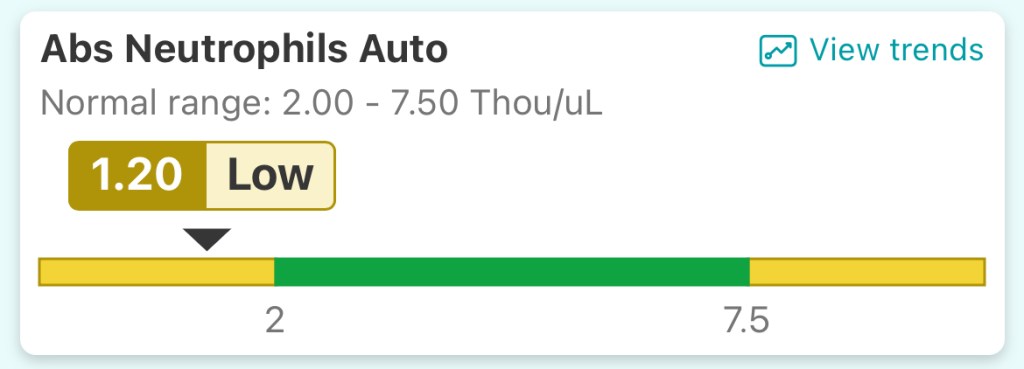
I would imagine, though I haven’t looked for data to confirm this, that most cases of GATA2 deficiency, and many other blood disorders, are first hinted at during the initial appearance of abnormal blood work. That’s how my own case was eventually diagnosed, but I’ll share more about that process in the next post.
At its root, this disorder begins in the bone marrow and often progresses from there, which is why early diagnosis (as with most conditions) is so important. If you take nothing else from this blog, let it be this: get your bloodwork done every year. It’s not fun but it could be the difference between catching something early and missing it entirely.
Unfortunately, low cell counts aren’t the only issue. GATA2 deficiency can also affect the cellularity of your bone marrow, as well as how your cells look and function. No point in sugarcoating it: it can, and often does, lead to cancer.
One of the more common complications for patients with GATA2 deficiency is a condition called Myelodysplastic Syndrome (MDS), which the American Cancer Society defines as: “Conditions that can occur when the blood-forming cells in the bone marrow become abnormal, resulting in the marrow not making enough healthy new blood cells. This leads to low levels of one or more types of blood cells. MDS is considered a type of cancer.”
MDS is most commonly found in older adults, as it’s closely linked to the health and function of bone marrow. Naturally, as we age, the cellularity of our bone marrow, the part responsible for producing blood, gradually decreases. A general rule of thumb: you can estimate your expected cellularity by subtracting your age from 100. So, if you’re healthy and have no underlying conditions, that number is roughly where your bone marrow cellularity should fall. In my case, my cellularity is currently sitting at around 10–15%. At my age, it should be closer to 70–80%.
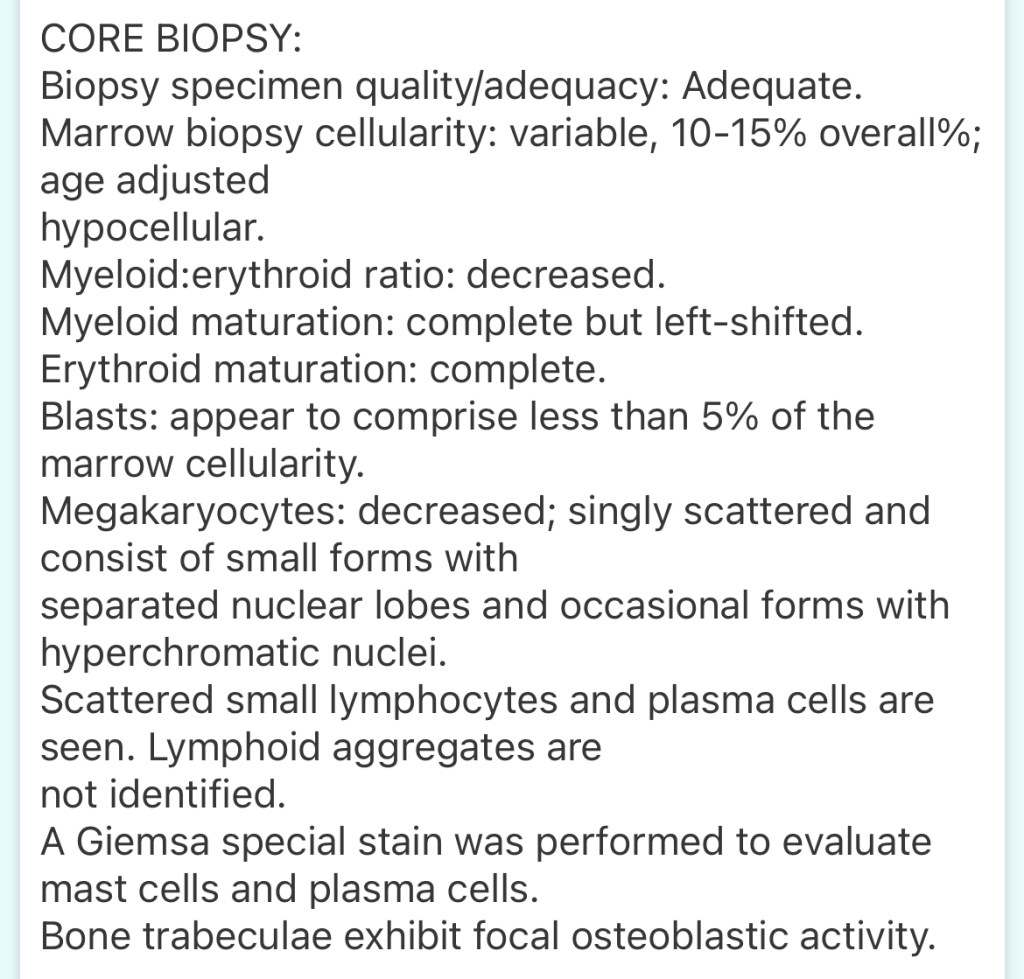
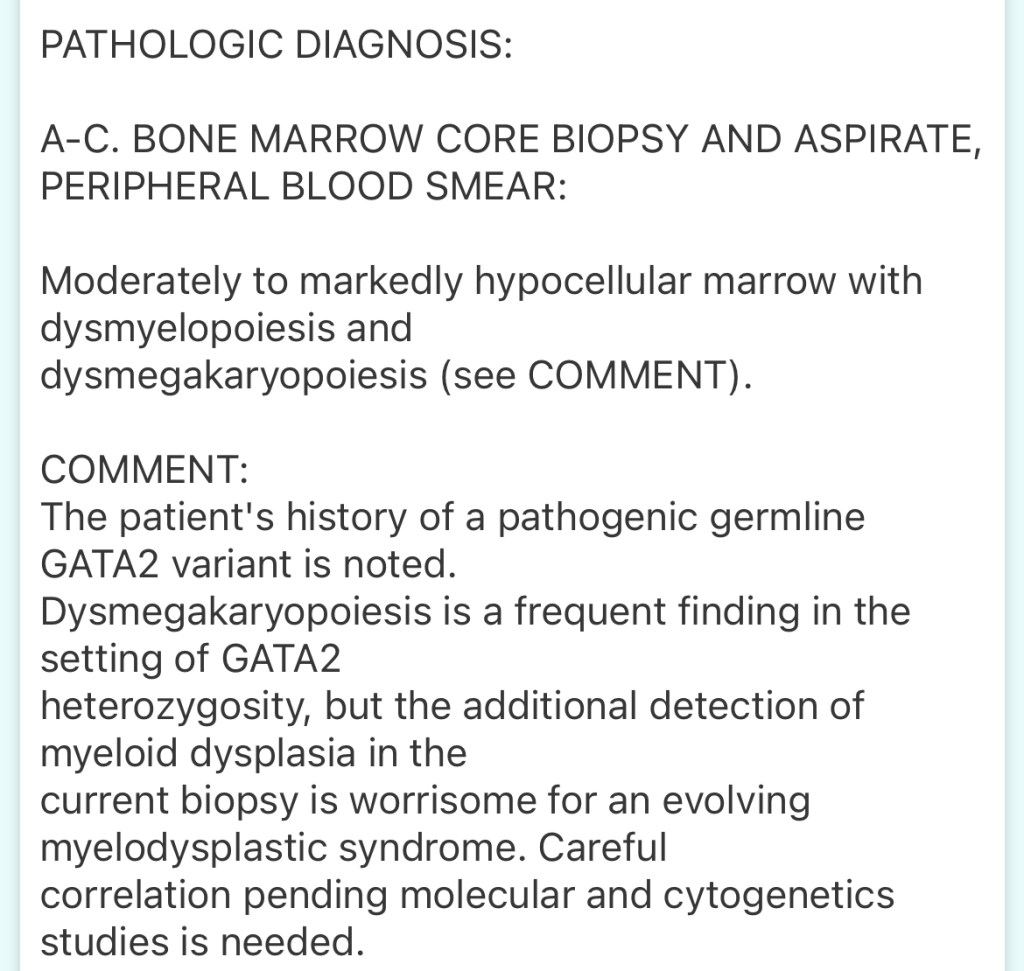
Symptoms of MDS can vary from person to person, but one of the main concerns is progression. According to the American Cancer Society, about one in three MDS patients will eventually develop Acute Myeloid Leukemia (AML).
I am sharing this because I am currently on the path towards MDS and actually have a second genetic mutation (STAG2) that all but confirms that should I develop MDS, it likely will be a more aggressive form. I am not quite at MDS yet thankfully, but the genetic condition(s) that I have is an example of a potential factor that could affect how your marrow, and in turn, your blood cells, function.
As I mentioned earlier, GATA2 deficiency can have an impact on a few different areas of your body, but most of the complications stem from your bone marrow which is why I chose to mainly focus this blog post on that area. I will be linking the articles that I referenced as well as any other articles that I found that dive deeper into the specifics of everything. I recommend reading through some of them if you are looking for more details about the science behind everything. They were written by people who are, without question, far more qualified than I am to explain the medical side of all this.
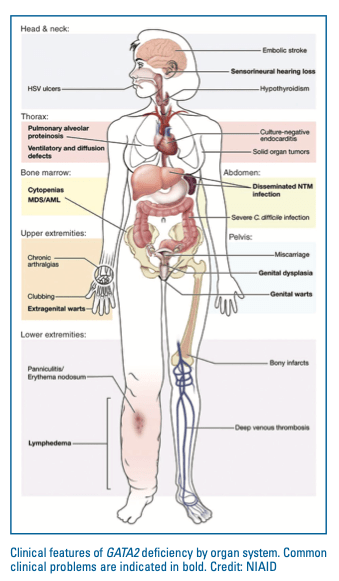
Understanding Rarity
At this point in the article, you may be wondering: how unlucky does one have to be to end up with a genetic disorder like this? Fair question. The truth is, it’s hard to say. There isn’t a ton of concrete data out there. The medical community is still learning about GATA2 deficiency: how common it is, how it works, and how best to monitor and treat those diagnosed.
What we do know is that it’s rare. Very rare. One-in-a-million rare, you could say. I always hoped my one-in-a-million story would involve winning the lottery or maybe running into Margot Robbie at my local coffee shop. But hey, we don’t always get what we want.
As it currently stands, the path forward for most GATA2 deficient patients will result in needing a stem cell transplant (SCT) at some point in their lives. That’s not always the case, but let’s just say that the odds are not great for avoiding it. It’s important to be aware of the very real possibility that if we share this diagnosis, you may need to undergo the procedure at some point.
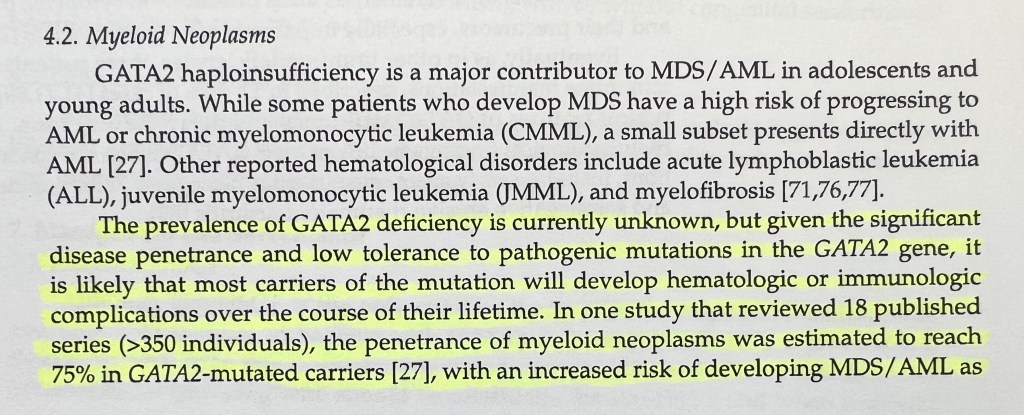
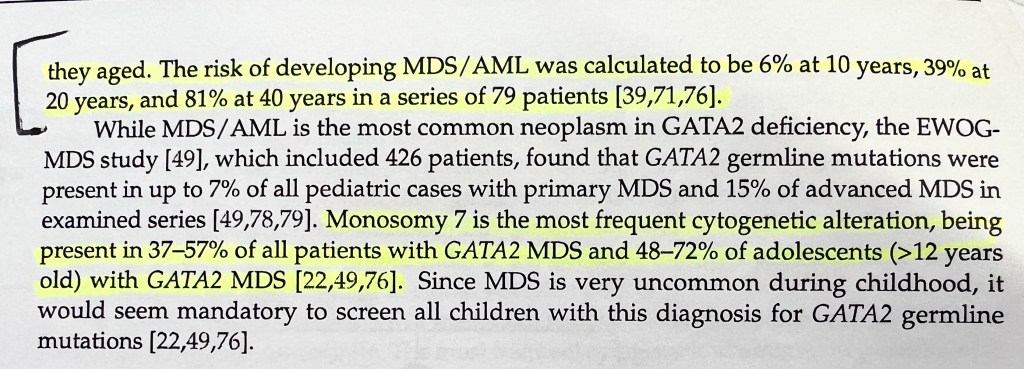
That being said, GATA2 deficiency is so rare, and because there’s still no universal treatment roadmap, your timeline may look very different from mine. As I mentioned earlier, the sooner you’re diagnosed, the better the odds are that your medical team can develop a plan of action. That might mean a more cautious, ‘let’s monitor this for now’ approach, or if things have progressed, a conversation about transplant.
Closing Thoughts
So there we are. Hopefully you now have a CliffNotes-style understanding of GATA2 deficiency and how it can affect the body. No quiz, I promise. In my next post, likely going up later this week, I’ll dive into how I was diagnosed and what that path has looked like so far. I think it’ll help paint a clearer picture of my specific experience and how I ended up here.
Before I go, just to reiterate: I’m not a doctor. If you have specific questions about your condition, please speak with your medical team. This post is simply a summary of my own understanding, which surely has its flaws. The only part I can confidently stand by without running it past a specialist first is that I genuinely do wish Margot Robbie would show up at my local coffee shop.
With that out of the way, if you have questions, thoughts, or just want to say hello, don’t hesitate to reach out. I’d love to hear from you.
Talk Soon,
– Ethan
Resources
External links directly referenced in this article (quotes & screenshots):
- GATA2 Factsheet
- https://www.niaid.nih.gov/sites/default/files/GATA2-Factsheet.pdf
- Super helpful quick summary.
- https://www.niaid.nih.gov/sites/default/files/GATA2-Factsheet.pdf
- Myelodysplastic Syndrome (MDS)
- The Clinical Spectrum, Diagnosis, and Management of GATA2 Deficiency
- https://pubmed.ncbi.nlm.nih.gov/36900380/
- A great place to start. This was the first article that was shared with me by my geneticist after I was diagnosed. The highlighted notes I shared are from this article.
- https://pubmed.ncbi.nlm.nih.gov/36900380/
Additional links that I found useful (GATA2 specific):
- The Spectrum of GATA2 Deficiency Syndrome
- GATA2 Deficiency
- The Different Faces of GATA2 Deficiency: Implications for Therapy and Surveillance
- GATA2 Deficiency: Early Identification for Improved Clinical Outcomes
- https://pmc.ncbi.nlm.nih.gov/articles/PMC8549740/
- A few great points on early identification.
- https://pmc.ncbi.nlm.nih.gov/articles/PMC8549740/
- Natural History of GATA2 Deficiency in a Survey of 79 French and Belgian Patients
Additional links that I found useful (Misc):
- Cytopenia
- Transplant Data Reports
- https://cibmtr.org/CIBMTR/Resources/Summary-Slides-Reports
- Data from transplant centers, this one was very helpful in understanding the odds/success rates for my treatment plan. Scary, but necessary to look at.
- https://cibmtr.org/CIBMTR/Resources/Summary-Slides-Reports
- Genetic Testing
- Genetic Disorders


Leave a Reply