Welcome back. It’s hard to believe this is already the tenth “field note” that I’ll be sharing here.
Due to the slightly longer gap between this update and the last, there’s a decent amount to catch up on. This will be a beefier post. Most, if not all of it, is good news.
There will also be a bonus section toward the end of this update, as I believe the topic we’ll be covering deserves its own dedicated space.
With that said, let’s get started.
Disclaimer: Every stem cell transplant experience is different. This is mine.
Medical
My previous update left you all with a few medical cliffhangers. To recap, I was still awaiting results from my first post-transplant biopsy, I had been referred to a urologist to look into a persistent post-transplant issue, and lastly, we had just begun tapering the main immunosuppressant that I had been on the past few months, tacrolimus.
Thankfully, we will be able to close the loop on most of these in today’s update. Because there is a lot to cover, I’ll be breaking this section into sub sections to make it easier to follow along.
Blood Counts
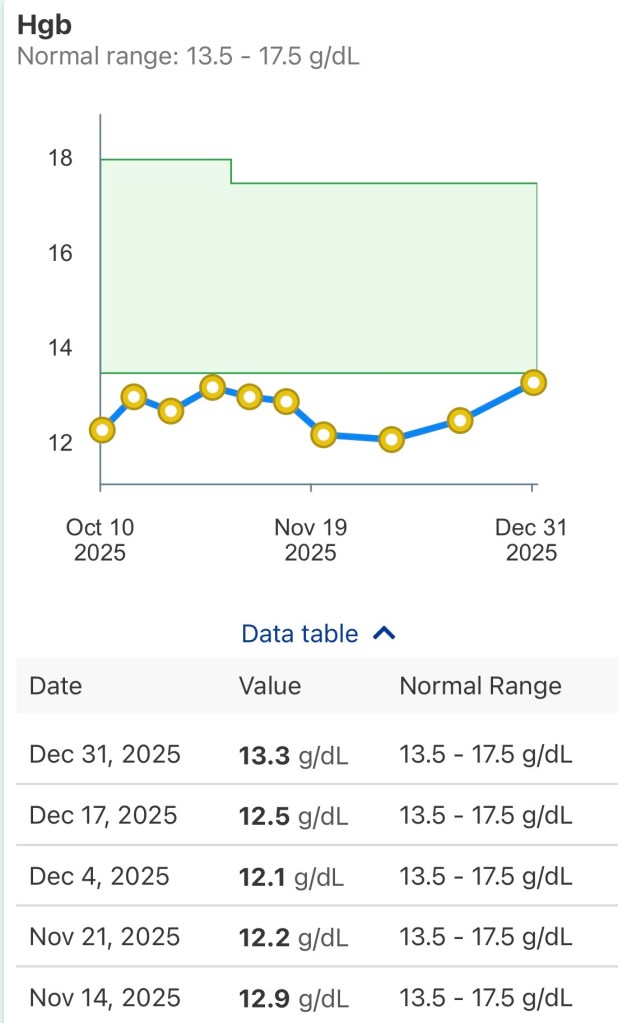
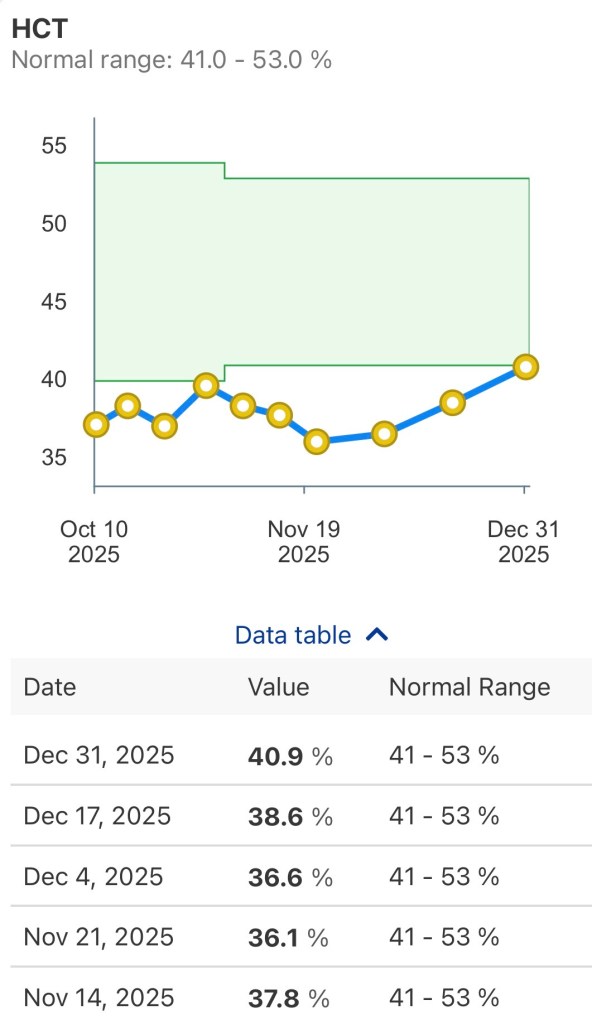
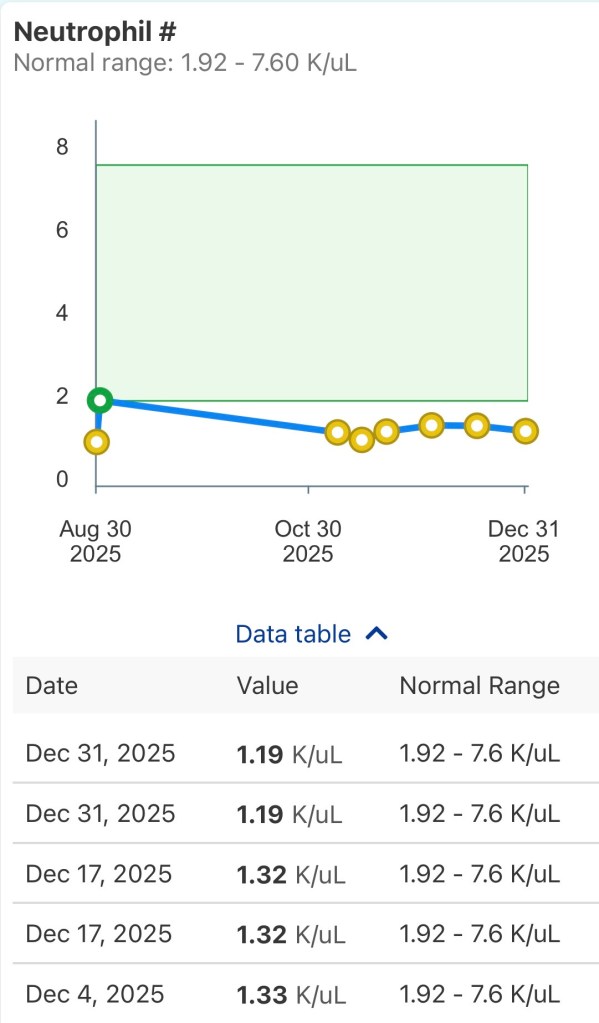
I’m going to ease us in with my most recent blood count update. Pictured below is where my three main cell lines stand as of day +139, which is when my most recent draw was taken.
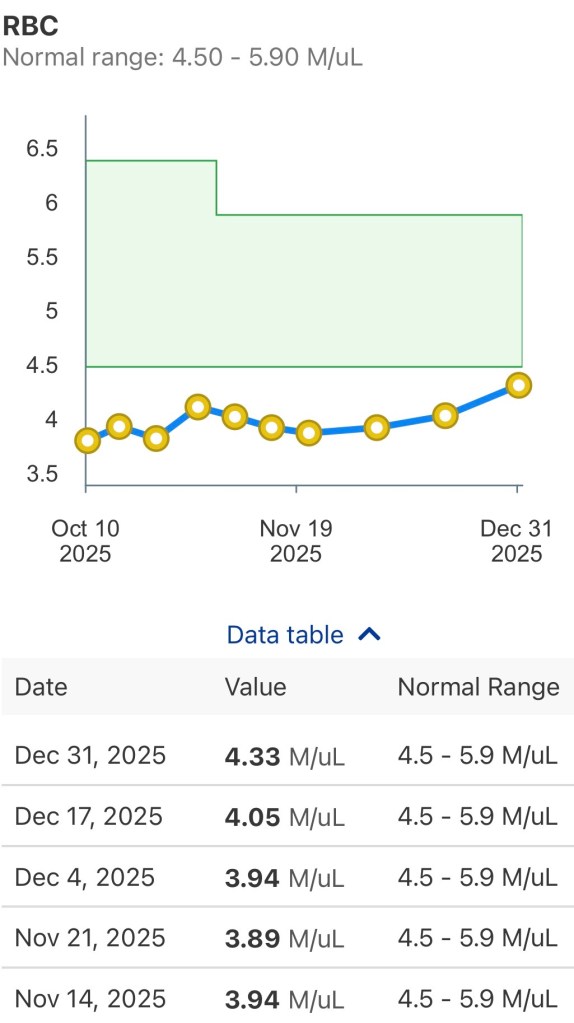
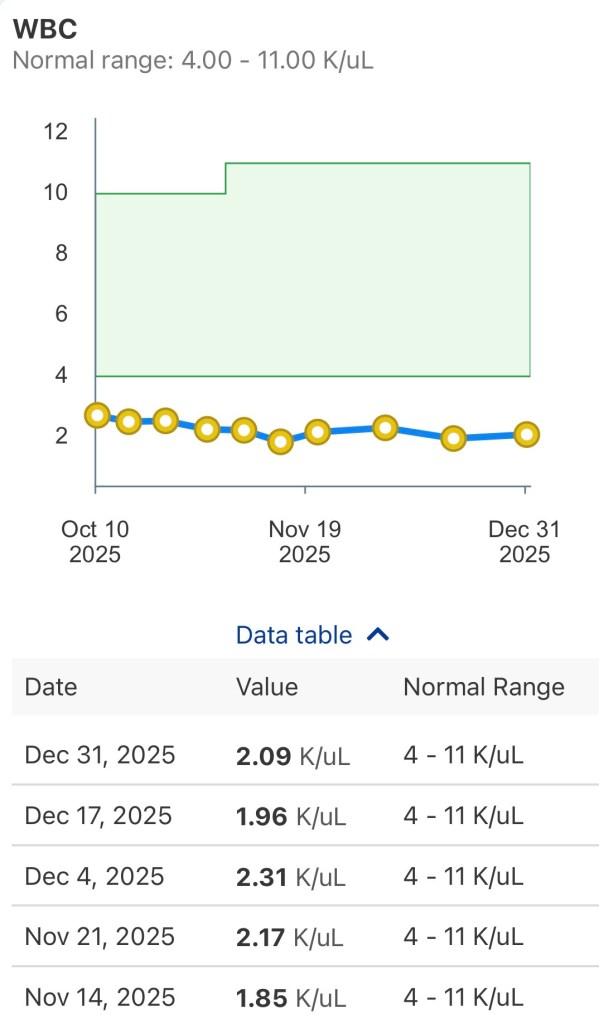
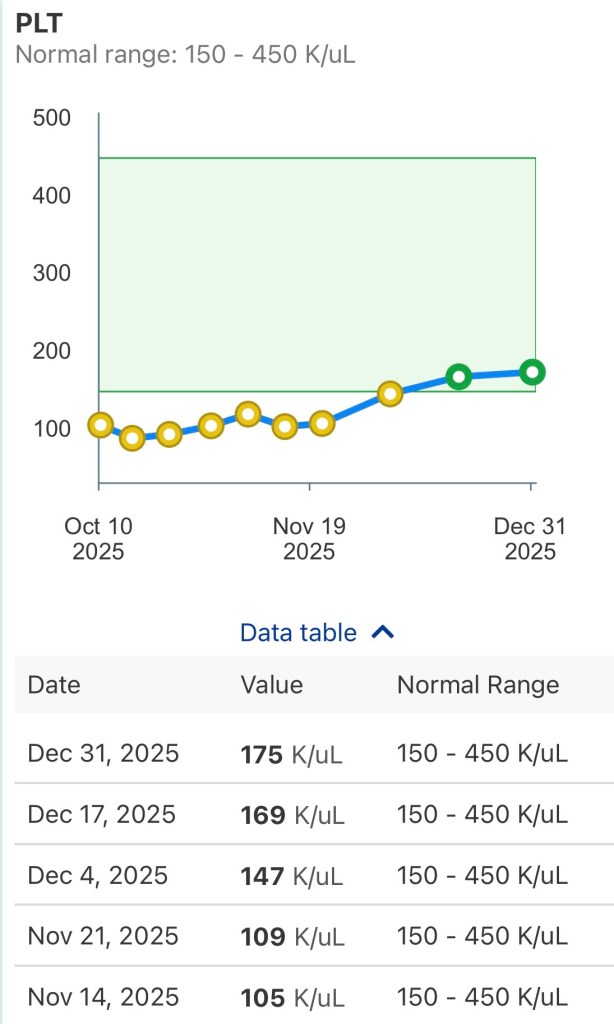
As you can imagine, I’m feeling pretty great about where things stand. In my last update, I had expressed some frustration with how long it seemed to be taking for my counts to climb. Even knowing that receiving bone marrow product can slow the process, and that my care team wasn’t concerned, I was feeling impatient and wanted to see more tangible progress.
Progress that finally seemed to show up with this most recent check. It helps that I’m now putting more distance between myself and my transplant, and that my appointments are every other week instead of weekly. My new marrow has had more time to adjust, and we’re checking a bit less frequently, which makes the progress more visible when we do look.
For transplant patients reading this, you’ll know that the specifics of the red and white cell lines usually get a little more attention than the overarching counts. Because of that, I’ll share my hemoglobin (red), hematocrit (red), and absolute neutrophil (white) counts below. You’ll be able to see my historical counts dating back to November/Early December as well.
Biopsy Results
Moving on to my biopsy results: really good. Not perfect, but largely a win according to my care team. I’ll share some snippets from the reports below.
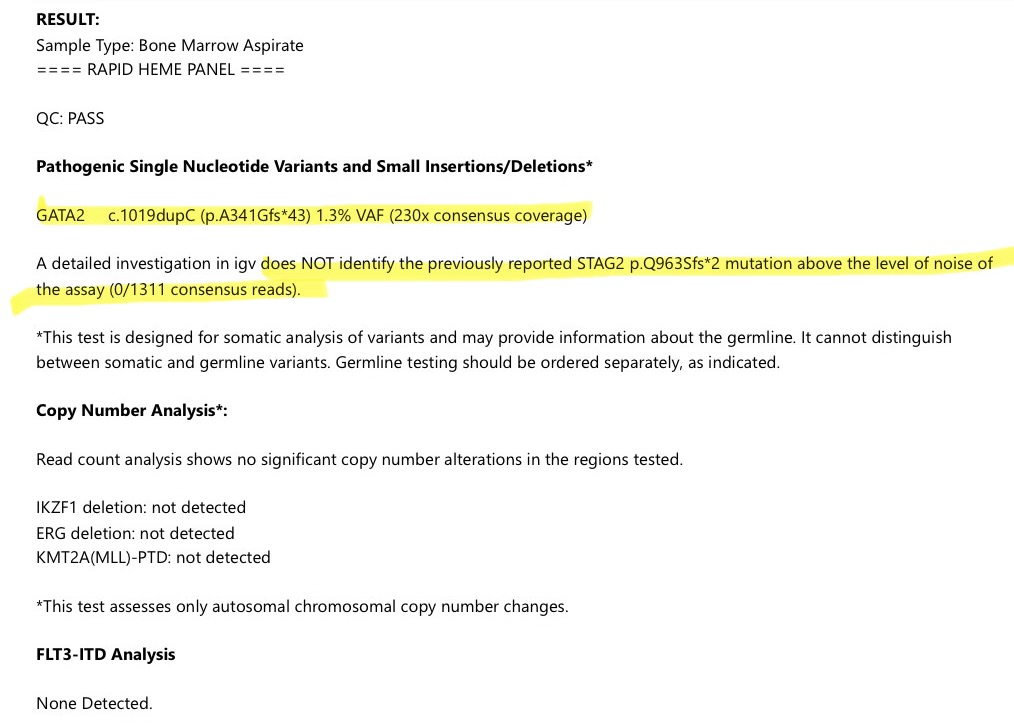
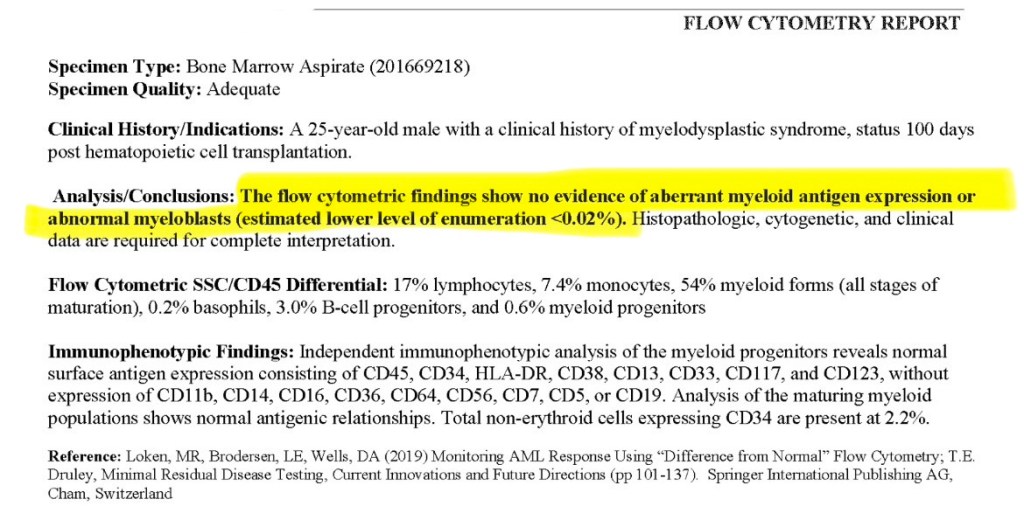
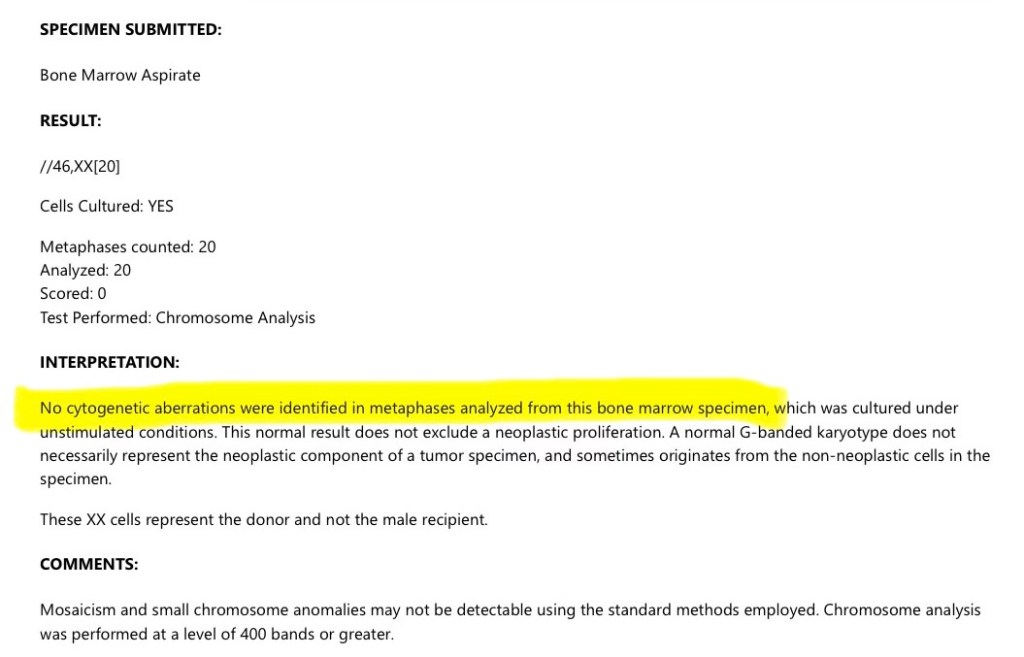
The high-level overview is this: the GATA2 germline mutation I have still appeared in my bone marrow sample at around a 1.3% frequency, down from the 50–60% it was occurring at prior to transplant. The STAG2 mutation that was identified in my marrow last May, which was occurring at 1–2%, is no longer detectable. Lastly, the cytogenetics portion of the test came back clear, meaning there is no detectable DNA or chromosome damage. This was true prior to transplant as well, so I was glad to hear that remained the same.
When I received the call from my team with the results, I was more than a bit discouraged to hear that the GATA2 mutation was still present in my marrow. They were quick to point out a few important details, though.
According to my team, this was not the best marrow sample. Whether due to human error (i.e., me fidgeting on the table) or the natural messiness of this kind of biopsy, they reassured me that the mutation still occurring at such a low frequency can have one or two different explanations. Both of which are not cause for immediate concern at this time.

The first explanation is that, because I have what’s known as a “germline mutation,” the GATA2 mutation exists in every single cell of my body, and always will. The goal of the transplant was to eliminate the existing mutation from my blood-forming cells, where it can cause damage, and repopulate my blood-forming cells with the donor’s cells that do not contain the harmful mutation.
To obtain a sample in a bone marrow biopsy, they have to get through a few layers of skin and bone first. Because the mutation was detected at such a low frequency, it’s very possible that the small percentage identified came from skin, fat, or bone that was picked up on the way to the marrow. If that’s the case, it would mean there’s actually no GATA2 mutation present in any blood-forming cells, which is exactly what we want.
The second theory is that the small percentage identified is actually from blood-forming cells, which is what we don’t want. You may remember from my previous update though that there’s a plan in place if this were the case. As a quick reminder: if the mutation were still present in my biopsy results, we would begin a more aggressive taper of the immunosuppressant drug tacrolimus, in hopes of loosening the reins on my new immune system enough for it to recognize my old cells as foreign and not belonging.
That is exactly what we’ve done over the past few weeks. After receiving the results, my team felt confident enough to initiate a more aggressive taper. I haven’t experienced much, if any, graft-versus-host (GVHD) symptoms since the transplant, and that remains true at the time of writing. I was officially taken off tacrolimus at my last appointment on day +139, and things have been going well since.
The hope is that by the time my next biopsy occurs around day +180–190, my immune system will have had enough time to “clean things up” if there are actually still blood-forming cells with the GATA2 mutation still present. If the first scenario is correct, being off the tacrolimus this early is still a net positive, as it’s one of the more side-effect heavy drugs that I have been on.
Because biopsy results usually take a while to come back, I can’t promise that I’ll have the follow-up results by the time the day +200 update goes live. That said, there are other reassuring points from these results that I want to highlight before moving on.
Prior to transplant, my cells didn’t look healthy. I was showing signs of a progressing myelodysplastic syndrome (MDS), and while my team was hesitant to diagnose me outright with blood cancer, they could see where things were heading based on the mutation I had and the way my cells were starting to look.
I’m happy to say that my cells look fine now. There is no sign of MDS or any other abnormal morphology that could be seen in this sample.
We also performed another chimerism test on my marrow to determine what percentage of my new cells are derived from my donor. This came back very positive, showing, I believe, 100%, donor cells across all three cell lines, or at least very close. I don’t have the exact specifics, as this data isn’t included in any of the records I can locate, but my team reassured me that this is the case, and I have no reason to doubt them.
So, largely, there’s a lot of good news here. Positives that I can and will be leaning on until my next biopsy, when I hope to receive even better news.
Urology Follow-Up
If you’re in your twenties and want to feel young, just spend a couple of minutes in a urology office. You’ll leave with a newfound appreciation for your youth, I promise.
Jokes aside, I had my long awaited urology appointment on day +116. For those of you who are new here, a quick recap: due to the cytoxan I received after my transplant, I developed what’s known as hemorrhagic cystitis. This caused a significant amount of blood to start appearing in my urine, especially during my hospital stay. It was uncomfortable, to say the least.
The further I got from transplant, the less discomfort I experienced. That said, I was still seeing blood relatively frequently, even a couple of months post-transplant. An ultrasound on day +85 revealed some “bladder wall thickening,” which prompted my team to refer me to a urologist, as we couldn’t determine the cause from the ultrasound alone.
At my appointment, my urologist laid out a simple two step plan to investigate the issue further. First was a urine test specifically looking for cancerous cells, known as a urine cytology test. Second was a CT scan, which was scheduled for day +127. The results from both are pictured below.
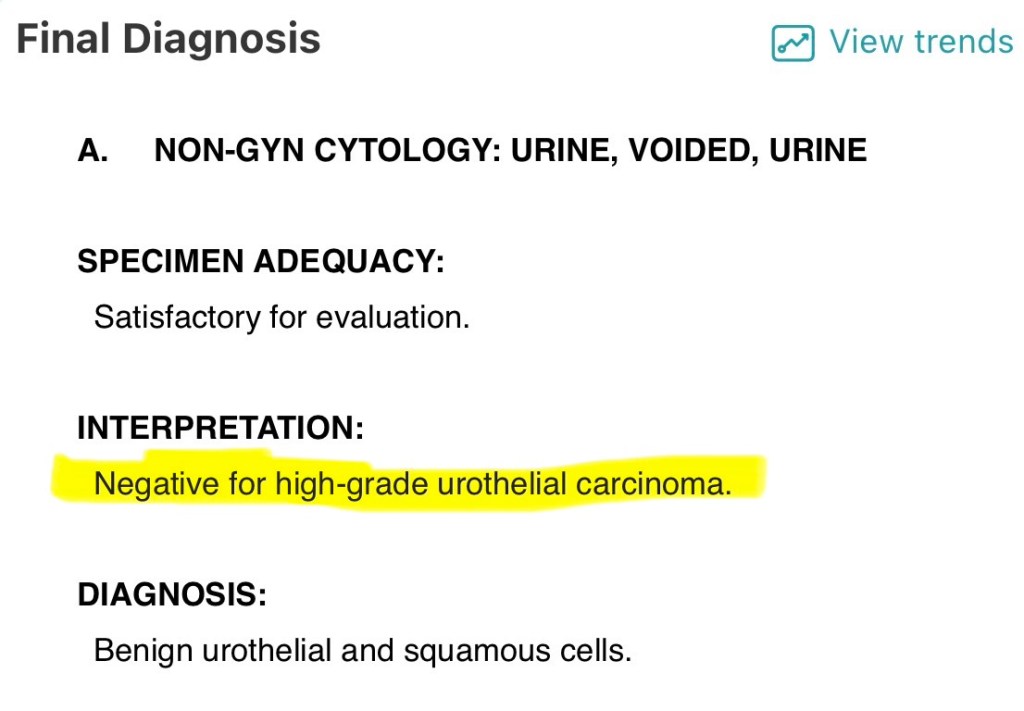
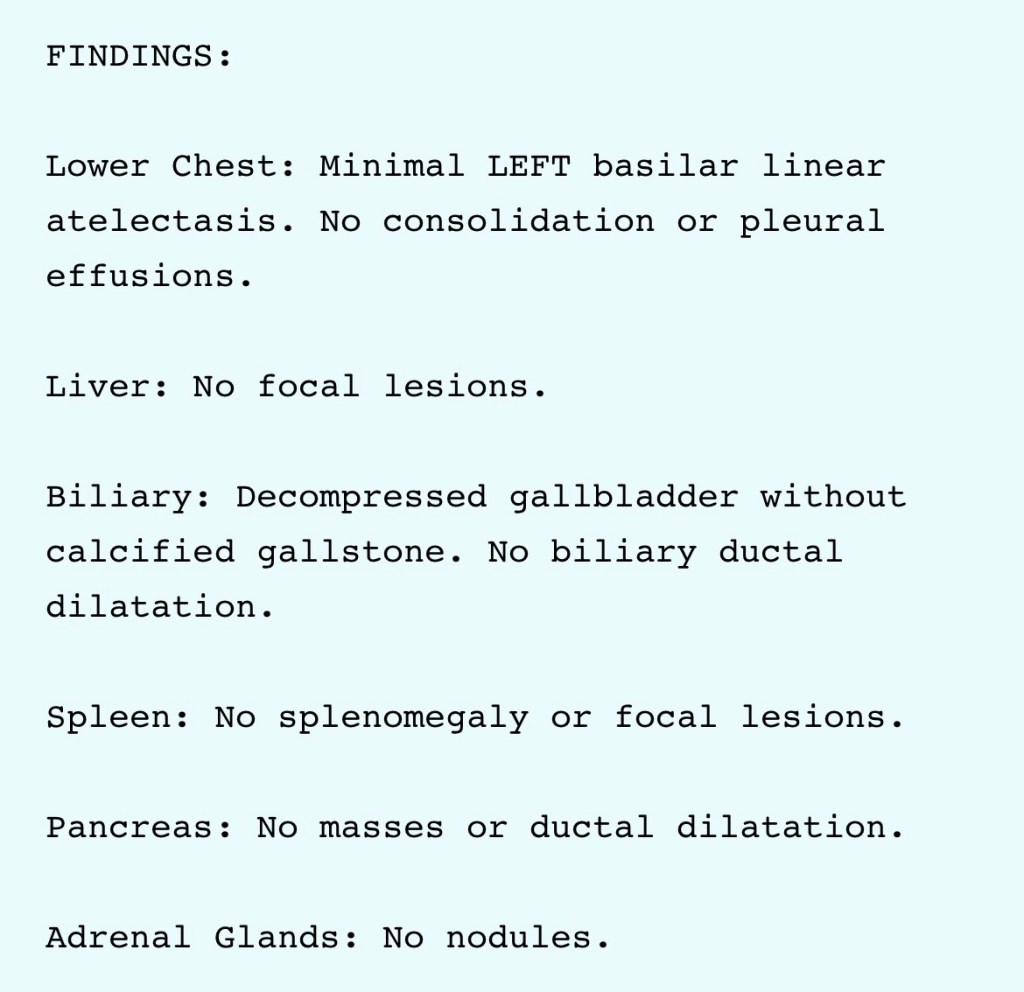
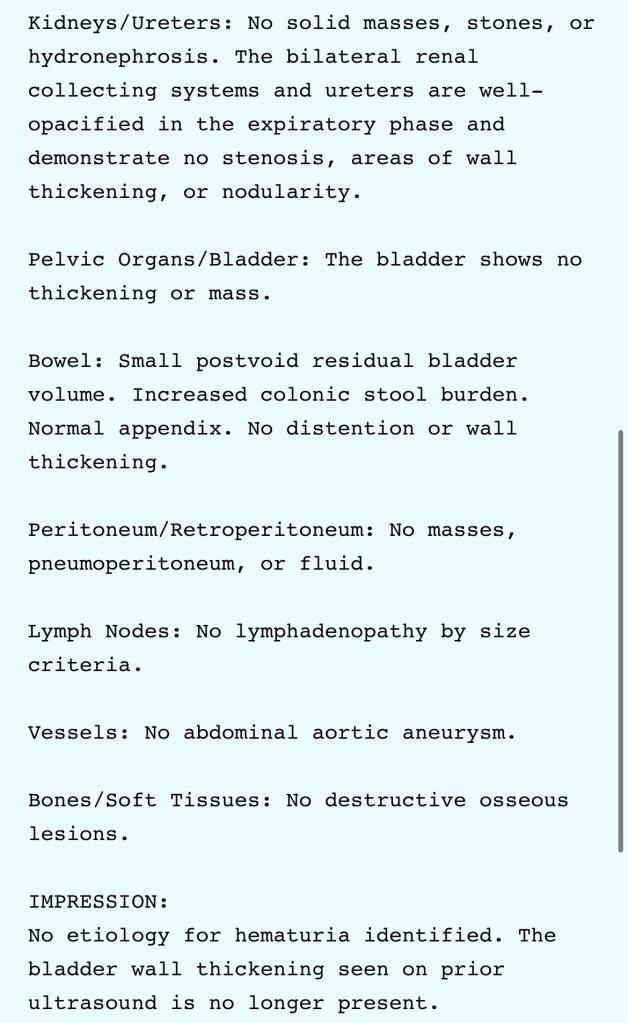
As you can see, my urine test came back clear for cancerous cells, and my CT scan showed absolutely no issues. The scan couldn’t even locate the initial thickening that prompted the follow up, which all but confirms that this was simply some post-cytoxan healing in my bladder and nothing to really worry about.
Throughout this little recovery side quest, there were plenty of reassuring details that I was able to lean on: decreasing blood, less discomfort, improving urinalysis results, and so on.
That said, this past year has turned me into someone who needs to see concrete data before assuming anything, so I’m grateful to be able to finally put this issue to rest and refocus on the larger task of recovery.
Miscellaneous
If you’re in your twenties and want to feel old, acquire hemorrhoids. It’s a surefire way to feel more connected to the older people in your life.
Again, just joking. Sort of. I won’t linger on it too long, but the hemorrhoids are still very much an ongoing issue. They stayed largely dormant during this time period, but I had a flare up in the last few days, which my team told me can and likely will happen. Nothing concerning, just inconvenient and uncomfortable.
Moving on, I mentioned it earlier, but as of day +139 I am officially off tacrolimus. That is huge. We started reducing the dosage around day +99 when I had my biopsy and began the more aggressive taper shortly after receiving the results on day +110. All told, it was roughly 40 days between the taper beginning and ending.
Let the record clearly state that we ideally would have done this more slowly if not for what my biopsy results showed. While my team wasn’t overly concerned with the results, they felt this was the best option in my case, and that the increased GVHD risk that comes with a faster taper was worth it to allow my new immune system to fully get back up and running.
I’ve noticed a few positive changes since coming off the tacrolimus, which I’ll touch on more in the next section.
I also completed my first post-transplant pulmonary function test (PFT) and received my first vaccinations on day +112. As you may know from my pre-transplant testing post, I despise the PFT. It’s instruction heavy and full of opportunities for human error, both on the administrator’s side and on the side of the person performing the exercises. That said, it’s still the best test they have for analyzing lung function and detecting any potential issues. My results are below.
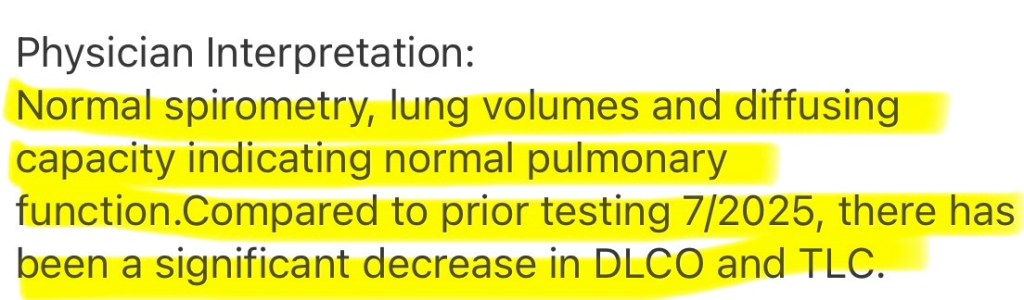
This roughly translates to: “The patient is out of shape, but everything more or less looks okay.”
That interpretation was as humbling as it was motivating to me. The more forward looking translation, and the one I’m going with into this new year, is this: you have work to do.
Moving on to vaccinations, I received my flu and RSV vaccines on day +112, followed by the first dose of my COVID vaccine (Pfizer) on day +125. This will be a three dose series, with two more doses to follow in the coming months.
According to the infusion nurse I spoke with, Dana-Farber doesn’t have a “preferred” COVID vaccine provider. That said, if this is something you feel strongly about, I imagine you can speak with your care team and have the preferred arrangements made.
Getting re-vaccinated is a major part of the post-transplant recovery process. I essentially have the immune system of a newborn, so the next year or so I will be getting poked quite frequently until I am once again up to date on my vaccines. Below is the rough timeline for the vaccinations that I’ve been given.
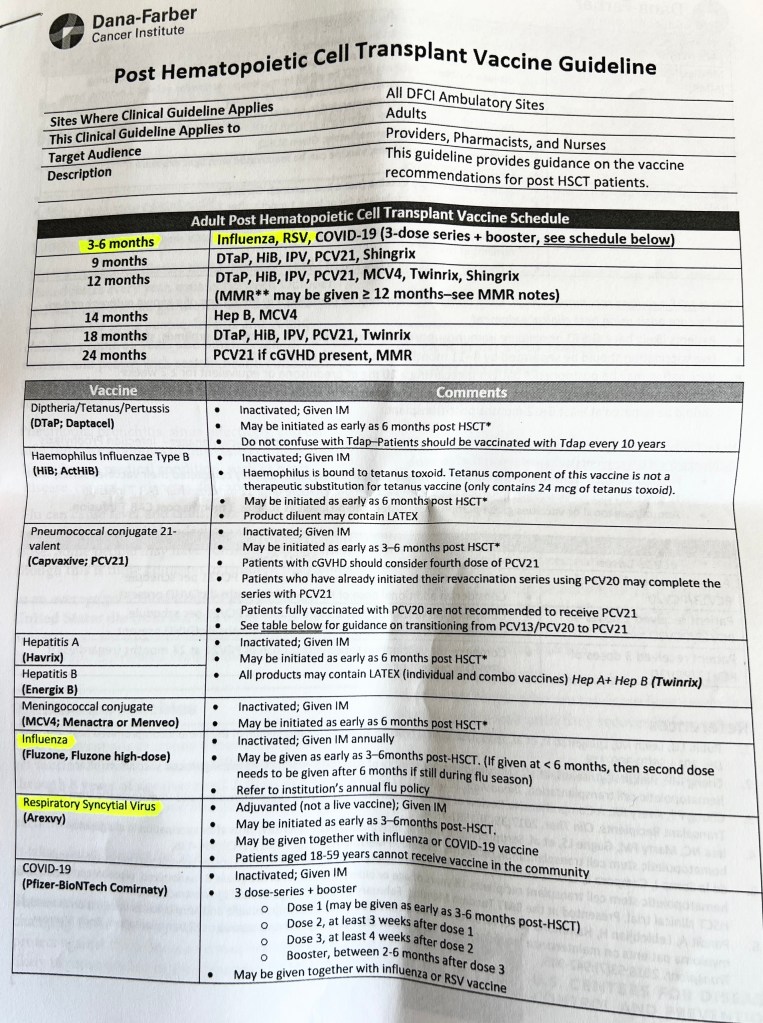
Not exactly the most fun items to put on my calendar, but important nonetheless.
Physical
Issues
Over this time period, most of my journal notes about how I felt physically just read: “feeling well.”
During the first ~20–25 days, however, I experienced a fair amount of tingling in my legs during exercise. As I mentioned in the previous update, I’ve been having some issues with leg swelling, especially during long periods of sitting, like I do at work.
The swelling is still an ongoing issue, but there’s no redness or pain, so it isn’t particularly concerning. It typically goes away each night or after a few hours of keeping my legs elevated. The tingling, however, was a newer development.
My team explained that it’s not entirely uncommon to experience a bit of neuropathy post-transplant. The body goes through a lot, from chemo to countless medications, and any GVHD that may be occurring, so nerves that were affected during treatment may still be in the process of healing. This can sometimes show up as tingling or a burning sensation in the affected areas.
I bring this up because it’s something I wasn’t really aware of before discussing it with my team. It was interesting to learn a bit more about it, but luckily my situation points more towards a typical edema than anything more concerning.
The tingling started around day +100 and seemed to peak around day +120-125 before gradually starting to decrease. Whether it was related to the swelling or the tacrolimus, I’m not entirely sure.
What I do know is that the timing of when I started to see improvement roughly coincides with when we began the more aggressive taper of the tacrolimus. Since then, I haven’t experienced nearly as much tingling during exercise. It no longer occurs on walks or bike rides, only during longer runs when I’m pushing my legs a bit harder. Even then, it’s mostly background noise and doesn’t really affect the quality of my workout.
Hair
I’ll start this portion with a quick caveat: the timeline for hair regrowth depends on so many factors. Your conditioning regimen, the type of transplant, post-transplant medications, GVHD, nutrition, hormonal shifts, age, genetics, infections, time since transplant… you name it, it probably has an impact.
Up until day +90–100, there was really nothing going on. Truly nothing worth mentioning in any previous update. Since then, however, my hair follicles seem to have woken up from their transplant-induced slumber, and I’ve noticed pretty significant hair regrowth all over my body.
Hair loss didn’t bother me as much as I thought it might prior to transplant, but the part that affected me most was the thinning of my eyebrows and eyelashes. I was able to hold onto some of both, which not everyone can say after going through their conditioning regimen, but it was still jarring to look in the mirror and almost not recognize myself.
I underestimated how much those two features specifically shape how I see myself.
With that in mind, I’m very happy to see progress in those areas, as well as the rest of my body. Since it’s easier to show than tell, below are two photos of where I am currently at. I’ve had to give myself a mini buzzcut once or twice already just to keep things somewhat even, but both pictures were taken on day +146.
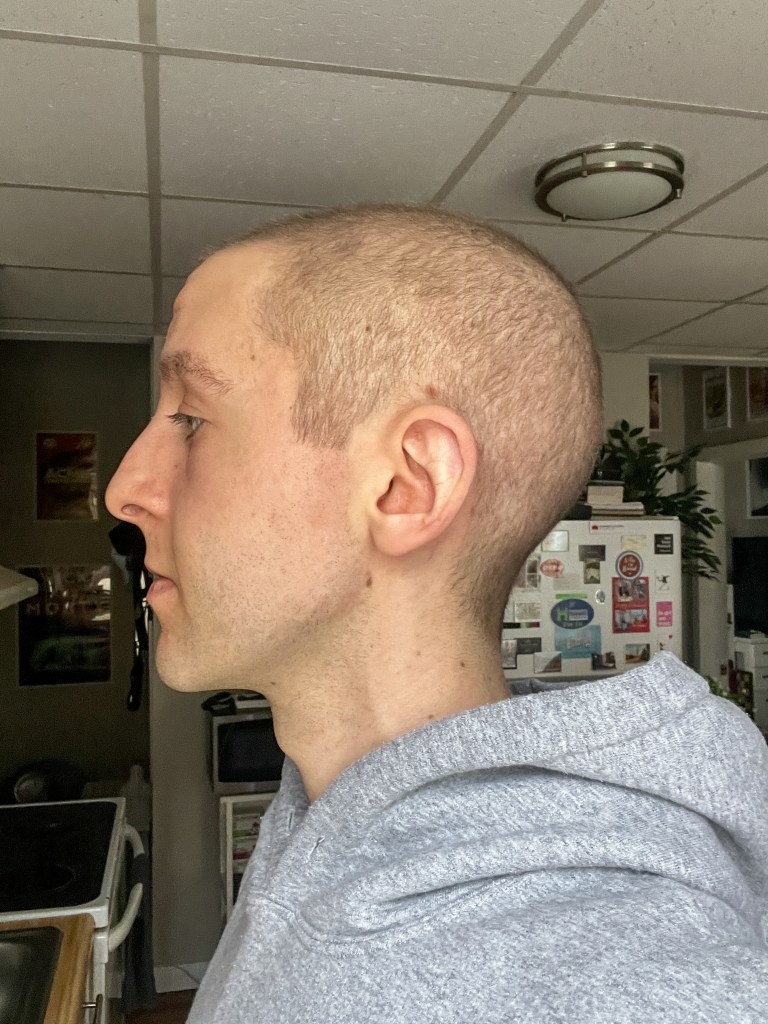
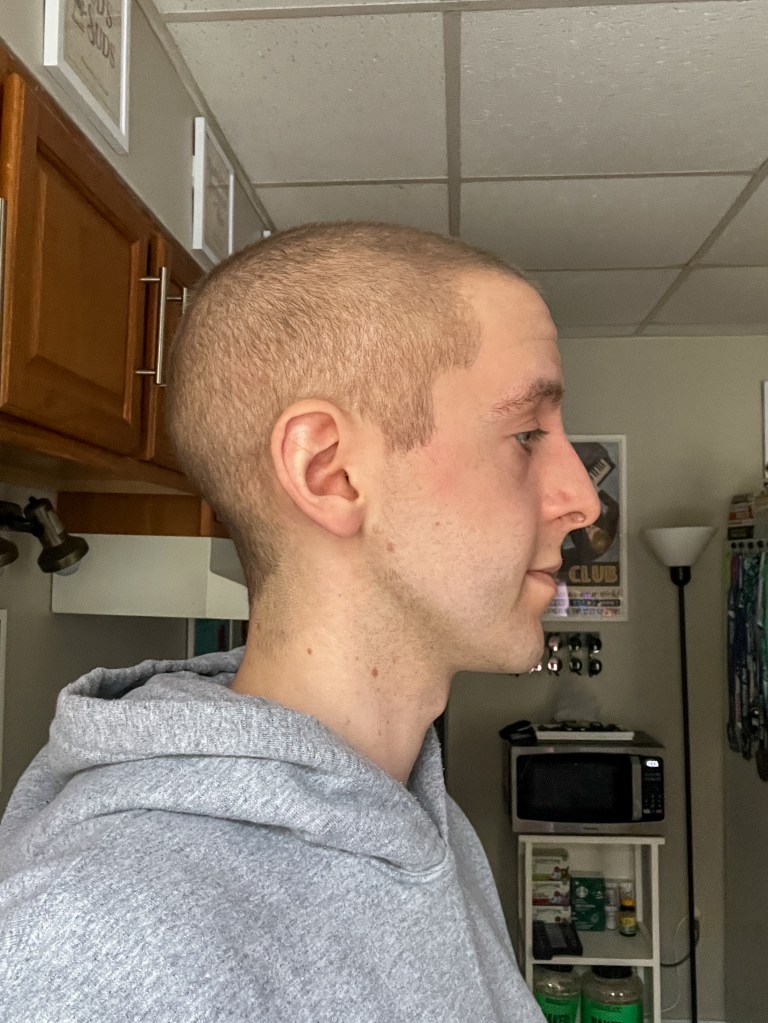
I will note that I’ve experienced quite a bit of dryness in my scalp and forehead area. Whether that’s just the time of year, my skin healing, or some combination of both, I’m not entirely sure. It’s nothing that a little lotion or moisturizer doesn’t take care of, but it felt worth mentioning nonetheless.
Moving forward, I’ll continue to include a photo or two in each update to track progress.
Weight
The last physical topic I want to touch on is one I probably should have discussed more in previous updates, and that’s my weight.
Coming into transplant, I weighed just under 150 pounds. Leaving the hospital, I weighed 132.
As of my last check-in on day +139, I was back up to 144. I’m very happy with this. As I continue to recover and increase my training load, I’m realizing just how much of the weight I lost was muscle. Exercises I may have scoffed at before transplant now give me quite a bit of grief.
I’m not beating myself up about that, it’s just the reality of where I am at right now. I’m continually surprised at the extent to which my body needs recalibrating after everything.
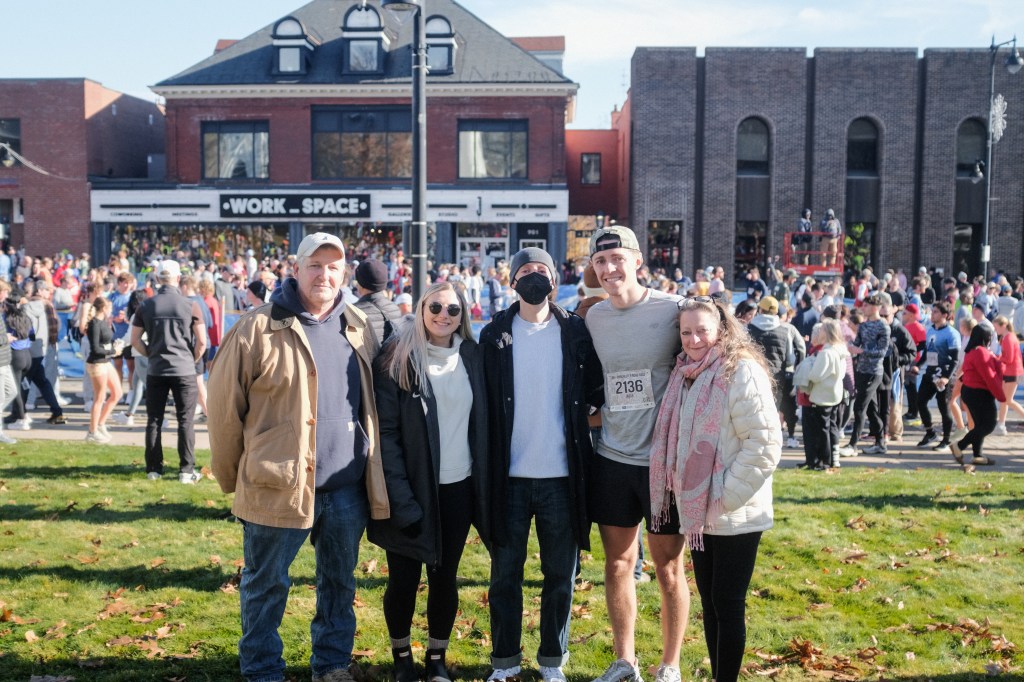
Much like before the transplant, I’ve mainly focused on whole foods and a balanced diet since returning home. Getting back to a stable weight was goal #1; now that I’ve reached it, the goal is to increase my training load and start rebuilding some of the muscle that I had lost.
While I’ll touch on my current fitness level and what I have been doing in the “Exercise” section, I’ve decided that the overall state of my health, my goals for the upcoming year, and how I plan to get there really deserve their own post. This will allow me to get more specific without making this already long update even longer.
That post will likely come out next month, around the six-month post-transplant mark, so stay tuned if that is of interest to you.
Mental
There’s definitely a “before and after” element to this update’s mental health check-in. The “before” was when I was still anxiously awaiting the biopsy results and my urology appointment, and then there was the “after,” where I was finally able to take what felt like my first deep breath in months.
Like most people, I tend to have a hard time sitting still. This experience has intensified that feeling a bit in the sense that even when I receive good news, I can’t help feeling like we might be missing something still. I know that isn’t the case because both my team and I are on top of everything, but still. My sense of stability has been rattled over the past year, and I expect it will take a long time to fully rebuild.
I was able to start taking some corrective steps in the last couple of weeks though. After my CT scan results came back with the good news on day +127, it was the first time in a while that I didn’t have a looming test or crucial appointment on the horizon.
If things continue going well, my next big “test” will be the biopsy around the six-month mark. Based on the results we received from my first biopsy and the corrective steps we’ve taken since then, I’ve been reassured that it should go well.
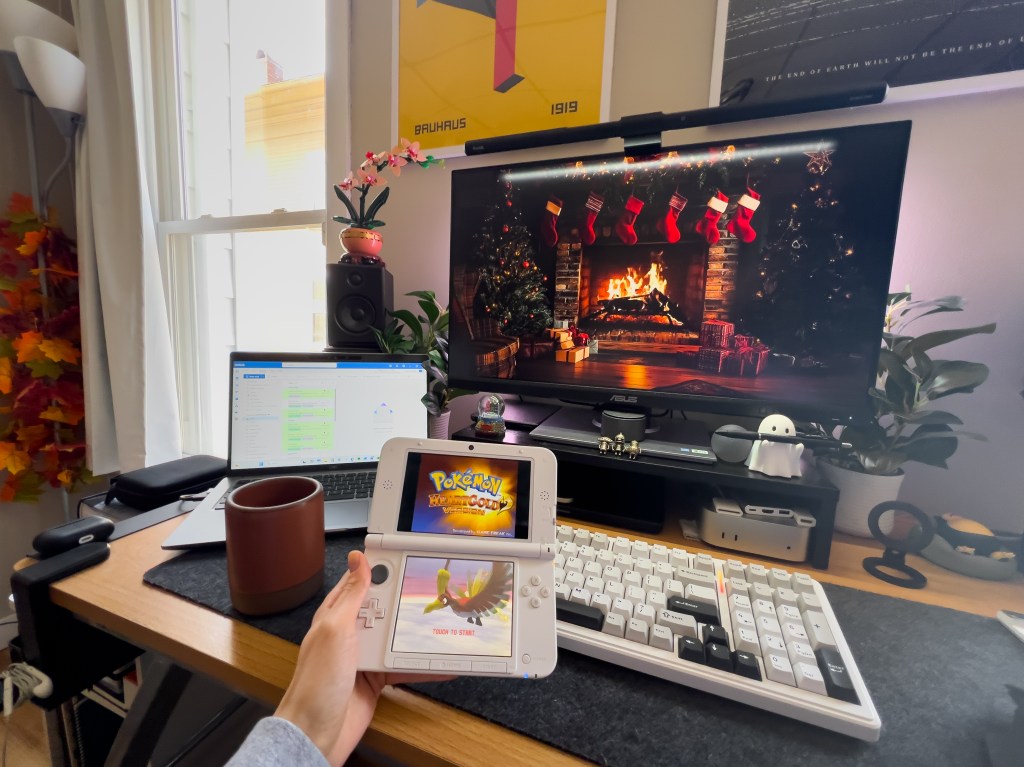
In all, It’s been a few weeks of really trying to settle into my routine, setting goals for 2026, spending time with family, and, above all, enjoying a few weeks of relative calm. Hard earned weeks, I’d say.
If there’s one tip I could share for those moving through this stage of recovery, maybe the first stage of renewed stability, it’s this: building my routine back up, and learning to protect and prioritize it, has been incredibly valuable.
I find my mental health improves when I’m taking action, whether that’s working out, writing, reading, or anything else that keeps me from sitting still and ruminating. This is much easier to do when I have a clear sense of what my day or week will actually look like, and I can plan specific times for those activities.
During this period of calm, I’ve started to re-build a routine that not only protects the little slice of stability I’ve found, but also encourages me to stay active. One that pushes my limits a little, which is helping me to rebuild a sense of strength, purpose, and ultimately, my sense of self.
Those things, like most good things, will happen one day at a time. I’m simply doing my part by giving myself the best opportunity, through my routine, for those positive changes to come about.
Exercise
Over the last couple of weeks, I’ve had to make a few adjustments to my exercise regimen due to the weather, the swelling and tingling I’ve been experiencing, and my ever fluctuating level of motivation. Some of those factors are within my control, some are not.
Before diving into some of those changes, I want to emphasize the importance of being flexible with yourself and your exercise habits post-transplant.
I understand, maybe better than most, how strong the urge can be to get back to your pre-transplant self when it comes to exercise. But the reality is that patience and listening to your body are essential. The outcome you’re aiming for will only be pushed further down the road if you overdo it too soon.
Because of that, and the factors I mentioned at the start, I temporarily adjusted my training load for much of this period. My revised goal was to run once a week. Just once. That pains me a bit to say, but I ramped up faster than I probably should have when I first returned to running, and I wanted to take a more cautious approach for a few weeks with what I had going on.
That run each week was done at my local track to reduce the strain that comes with more drastic elevation changes, like those on my usual routes. Distance was the main focus, with the overarching goal of rebuilding some endurance, both mentally and physically.
In addition to my weekly run, I’ve been trying to walk everyday and bike on the other days that I don’t run. Both, I believe, have been small and subtle ways that my cardiovascular fitness has been able to improve over the past 50 days or so.
Importantly, both forms of exercises are low impact compared to running. My walks typically range from 1.5 to 2.5 miles, with an estimated 250 to 400 feet of elevation gain. My bike rides, on the other hand, are more focused on time on the bike rather than distance or resistance, though if I had to provide a range, they usually end up around 8 to 12 miles right now.
Overall, I’m seeing steady progress. Really steady progress. I’ve found that sometimes it takes energy to get energy in return, and exercise does exactly that for me. It provides a boost in nearly every other area of my life, and it was during this window that I really began to see a payoff from the work I’ve been putting in since transplant.
Below are some data summaries from a few of my workouts during this time period.
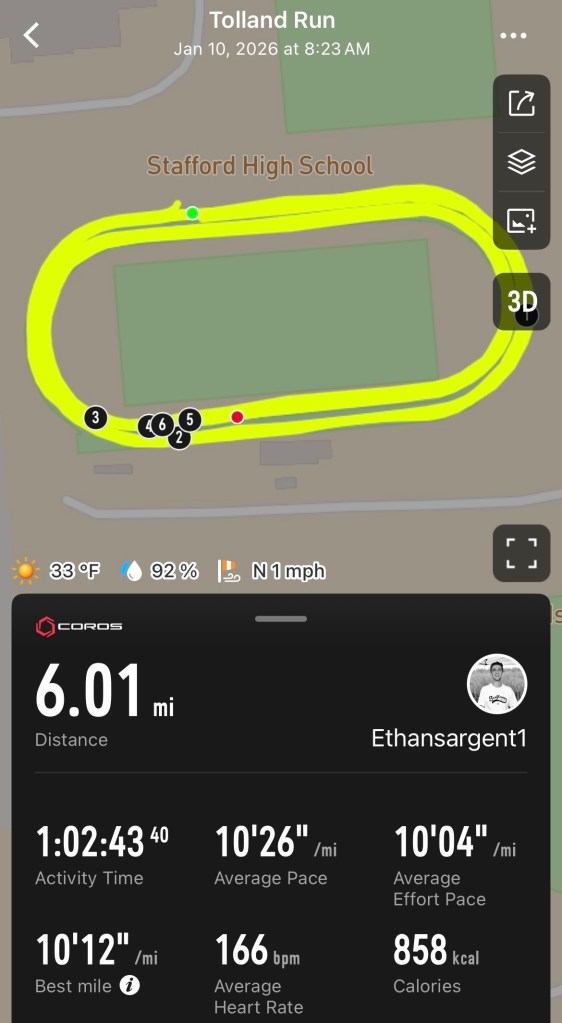
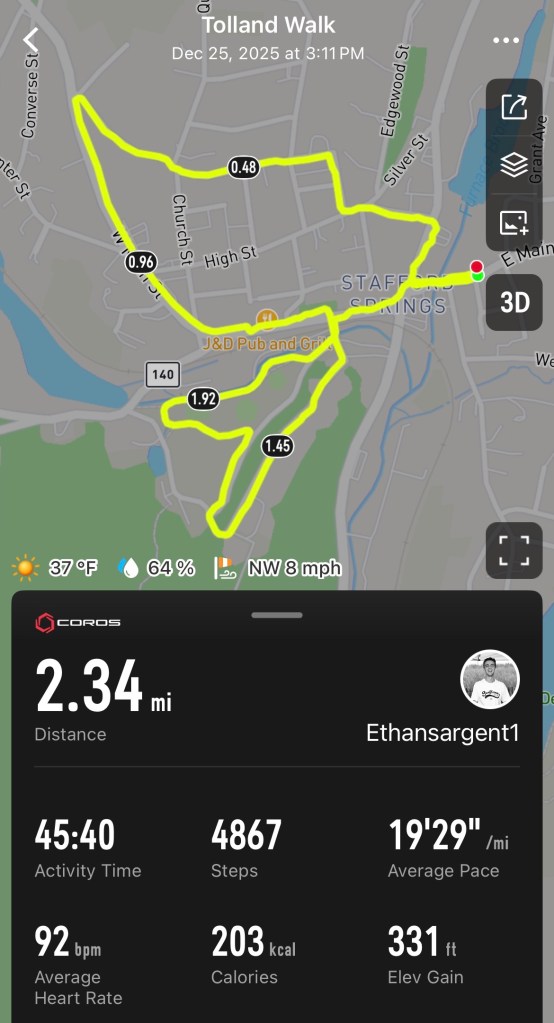
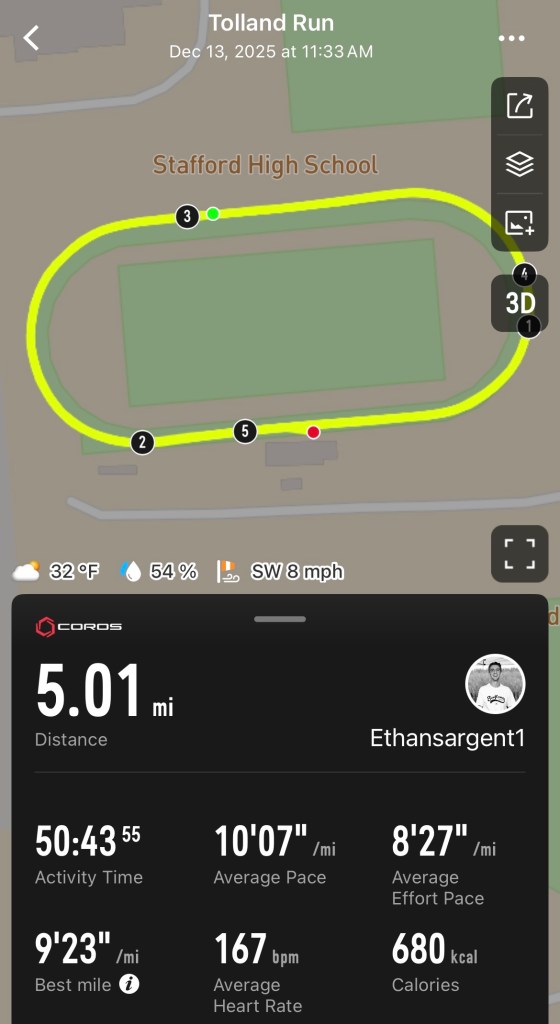
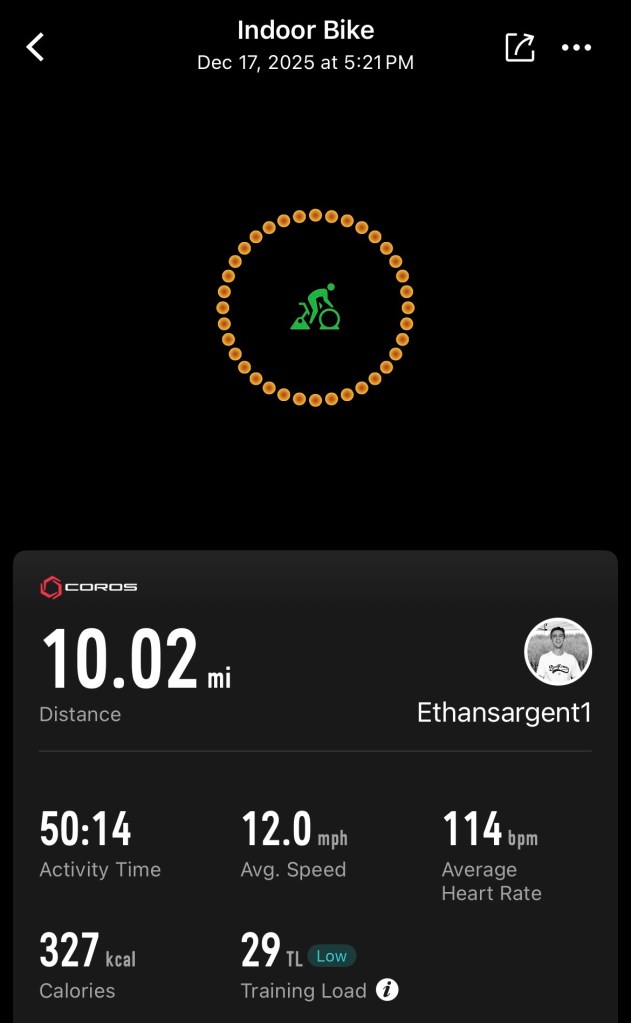
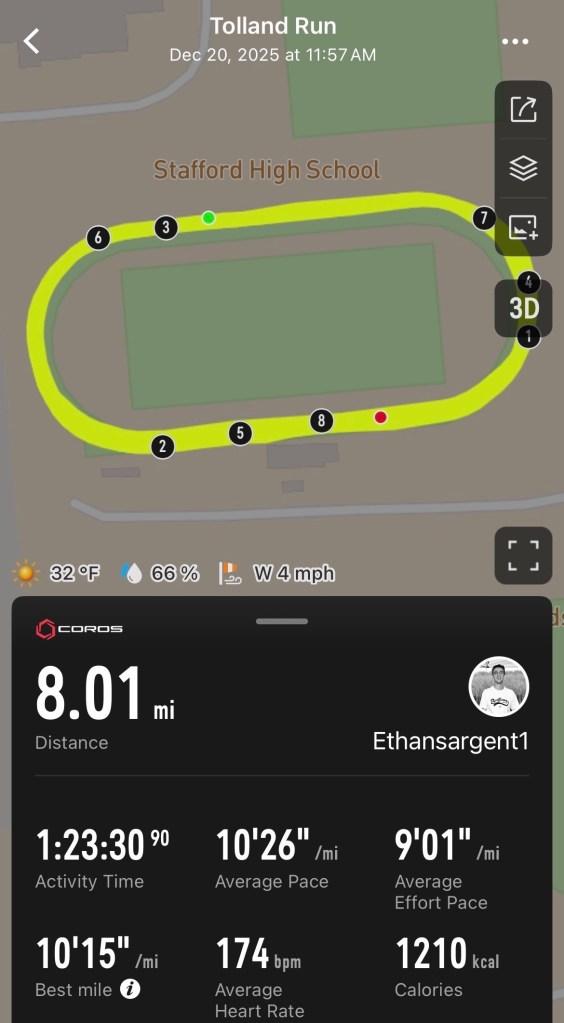
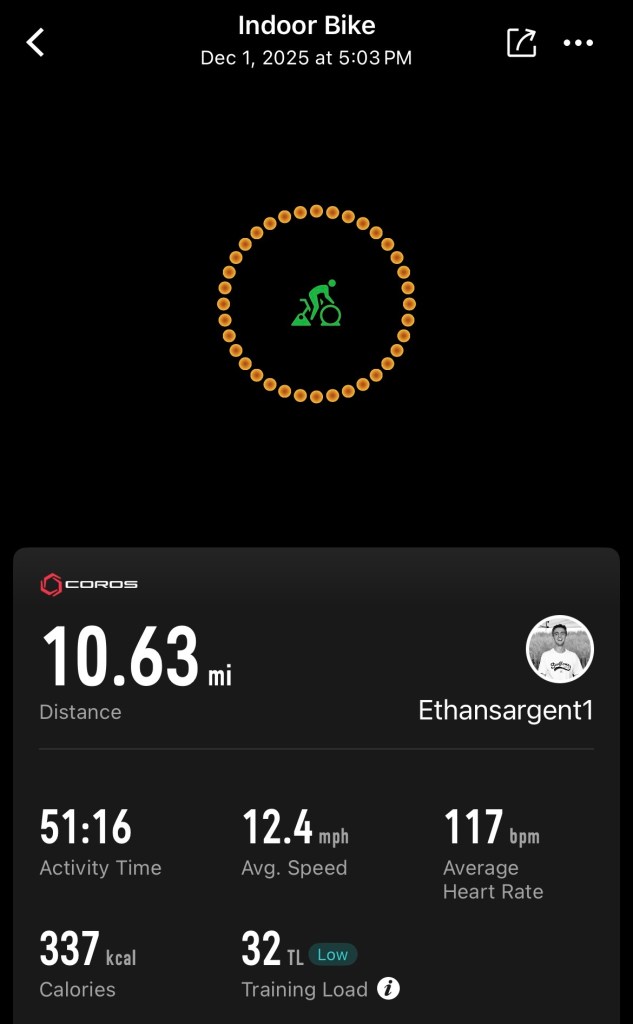
There may be one or two workouts that stand out, which I’m going to very proudly touch on now. On day +121, I completed my first five mile run post-transplant at the track. The leg tingling was in full effect, but I was still very happy with the overall effort that day.
At my appointment on day +125, I mentioned it to my team, and they said something along the lines of, “It may be because of your age, but we don’t really have anyone else running five plus miles at this stage of recovery.”
As you can imagine, this went straight to my head. Just kidding. It did make me smile though, and it motivated me to keep it up. The following weekend, on day +128, I set out with the intention of running six. It was a beautiful day, I had some Kings of Leon blasting through my headphones, and the tacrolimus taper was starting to show some positive effects.
I got to five miles and my legs felt great. Far less tingling than the week before. So I kept going until I hit six. At six, I told myself I’d keep moving until it felt like I was starting to overreach. I reached seven, and my aversion to odd numbers (not getting into that right now) kicked in, so I pushed on to eight.
My legs held up, and I got it done.
That ride home was one of the peak moments of my post-transplant recovery so far. Windows down, grinning like an idiot, basking in the “we are so back” feeling that run gave me.

I haven’t touched eight miles since that day, but knowing I’m already capable of that distance has been enough to keep me motivated over the last few weeks.
My plan moving forward looks a bit different, partly because of the footing that I seem to have found over this chunk of time, but I’m not going to get into all of that here. As I mentioned earlier, my next post will be a more comprehensive breakdown of my nutrition, running, weight training, and overall health and fitness approach for the next couple of months. The six month mark feels like the perfect time for that, and I’m excited to have a bit more freedom to dive into the specifics.
Until then, if you’re more data driven and want a more specific look at my day-to-day training, feel free to check out my Strava account. I created it on January 1st as a way to add a social component to all of this and to give anyone who is interested the kind of concrete data that I would want if I was wondering what post-transplant fitness can realistically look like through different stages of recovery.
Social
The bonus section. Context is important here, so I’ll start by providing some in case you’re new.
Prior to my transplant, I shared a post about the logistics of preparing for what lay ahead. All of the details, both big and small, that I had to consider before being admitted.
One of the topics I discussed was the importance of developing a communication strategy of sorts. Essentially, a shared understanding between you, your family, and anyone in your inner circle about how you want to go about sharing, or not sharing, what you’re going through.
There are many things you can’t control heading into a stem cell transplant. This is one of the few things that you actually can. Deciding when and how you share your experience can help restore a sense of being back in the driver’s seat, even if only briefly.
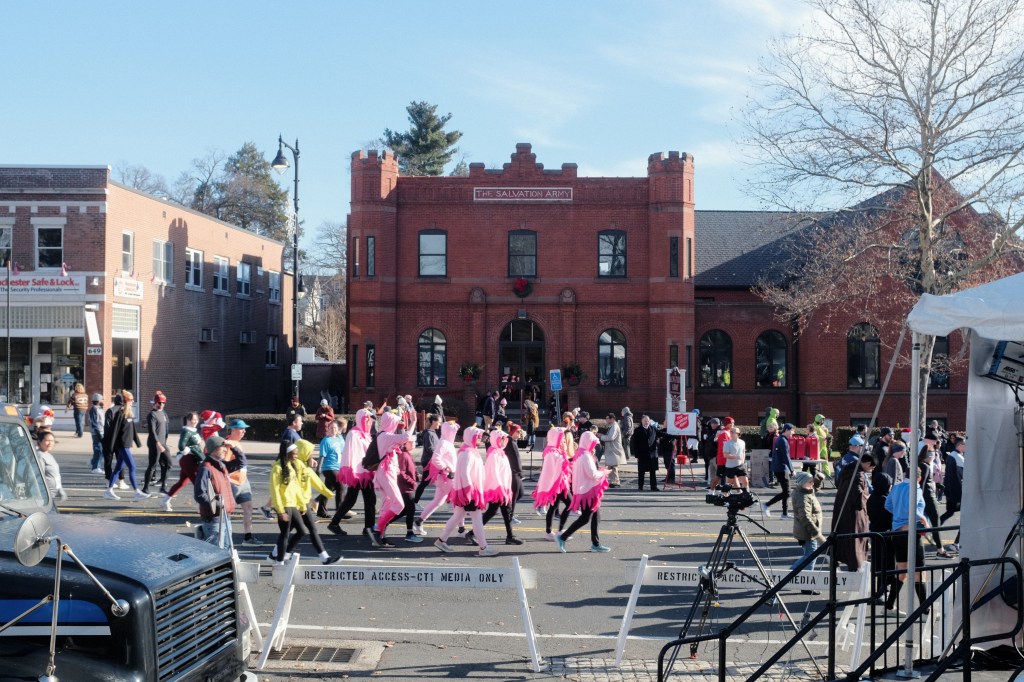
In my case, when I was diagnosed with GATA2 deficiency last January and began learning more about what needed to be done, I decided not to immediately share anything with my larger circle. There were many reasons for this, but the main one was simple: I didn’t want to tell people I was sick. That I had this mountain to climb. That I was terrified of what might happen.
While I’m sure the support would have been great, I didn’t want it to turn into a pity party either. I know that can sound harsh, but it’s how I felt at the time. Inviting more people into the loop also meant more pressure on both myself and my family to provide updates. We already had enough on our plate, and the idea of taking on even more didn’t feel right.
So I stayed quiet. I trusted that the love and support of my family, and the very few people I did tell, would be enough to get me through, and it was.
When I did share, I wanted it to be from a place of strength and stability, not fear. I wanted to be on the other side of treatment, able to talk about it in hindsight rather than as something I still needed to get through.

Over this past stretch, things started to line up and the timing began to feel right. I’d been working on what I wanted to say basically since discharge, had a set of photos I loved, and, most importantly, felt like I was back on steadier ground after what had been an incredibly challenging year.
So I shared.
The response has been really great so far. Over the past few weeks, I’ve had some of the nicest conversations with acquaintances both old and new, and I’ve felt more grounded in my experience than I have all year.
In the short time I’ve had to process what sharing has been like, I’ve already come to a clear conclusion: there is power in sharing your life experiences, no matter if they are your highest highs or your lowest lows, with others. It’s one thing to know that, and it’s another to feel it firsthand, especially with something as heavy as this.
Sharing your experience and showing up as your true self doesn’t just lighten your own load, it gives others permission to do the same. It invites people to be brave, to be honest, and to be kind, because you never truly know what someone else is carrying.
I don’t think there are many greater gifts that we can give each other than that.
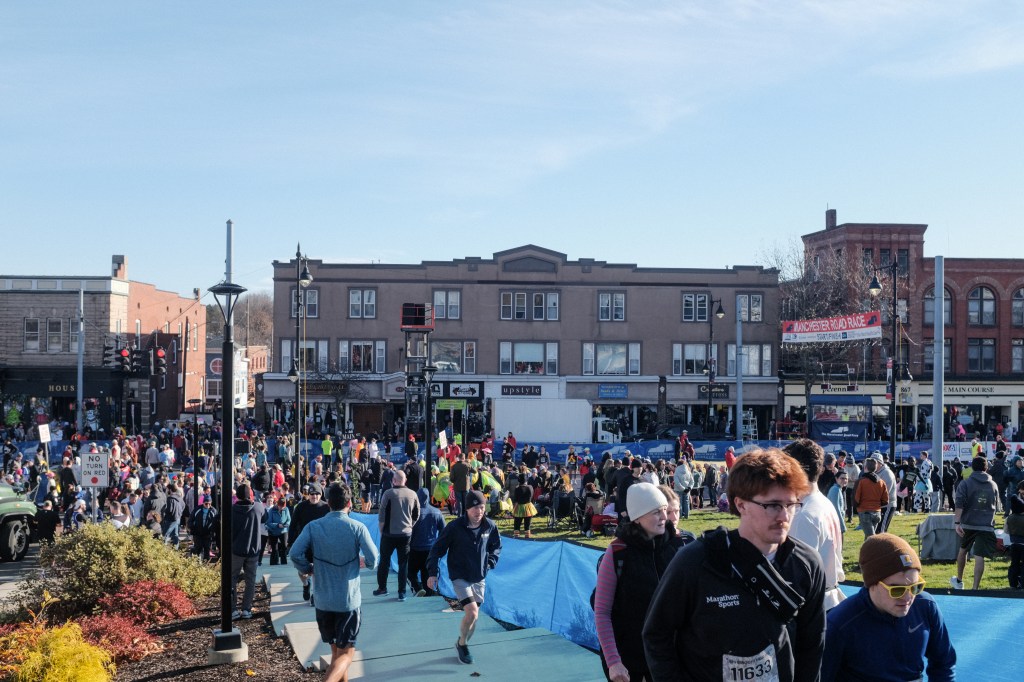
Philosophy aside, if you’d like to view the post, I’ll link it here. My account will be public for a little while to allow anyone who is interested to have a look.
Closing Thoughts
I warned you this would be a long one, didn’t I? If you choose to count this post as one of the books you’ve read this year, you have my full support.
The next time you hear from me should be sometime next month, with a more comprehensive look at my exercise, nutrition, and overall health habits as I approach the six month post-transplant milestone.
Before I go, I just want to say thank you to everyone reading this. I may not have shared my experience with my wider network until recently, but I did choose to share it here as I navigated this past year.
By following along, you’ve lightened my load and given me a space not only to process everything, but to connect with others who may be going through something similar. I’ve never been more certain that writing about all of this was the right decision.
I will forever be grateful to you all for that.
Talk Soon,
– Ethan
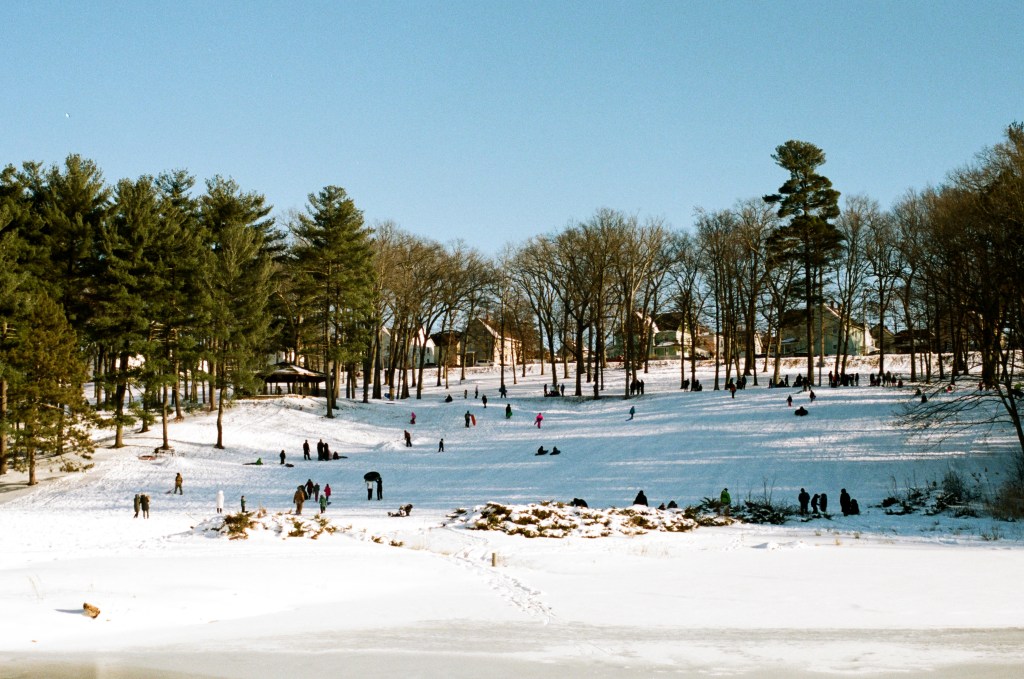
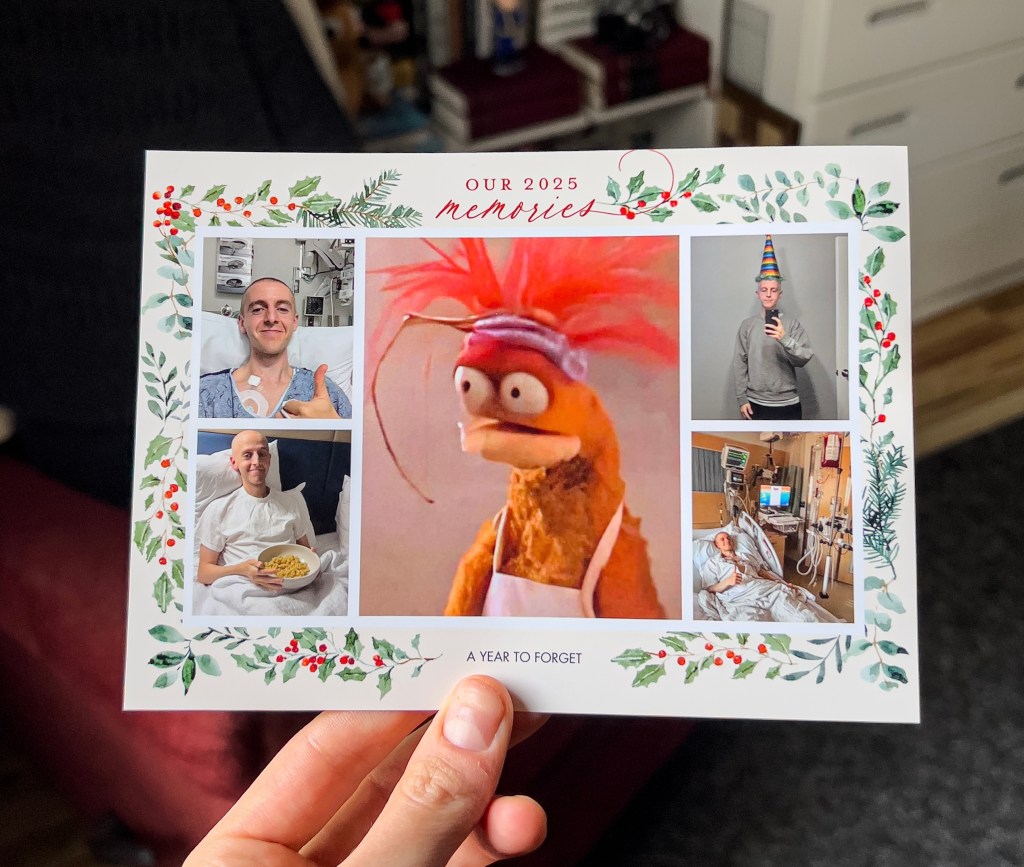
P.S. Please enjoy my 2025 Christmas card.
Resources
External links directly referenced in this article:
- https://www.mayoclinic.org/drugs-supplements/tacrolimus-oral-route/description/drg-20068314
- https://www.aamds.org/bmt-bone-marrow-v-stem-cell-transplantation
- https://www.medicinenet.com/hemoglobin/article.htm
- https://www.medicinenet.com/hematocrit/article.htm
- https://www.webmd.com/a-to-z-guides/what-to-know-neutrophils
- https://ashpublications.org/bloodadvances/article/7/8/1351/493422/Clinical-and-prognostic-impact-of-STAG2-mutations
- https://my.clevelandclinic.org/health/body/23067-somatic–germline-mutations
- https://www.mayoclinic.org/tests-procedures/bone-marrow-biopsy/about/pac-20393117
- https://my.clevelandclinic.org/health/diseases/10255-graft-vs-host-disease-an-overview-in-bone-marrow-transplant
- https://www.mayoclinic.org/diseases-conditions/myelodysplastic-syndrome/symptoms-causes/syc-20366977
- https://biologyinsights.com/what-does-abnormal-morphology-mean-in-medicine/
- https://www.nicklauschildrens.org/treatments/chimerism-test
- https://www.mayoclinic.org/drugs-supplements/cyclophosphamide-oral-route-intravenous-route/description/drg-20063307
- https://my.clevelandclinic.org/health/diseases/24164-hemorrhagic-cystitis
- https://my.clevelandclinic.org/health/diagnostics/22942-urine-cytology
- https://my.clevelandclinic.org/health/diagnostics/4808-ct-computed-tomography-scan
- https://my.clevelandclinic.org/health/diagnostics/17893-urinalysis
- https://www.mayoclinic.org/diseases-conditions/hemorrhoids/symptoms-causes/syc-20360268
- https://my.clevelandclinic.org/health/diagnostics/17966-pulmonary-function-testing
- https://www.mayoclinic.org/diseases-conditions/flu/in-depth/flu-shots/art-20048000
- https://www.cdc.gov/vaccines/vpd/rsv/index.html
- https://www.cdc.gov/covid/vaccines/stay-up-to-date.html
- https://my.clevelandclinic.org/health/diseases/14737-peripheral-neuropathy
- https://my.clevelandclinic.org/health/diseases/12564-edema
- https://www.strava.com/athletes/199166376
- https://www.instagram.com/esargentt/p/DSz7f9Pjkv0/
 Long Way From Home
Leave a comment